

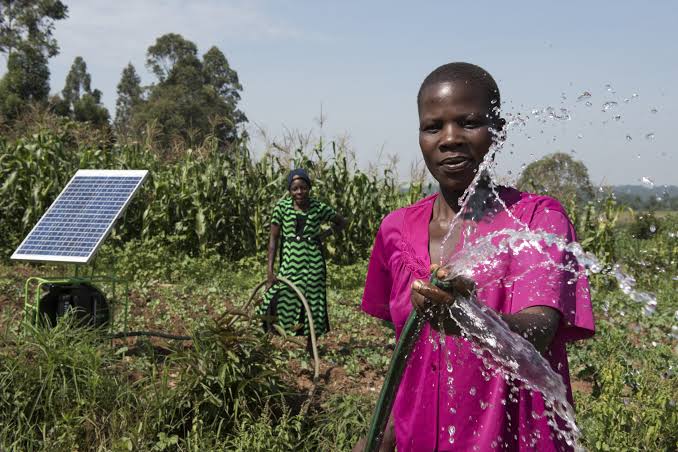
Expanding access to affordable renewable energy could help African countries increase farm productivity, process more agricultural produce and build food systems that are better able to withstand climate change, experts and officials said in Kigali.
The issue featured prominently at the Africa Food Systems Forum 2026, which is bringing together agriculture leaders and experts from Africa and beyond in Kigali from Aug. 31 to Sept. 4.
Speakers said energy should be treated as a central part of the food system rather than an issue limited to electricity supply. Farmers need reliable energy not only to produce food but also to irrigate crops, process harvests, add value to produce and move it to markets.
Bright Kanyonhore, Uganda’s minister of state for livestock, said renewable energy had already shown benefits in his country’s efforts to promote climate-smart agriculture.
“Using renewable energy has improved the way our programs operate, helped reduce land degradation and enabled farmers to increase their incomes,” Kanyonhore said.
He called for policies that encourage wider use of renewable energy while urging governments to do more to help farmers adopt modern technologies and practices.
Kanyonhore said farmers need better access to irrigation, high-yielding and climate-resilient seeds, fertilizer and agricultural extension services if they are to cope with changing weather conditions.
“We have to stop talking and start doing,” he said.
Financing remains another major obstacle, particularly access to affordable credit, Kanyonhore said. Uganda has responded by taking financing closer to farmers at the local level and helping them access quality seeds and equipment.
The country has also increased the use of agricultural extension workers to monitor farmers and provide guidance, a system Kanyonhore said has contributed to higher production in both crops and livestock.
Participants said investment in energy should therefore be considered alongside other efforts to transform Africa’s food systems, arguing that producing more food will have limited impact if farmers cannot process, transport and market what they produce.