
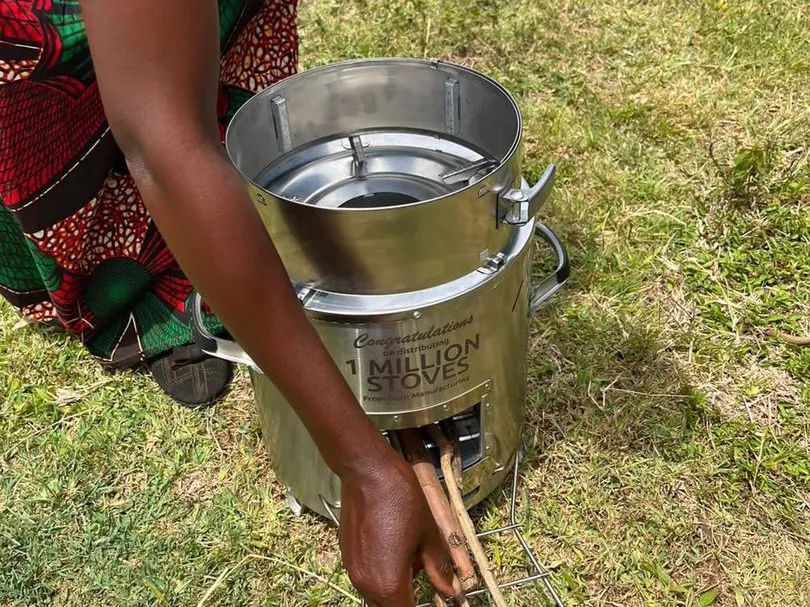
A cookstoves project in Rwanda has received 387,015 additional carbon credits in its fifth issuance, bringing the total number of credits expected to qualify for an international aviation emissions scheme to more than 2.3 million.
Canadian carbon markets company Base Carbon Inc. announced on October 15 that Verra, a carbon credit registry, had completed the latest issuance under the project, which it operates in partnership with DelAgua Group.
The credits were generated during a seven-month monitoring period, compared with the 12-month period covered by the project’s previous issuance in March 2026.
Base Carbon said the latest credits are expected to be included in Rwanda’s 2026 Biennial Transparency Report under the Paris Agreement. Their inclusion is anticipated to enable them to receive eligibility tagging for the first phase of the Carbon Offsetting and Reduction Scheme for International Aviation (CORSIA) without requiring insurance coverage.
CORSIA is a global scheme designed to address emissions from international aviation by allowing airlines to use eligible carbon credits to offset certain emissions.
Once the latest credits receive the anticipated eligibility tagging, the project will have issued a cumulative 2,346,827 credits eligible for the scheme since its inception, according to Base Carbon. The latest credits are held by DelAgua under an agreement that provides for revenue sharing between the two companies.
Base Carbon said the anticipated inclusion of the credits in Rwanda’s transparency report could eliminate associated insurance costs, potentially increasing the company’s net proceeds from their sale.
The company also expects the project to generate approximately 2.2 million additional carbon credits at regular six-month intervals during the remainder of its crediting period.
However, those future issuances, their eligibility tagging and their eventual sale remain subject to verification, regulatory requirements and other conditions outlined by the company.
Base Carbon said it was engaged in several carbon credit sale processes and remained focused on maximising the value of credits generated by the project.
Cookstove programmes can contribute to emissions reduction by helping households reduce reliance on conventional cooking fuels. Their climate benefits depend on factors including how the stoves are used and the emissions reductions demonstrated through project monitoring and verification.
Base Carbon provides financing, development expertise and operational resources to projects involved in carbon reduction and removal. Its Rwanda initiative is being implemented with DelAgua under a commercial agreement that includes sharing revenue from carbon credit sales.