
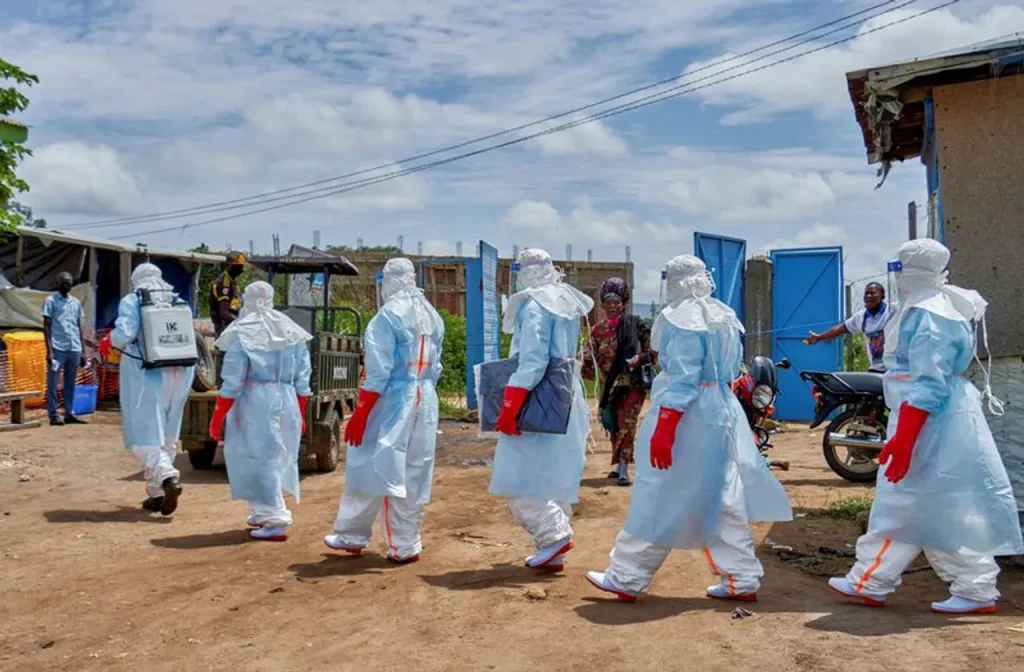
The death toll from the Democratic Republic of Congo’s latest Ebola outbreak has surpassed the country’s previous record, with 2,325 people reported dead since the outbreak was declared in May.
The latest government figures, released Sunday, showed 4,945 confirmed cases, including 101 new infections recorded in the previous 24 hours.
The number of deaths has overtaken the 2,299 fatalities recorded during Congo’s 2018-2020 outbreak, previously the country’s deadliest Ebola epidemic.
The current outbreak also became Congo’s largest by number of confirmed cases in late July, adding to concerns about the difficulty of containing the virus.
Health authorities are facing challenges including delayed detection of infections, limited health infrastructure, insecurity and resistance in some communities. These factors have made it harder to trace contacts and ensure patients receive treatment early.
The outbreak is caused by the Bundibugyo species of Ebola, for which there are no approved vaccines or treatments. Experimental vaccines and therapies are being evaluated, while researchers are studying whether existing Ebola treatments could offer protection.
The proportion of confirmed patients who have died has risen to 46%, from about 20% in early June, according to government data.
Health experts say the rise does not necessarily mean the virus has become more lethal. Instead, it may reflect continued delays in identifying infections and bringing patients to health facilities.
“Normally, as an outbreak progresses, the case fatality ratio should fall as contact tracing improves and patients are identified and treated earlier,” said Thomas Parisch, a public health specialist deployed to Congo with Médecins Sans Frontières.
Many cases are still being identified late, sometimes only after patients die in their communities, he said.
The outbreak is now second only to the 2014-2016 Ebola epidemic in West Africa, which recorded 28,616 cases and 11,310 deaths across Guinea, Liberia and Sierra Leone, according to the World Health Organization.
The virus also spread to neighboring Uganda, where authorities recorded 20 cases and two deaths before the country declared the outbreak over last month.
Ebola spreads through direct contact with bodily fluids from infected people, living or dead. It can cause fever, vomiting and diarrhea and, in severe cases, internal and external bleeding.