
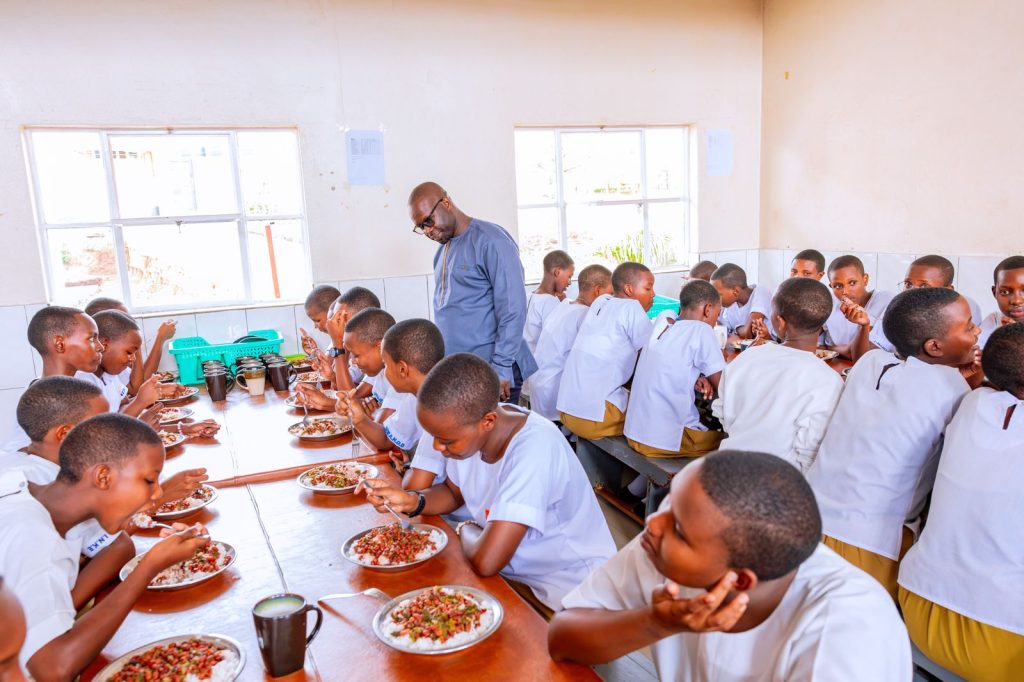
Rwanda has substantially increased government funding for school meals, with the allocation rising from 35 billion to 152 billion Rwandan francs, in a move officials say is helping improve children’s nutrition and keep more learners in school.
The increase was announced by Jean Damascène Nsengiyumva, director general responsible for school health and well-being at the Ministry of Education, during a visit to École Notre-Dame de la Providence in Karubanda, Huye District, on Tuesday.
The visit formed part of a nationwide assessment by ministry officials examining progress and challenges in the education sector.

Nsengiyumva said the school feeding programme had contributed to reducing school dropouts by addressing one of the difficulties that can prevent children from attending and concentrating in class: inadequate access to food.
But he acknowledged that maintaining the programme remained challenging, particularly as food prices rise and some parents fail to make their contributions on time.
The ministry is working with other stakeholders to address the difficulties, he said, adding that the government alone could not resolve all the problems affecting implementation.
The programme is part of Rwanda’s broader effort to improve the quality of education by linking children’s health and nutrition with their ability to learn.
At the school visited in Huye, that approach is reflected in a system that combines classroom education with agricultural production and livestock farming to support the institution’s food supply.
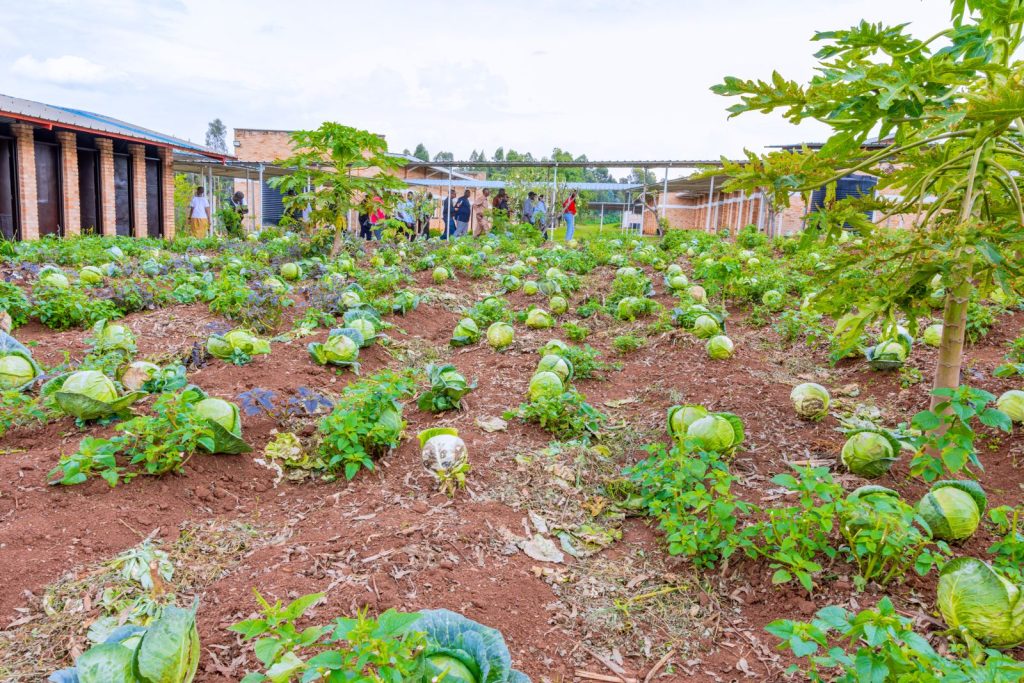
École Notre-Dame de la Providence, an all-girls school established in 1954, has 685 students. It uses about 10 hectares for agricultural and livestock activities, producing vegetables and fruit while keeping animals that contribute to its food supply.
Its farms grow cabbage, carrots, tomatoes, spinach, cucumber, eggplant and peppers, among other crops. Fruit trees, including avocado, also form part of the school’s agricultural activities.
The institution raises rabbits, pigs, cattle and chickens for eggs and meat. The livestock provides organic manure used to support crop production, helping the school connect food production with meal preparation.
School director Sister Clothilde Ayimana said support from the Ministry of Education and other partners had been important in improving the school’s feeding programme.
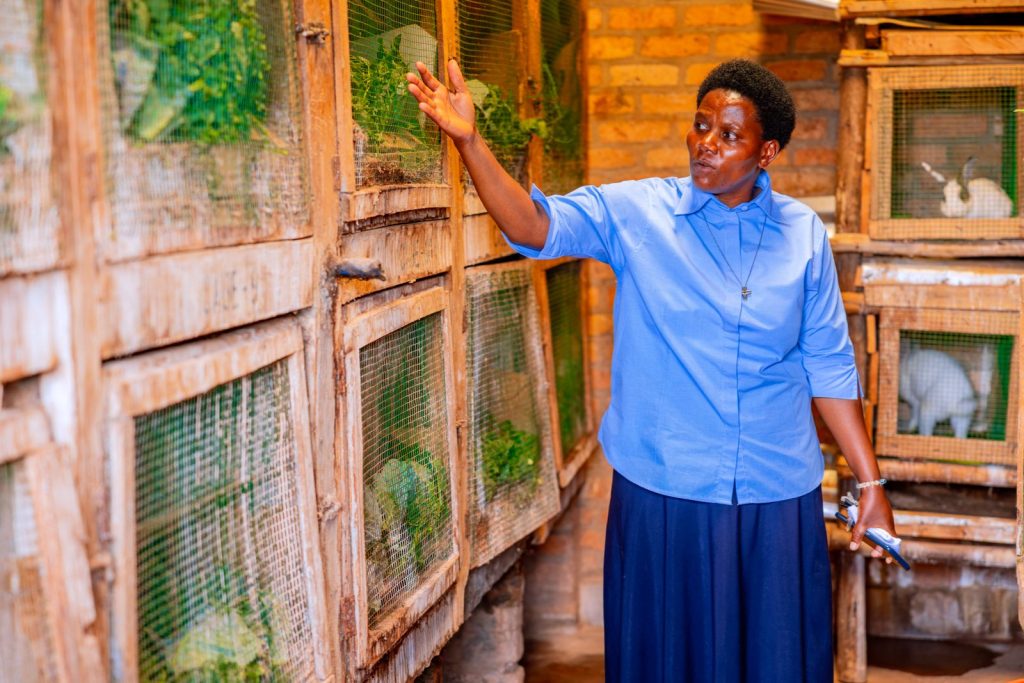
She said the changes had improved students’ diets and their general well-being. Ayimana also claimed that illnesses among students had declined by 98% since the school improved its food provision, although no independent health data was provided to substantiate the figure.
She said the school would not have achieved the same progress without the support of its partners.
The experience at Karubanda illustrates how some schools are using agriculture and livestock farming to supplement government-supported meals and improve the diversity of food available to learners.
However, rising market prices and delays in parental contributions remain challenges for the national programme. The government’s ability to sustain the increased funding and ensure that schools receive adequate resources will be important to maintaining the gains in student nutrition and attendance.
The expansion of school feeding represents an investment not only in education but also in children’s health and the conditions needed for them to learn.