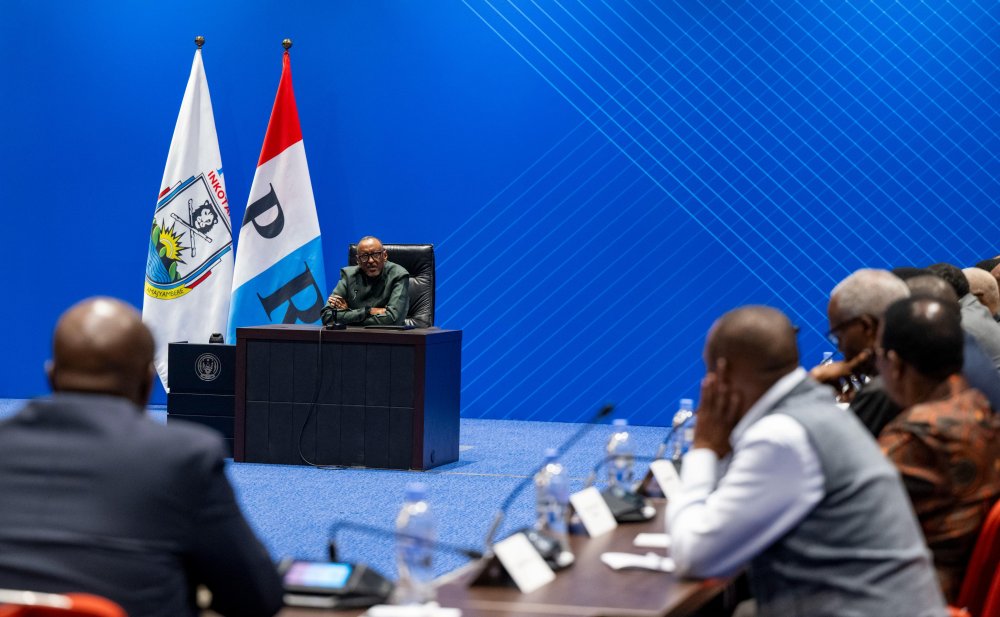


President Paul Kagame’s appointment to co-chair a new United Nations-backed commission on artificial intelligence (AI) has placed Rwanda among countries shaping global discussions on the future of the rapidly advancing technology.
Kagame will lead the AI for Good Global Commission alongside Marc Benioff, Chair and CEO of Salesforce, while International Telecommunication Union (ITU) Secretary-General Doreen Bogdan-Martin will serve as vice chair.
The commission was established by the ITU in partnership with UNESCO to promote the responsible use of AI, expand access to the technology and help countries use it to address development challenges.
Its first meeting will be held during the AI for Good Global Summit in Geneva, Switzerland, from July 7 to 10, bringing together more than 40 leaders from governments, international organizations and the private sector.
The commission will focus on strengthening trust in AI, supporting countries in building capacity and ensuring that developing nations benefit from advances in the technology rather than being left behind.
Speaking after his appointment, Kagame said technology should remain “a force for good” and called for stronger international cooperation to reduce inequalities and ensure more people benefit from AI-driven innovation.
The commission includes leaders from major technology companies, including Microsoft, Amazon, NVIDIA, Google, Qualcomm, Vodafone, MTN Group and Accenture, as well as representatives from the African Union, UNESCO, the World Trade Organization and several governments.
Kagame’s new role comes as Rwanda continues to position itself as a key player in Africa’s digital transformation. The country adopted a national AI policy, hosted Africa’s first AI summit in 2025 and has continued to promote responsible adoption of emerging technologies.
In June, Rwanda’s Cabinet approved the establishment of a National Artificial Intelligence Office, which is expected to support innovation, attract investment and strengthen digital governance.
AI is already being applied in Rwanda across sectors including healthcare, education, agriculture, justice and public administration as the country seeks to use technology to improve services and support economic development.
The creation of the global commission comes as the world faces challenges in ensuring equal access to digital technologies. About 2.2 billion people worldwide remain without internet access, with many living in developing countries, particularly in Africa.
Through the AI for Good Global Commission, Kagame joins global leaders working to ensure artificial intelligence develops in a way that creates opportunities for more people and countries.