
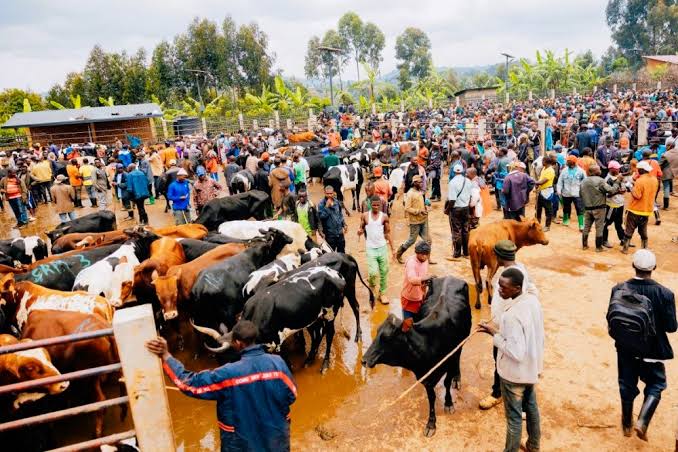
Livestock markets and meat sales have resumed in four districts of eastern Rwanda after health monitoring found no new signs of Rift Valley fever among animals or people for a month, an official said.
Nyagatare, Gatsibo, Ngoma and Kirehe are the first districts in Eastern province to have livestock restrictions lifted following the outbreak of the disease, known locally as Ubuganga bwo mu Kibaya cya Rift.
The Rwanda Agriculture and Animal Resources Development Board (RAB) placed six districts under quarantine on June 26 as authorities responded to the outbreak.
Eastern Province Gov. Pudence Rubingisa said authorities began easing restrictions about two weeks ago after daily testing found no new signs of the disease among livestock or people for a month.
Rubingisa said authorities started with Nyagatare and Gatsibo, where livestock markets had already been held twice since restrictions were lifted.
Livestock being sold in districts where restrictions have been lifted must first be tested to confirm the animals are healthy, he said. The animals have also been vaccinated against the disease.
Authorities are continuing to monitor Rwamagana, Bugesera and Kayonza. Rubingisa said the three districts could also be cleared in the coming days if testing continues to show no new cases.
The government plans to vaccinate livestock more than once a year as part of efforts to prevent future outbreaks. Rubingisa said all livestock would be vaccinated again in January 2027, including pregnant cattle, using a new vaccine intended to strengthen immunity.
He urged farmers not to eat animals that show signs of illness and warned against retrieving livestock carcasses after they have been buried.
Farmers were also advised to keep livestock in proper shelters and separate manure and waste from areas where animals stand or sleep to reduce conditions that attract mosquitoes, which spread the disease among animals.
Rubingisa also warned butcheries and restaurants against buying meat that has not been inspected.
Anyone selling or buying meat, whether for a butcher shop, restaurant or home, should have proof that it was inspected before being sold, he said.
Authorities have urged consumers buying meat for home use to ask for proof that it has been inspected.
Rwanda is continuing to monitor the remaining districts that were placed under restrictions as authorities assess the risk of further transmission.