

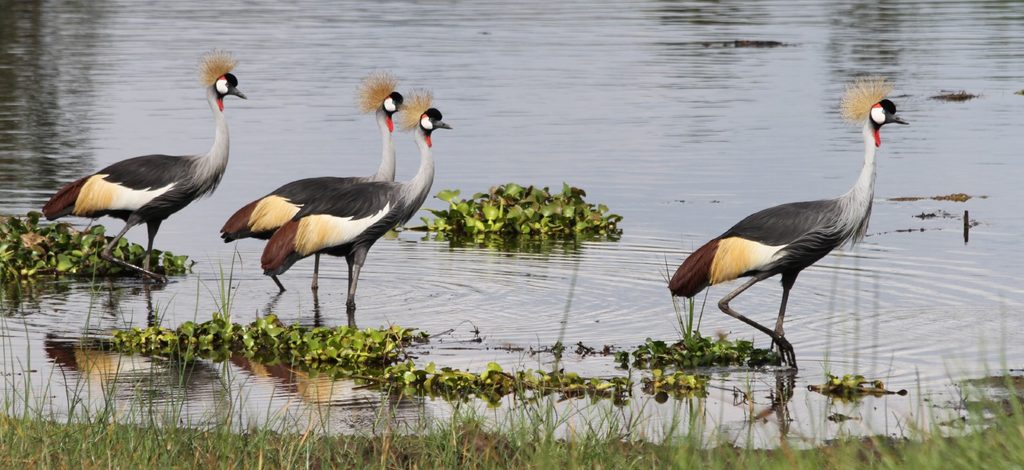
The Rwanda Wildlife Conservation Association (RWCA) has received the Africa Biodiversity Award for its work protecting the endangered grey crowned crane, whose population in Rwanda has increased to 1,438.
The award recognises the organisation’s approach to biodiversity conservation, which combines wildlife rescue, law enforcement and community participation, particularly among people living near important natural habitats.
The Fondation Biodiversity Award (FBVA) said RWCA’s work had helped stop the illegal capture and hunting of the birds while encouraging local communities to take an active role in their protection.
When Rwanda’s crane conservation programme began in 2015, fewer than 300 grey crowned cranes were estimated to remain in the wild. The latest national census, released in August 2026, counted 1,438 birds, marking a significant recovery for the species.
RWCA founder Dr Olivier Nsengimana said the initiative initially focused on people who kept cranes in their homes, hotels and private gardens. Some birds had their wings clipped to prevent them from flying away, while others were kept in unsuitable conditions that affected their health and ability to breed.
Rather than immediately taking the owners to court, the conservation team encouraged them to voluntarily surrender the birds and participate in their protection.
The rescued cranes were examined, treated and fitted with identification rings before being placed under care. Those capable of surviving in the wild were later released into Akagera National Park.
RWCA, formally established in 2018, has also trained local residents known as Community Conservation Champions to monitor wildlife, report threats and support habitat protection.
The initiative includes work around Rugezi Wetland, an internationally recognised conservation site under the Ramsar Convention. More than 130,000 indigenous trees have reportedly been planted there, with a survival rate of 95%, according to the award information.
The foundation also recognised efforts to involve former poachers and other residents in conservation, turning communities that once threatened wildlife into partners in protecting it.