

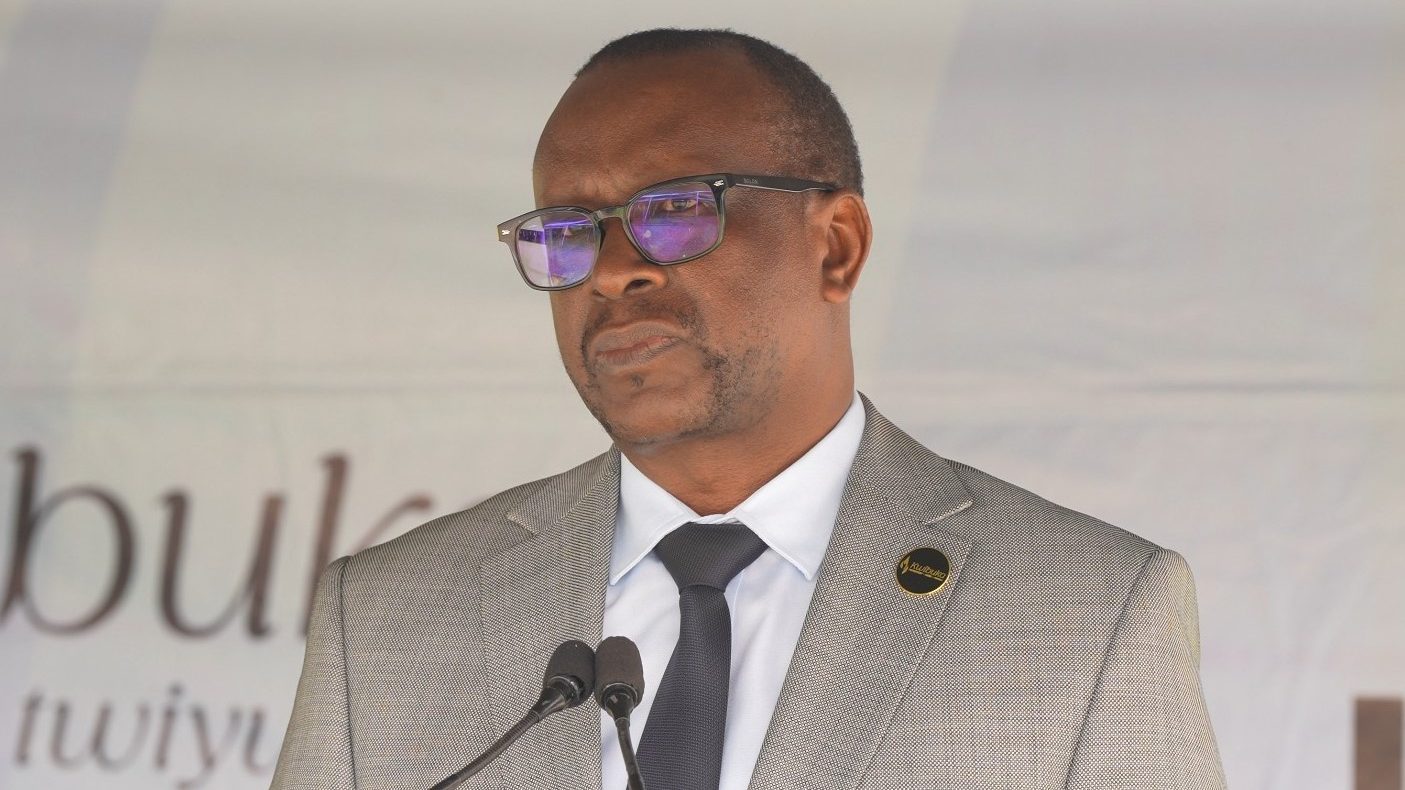
Minister of National Unity and Civic Engagement, Jean Damascène Bizimana, on Sunday urged citizens to guard against the ideology that led to the 1994 Genocide against the Tutsi, as the remains of 43 victims were reburied at the Nyanza Genocide Memorial.
The reburial took place during a commemoration ceremony in Busasamana Sector marking 32 years since the genocide. Survivors, residents and officials gathered to honor victims and reflect on the country’s efforts to preserve memory and promote unity.
Bizimana said understanding the roots of genocide ideology is essential to preventing its return and protecting national stability.
“Understand this ideology so that we may recognize its harmful aspects and prevent them, protect our country, and support the good leadership we have today. This leadership provides a positive direction for every Rwandan, something that did not exist under the governments of Presidents Kayibanda and Habyarimana, and had last been seen during the era of the kings. Therefore, we must protect, appreciate, and respect our leadership.”
The minister said continued remembrance and proper burial of victims plays an important role in honoring the dead and strengthening collective memory more than three decades after the genocide.

The ceremony also provided families and communities an opportunity to lay to rest remains recovered from different locations across the area.
Reflecting on the country’s past, Bizimana said those who carried out the genocide did not anticipate that victims would one day be honored and buried with dignity.
“The PARMEHUTU members and the Interahamwe never imagined that they could be defeated and that we would one day be able to bury our loved ones with dignity, honor their memory, and speak about the crimes of the genocidaires while drawing lessons from them.”
The Genocide against the Tutsi killed more than 1 million people between April and July 1994 in a period of about 100 days.
Since then, Rwanda has pursued policies aimed at promoting national unity, combating genocide ideology and preserving historical memory through education and commemoration programs.