
Rwanda is set to expand efforts to make agriculture more resilient to climate change after securing a €40 million ($43 million) financing package from the European Union aimed at improving productivity, strengthening irrigation and supporting farmers affected by changing weather patterns.
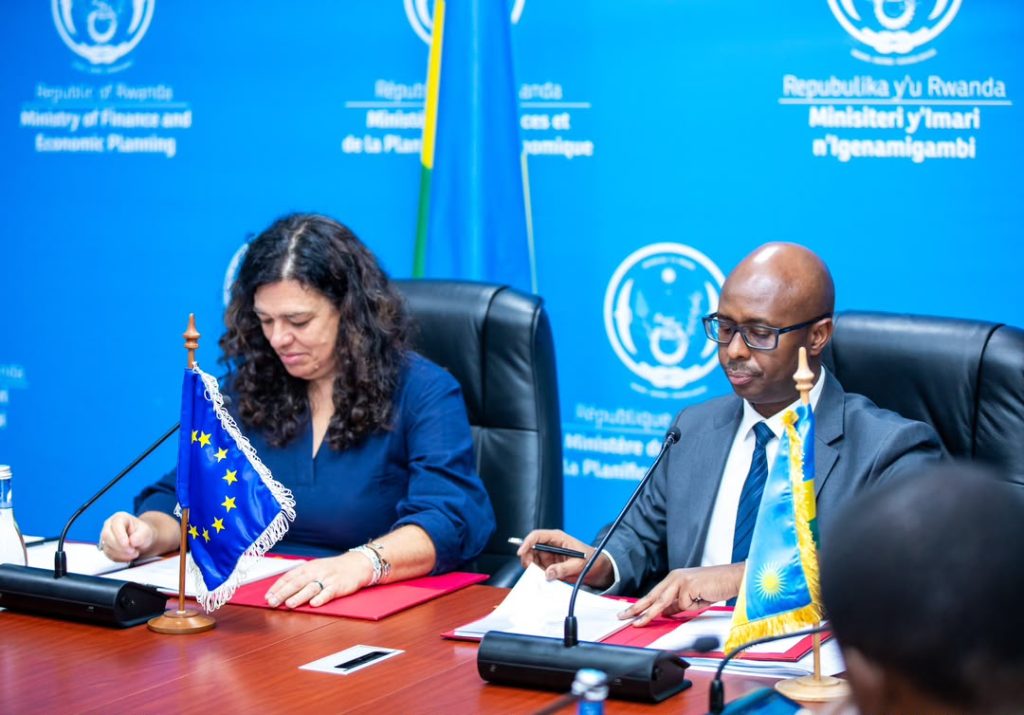
The agreement, signed on Tuesday by Finance and Economic Planning Minister Yusuf Murangwa and EU Ambassador to Rwanda Belén Calvo Uyarra, will support the second phase of the Climate-Smart Agriculture Budget Support Programme.
The programme will focus on strengthening agricultural policies, improving institutional capacity and scaling up measures designed to help farmers adapt to climate-related challenges.
Rwanda’s agriculture sector, which remains a key source of livelihoods and economic activity, has increasingly faced pressure from drought and unpredictable weather, particularly in parts of the Southern and Eastern provinces.
Agriculture Minister Dr. Telesphore Ndabamenye said the new funding would help address some of these challenges by increasing productivity per hectare and expanding irrigation systems.
“We need to increase agricultural productivity per hectare. Some districts have been affected by drought, so small-scale irrigation programmes need to be expanded,” he said.
The investment will support agricultural consolidation areas through improved soil management, erosion control, agroforestry, the use of climate-resilient seeds and tree varieties, as well as increased research and innovation.
Rwanda has identified 13,379 agricultural consolidation areas covering more than 495,000 hectares across the country. Authorities say each area has been assessed to determine farmers’ needs, with agronomists assigned to provide technical support.
EU Ambassador Belén Calvo Uyarra said the partnership reflected a shared commitment to addressing climate change while supporting Rwanda’s agricultural transformation agenda.
“Through this programme we are further strengthening our partnership in addressing climate change and supporting our shared goals of advancing climate-related initiatives and the agricultural sector,” she said.
Ndabamenye said agricultural growth must be linked with environmental protection, noting that farmers need access to affordable irrigation technologies, sustainable farming methods and continued support to improve resilience.
The latest financing builds on Rwanda’s wider cooperation with the EU under the 2021–2027 Multiannual Indicative Programme, through which the bloc has committed €390 million to support priority areas including education, skills development, youth employment, green growth and governance.
The new agricultural funding comes as Rwanda seeks to transform farming from a largely subsistence-based activity into a more productive and climate-resilient sector capable of supporting food security and rural livelihoods.