
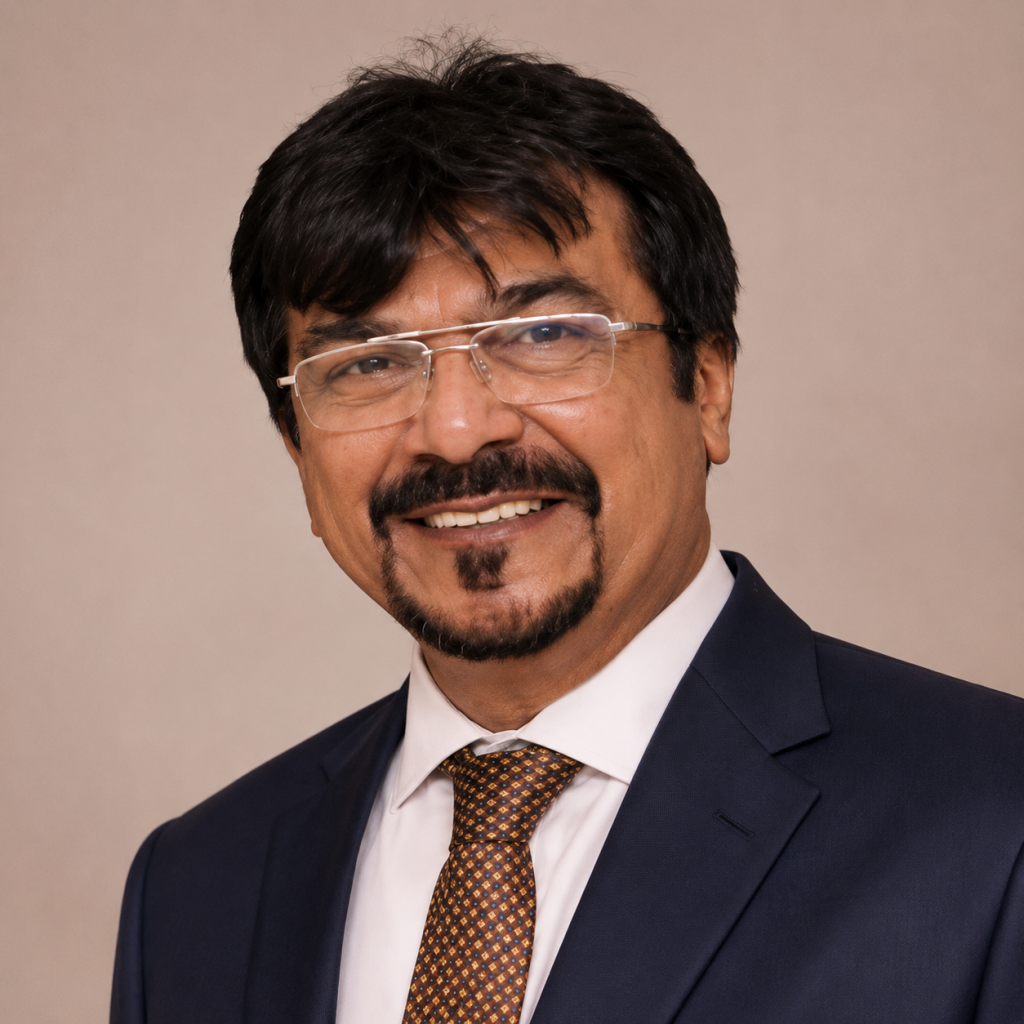
W hen Amjad Ali Merchant first passed through Kigali in 1990, Rwanda’s capital was a quiet stop on a long East African journey from Goma to Mombasa. He remembers limited infrastructure, no proper lighting, and a smalltown atmosphere rather than a capital city.
More than three decades later, that impression has been replaced by a life deeply rooted in Rwanda.
“I am originally from Karachi, Pakistan,” says Merchant, who is now Chairman of the Pakistani community in Rwanda. “But I have spent most of my life in Africa.
Rwanda is my second home.” Today, Merchant is an industrialist based in Kigali, running a furniture manufacturing company specializing in custom wooden designs for homes, offices, apartments, and government institutions.
He also leads the growing Pakistani community in Rwanda, now estimated at more than 500 people.
CHOOSING RWANDA
Although Merchant first encountered Rwanda in 1990, his decision to settle came much later.
In 2011, while visiting from Dar es Salaam, he spent several weeks in the country after a friend invited him for a short stay. What he found changed his outlook. “The development had already started,” he recalls.
“I saw order, cleanliness, and direction.” He studied the market and followed Rwanda’s national development vision closely, including the leadership of President Paul Kagame.
Having lived in Kenya, Tanzania and the Democratic Republic of Congo, Merchant says Rwanda stood out for its stability and organization.
Soon after that visit, he made a life-changing decision. He called his wife and son in Pakistan and asked them to prepare to relocate. “We are moving to Rwanda,” he told them.
Building a community When Merchant settled, the Pakistani community in Rwanda was very small of around 30 to 35 people with no formal structure.
Over time, informal coordination evolved into organized leadership.
In 2018, the Pakistan Association in Rwanda was officially established and later registered with the Rwanda Governance Board (RGB) as an NGO.
Merchant now serves as Chairman of the community, coordinating engagement between Pakistani residents, Rwandan institutions, and diplomatic representatives.
“It gave the community structure and recognition,” he says.
Today, the association works to strengthen ties between Pakistani and Rwandan communities and to support collective initiatives.
It also serves as the official link and platform for communication and cooperation between the High Commission of Pakistan accredited to Rwanda and the Pakistani community, as well as other relevant entities.
PROMOTING RWANDA ABROAD
Before the association was formalized, Merchant promoted Rwanda in Pakistan through newspapers such as Dawn and other business publications.
At the time, he says, Rwanda was largely unknown to many investors. “I wanted to show there is opportunity here,” he explains. “Rwanda is safe, stable, and open for business.” He encouraged businesspeople to visit Rwanda, study the market, and explore small and medium-scale investment opportunities.
TRADE OPPORTUNITIES
Merchant sees significant untapped trade potential between Rwanda and Pakistan, pointing to Rwanda’s steady economic transformation under President Paul Kagame as a strong foundation for deeper cooperation.
He noted that the country’s growth reflects “the power of vision, clarity of ideology and values, and consistent execution,” which has helped build new industries and attract investment.
He highlighted agriculture contributing about 35% of GDP and employing roughly 70% of the population as a key sector of interest to Pakistani investors, alongside opportunities in coffee, tea, and pyrethrum.
Merchant also pointed to growing engagement between the two countries, noting that efforts by Pakistan’s High Commissioner to Rwanda, Naeem Khan, have encouraged business exchanges, with over 40 entrepreneurs from sectors such as tea, rice, textiles, and surgical goods participating in expos and meetings.
Both sides, he added, have agreed to increase interactions and business delegations to further explore and expand bilateral trade. One key example is tea.
Rwandan tea is sold through auctions and exported via Mombasa in Kenya, where it is blended and rebranded before reaching global markets, including Pakistan.
He estimates that a large portion of tea consumed in Pakistan, particularly in Karachi, originates from Rwanda.
His view is that Rwanda should export directly to Pakistan. “This would benefit everyone,” he says. “Farmers would get better prices, Rwanda would earn more foreign exchange, and consumers would benefit from direct supply.”
He also highlights opportunities in Rwandan avocados, beans, and coffee, and in return, Pakistani exports such as surgical instruments, textiles, IT services, and agricultural machinery.
He has proposed introducing mini tractors suited to Rwanda’s hilly terrain, supported by bank financing to help small farmers improve productivity.
COMMUNITY DEVELOPMENT WORK
As Chairman, Merchant oversees several initiatives under the Pakistan Association in Rwanda.
The association runs programs to strengthen community relations and support education and skills development.
It has established committees, including a sports committee and a women’s sub-committee of eight members.
The women’s subcommittee focuses on rural outreach, providing training in baking, stitching, and cooking, as well as basic health awareness, including maternal education.
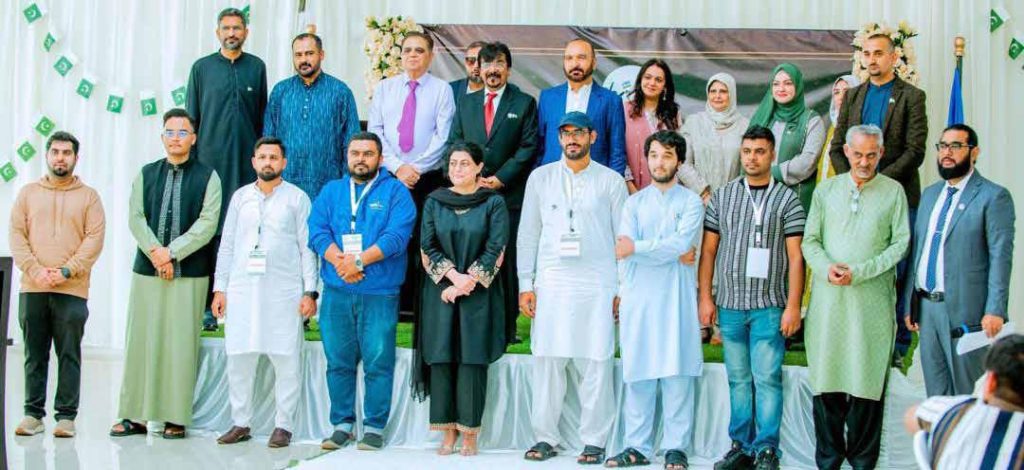
It also works to familiarize people with Pakistan’s rich and diverse culture by organizing traditional festivals, social gatherings, discussions, seminars, lectures, exhibitions, and workshops for both Rwandans and members of the Pakistani community.
“We want to reach rural communities where practical skills can make a real difference,” Merchant says.
The association also plans to support schools and local facilities where needed.
GROWING COMMUNITY AND RWANDA’S CHANGING IMAGE
The Pakistani community in Rwanda has grown from a few dozen people to an estimated 500 today.
Members include entrepreneurs, engineers, and professionals working in information technology, telecommunications, and infrastructure.
Some are involved in major systems and installations in Rwanda’s growing digital economy. Merchant says this reflects a broader shift in perception about Africa.
“People are beginning to see Africa differently,” he says. “It is not what it used to be in their imagination.” Merchant also recalls a recent visit by a foreign minister during a Commonwealth Heads of Government Meeting in Kigali.
The visitor was struck by the city’s cleanliness, safety, and stability no power cuts, clean streets, and safe movement even at night.
Such reactions, he says, are now common among firsttime visitors. “Rwanda is often compared with other African countries, and people are surprised,” he says. “It is stable, organized, and moving fast.”
LIFE ACROSS CULTURES
Having lived across Africa, Merchant speaks multiple languages fluently, including French, Swahili, Lingala, and little Greek, in addition to his native languages.
He says cultural understanding has been key to his integration and success. “If you understand the culture, people accept you,” he says. “Then you become part of society.” After decades across the continent, Merchant now sees Rwanda not just as a place of work, but as home.
“It is secure, organized, and full of opportunity,” he says. “For me, it is home.” From a young traveler passing through Kigali in 1990 to Chairman of the Pakistani community and industrialist in Rwanda, his journey mirrors the country’s transformation from a quiet capital to a fastgrowing hub of investment and opportunity.
And in that shared transformation, he has found purpose and belonging.