
Farmers in Rwanda’s Southern Province say improved farming methods have increased both the amount they harvest and the money they earn from crops, with some reporting several-fold increases in income.
The gains have been reported by farmers supported by the Climate-Resilient Agriculture Development (CDAT) project, a five-year programme launched by the Rwanda Agriculture and Animal Resources Development Board (RAB) in 2022.
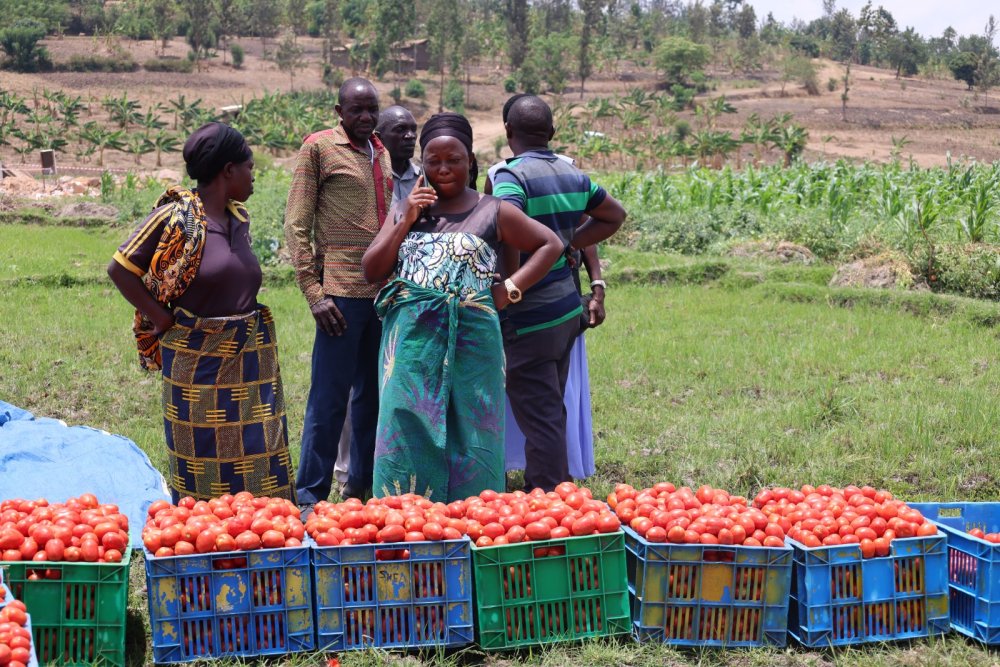
In Ruhango and Nyanza districts, farmers growing tomatoes in Kanyegenyege marshland say better seeds and training have helped them improve production and find better returns in the market.
Bavakure Boniface, president of Abiyunze Kinazi Cooperative, said farmers previously saved tomato seeds from their own harvests, a practice that often produced weak crops and poor-quality tomatoes.
After receiving training on seed selection, planting, fertiliser use, timing and crop protection, farmers saw tomato production rise from about seven tonnes per hectare to an estimated 13 to 14 tonnes.
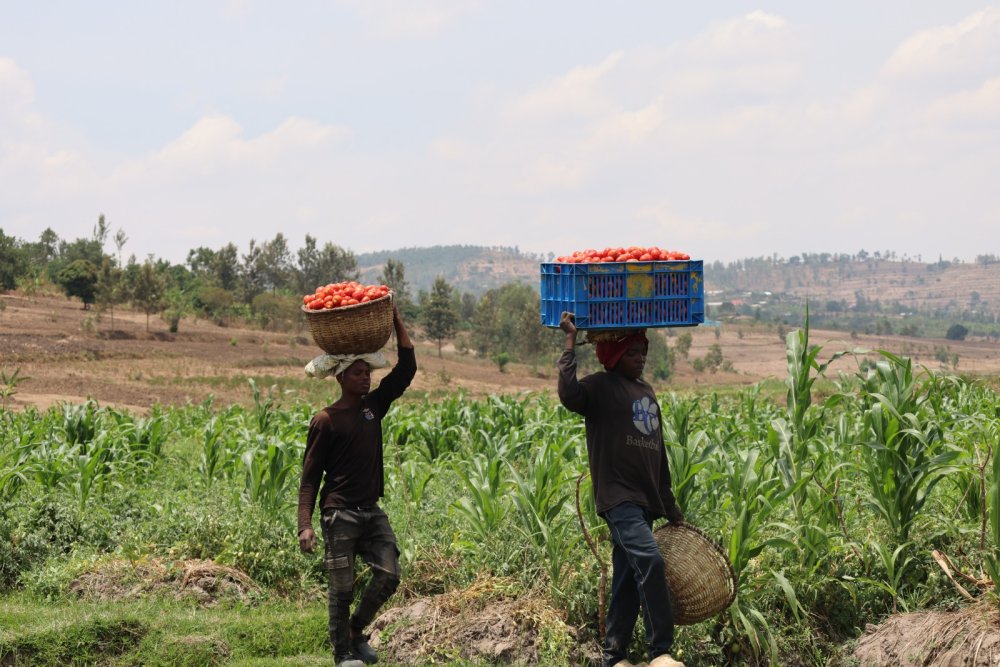
The price of a basket of tomatoes has also increased from about 3,000 Rwandan francs to 18,000 francs, Bavakure said.
Musabese Félicité, who grows rice and tomatoes on seven ares in Kanyegenyege, said she previously earned about 40,000 francs a year from tomatoes. From her latest harvest, she had already earned 100,000 francs while continuing to harvest.
She said the additional income has helped her meet household expenses, including paying school costs for her children.
In Nyanza, Nyandwi Charles, president of Coproriz Busoro, said farmers cultivating tomatoes, eggplants and other vegetables in the 74-hectare Burakari marshland have also seen higher returns.
A farmer cultivating five ares who previously earned about 150,000 francs from tomatoes can now make more than 600,000 francs because the crop can be harvested four times, Nyandwi said.
The project has also supported farmers in Gisagara District, where terraces and water-control structures were built on 40 hectares of a 52-hectare farming area in Kanyegenyege, Kigembe Sector.
Farmers there say onion yields have increased from about four tonnes per hectare to 18 tonnes after receiving training and improved seeds.
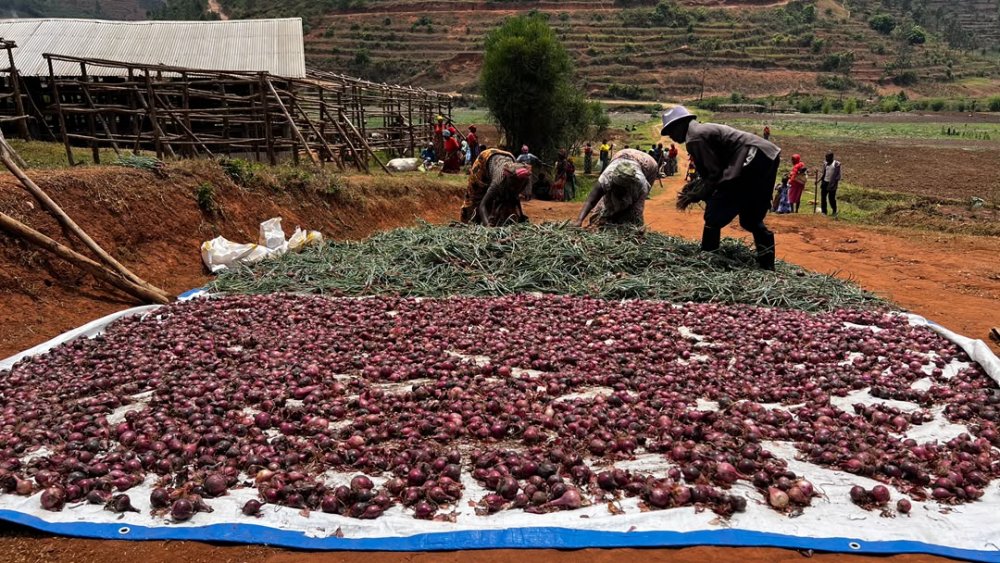
One farmer said the difference was clear when comparing current harvests with those from previous seasons, when production rarely exceeded four tonnes per hectare.