
Rwanda is investing heavily in irrigation to boost domestic fruit production as it seeks to reduce reliance on imports, with farmers already reporting bigger harvests, expanded orchards and growing access to export markets.
Much of the fruit sold in Rwanda is imported from neighbouring countries, while unreliable rainfall and limited irrigation have constrained local production. To address the challenge, the Rwanda Agriculture and Animal Resources Development Board (RAB) is implementing the Sustainable Agricultural Intensification and Food Security Project (SAIP II), which has allocated Rwf11 billion ($7.8 million) to irrigation in 20 districts between 2024 and 2026.
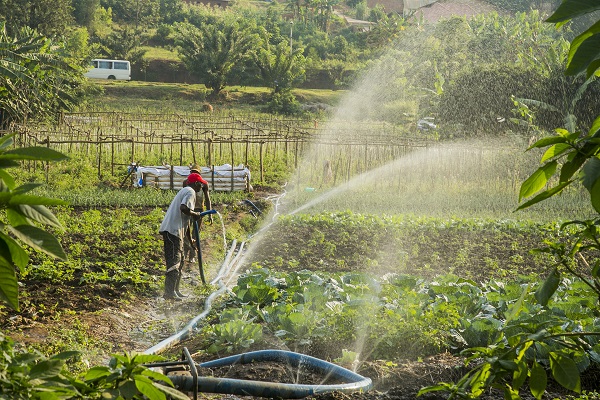
The project provides irrigation equipment, including solar-powered water pumping systems, and technical support to farmers cultivating up to 10 hectares, enabling production to continue during prolonged dry spells.
In Rwamagana District, avocado farmer Charles Nzabahimana said irrigation has transformed his cooperative’s operations. The group has expanded its orchard from one hectare to four hectares and now harvests avocados twice a year instead of once after installing a solar-powered system that pumps water from Lake Muhazi.
“We started with one hectare and expected only one harvest a year,” Nzabahimana said. “Now we have four hectares, and production is increasing as the trees mature.”
The cooperative recently harvested 260 kilogrammes of avocados and expects output to rise sharply in the coming seasons. It has also introduced raspberry production and is targeting export markets.
The impact is also visible in southern Rwanda. At the Catholic University of Rwanda’s Save campus in Gisagara District, a 10-hectare irrigated orchard producing passion fruit and raspberries has created 80 jobs. Managers expect raspberry production to reach about three tonnes a year and say demand from nearby Huye already exceeds what the farm can supply.
In neighbouring Nyanza District, avocado farmer Claver Kuyihura has installed irrigation across his 7.5-hectare orchard with support from SAIP II. His first 800 avocado trees now produce about four tonnes annually for buyers in Kigali and export markets.
For growers, irrigation is turning fruit farming into a more predictable commercial venture, with rising production beginning to test the limits of local supply rather than demand.