
Rwanda wants to move beyond using artificial intelligence developed elsewhere and take a more direct role in building technologies that address Africa’s own needs, Prime Minister Justin Nsengiyumva said Monday.
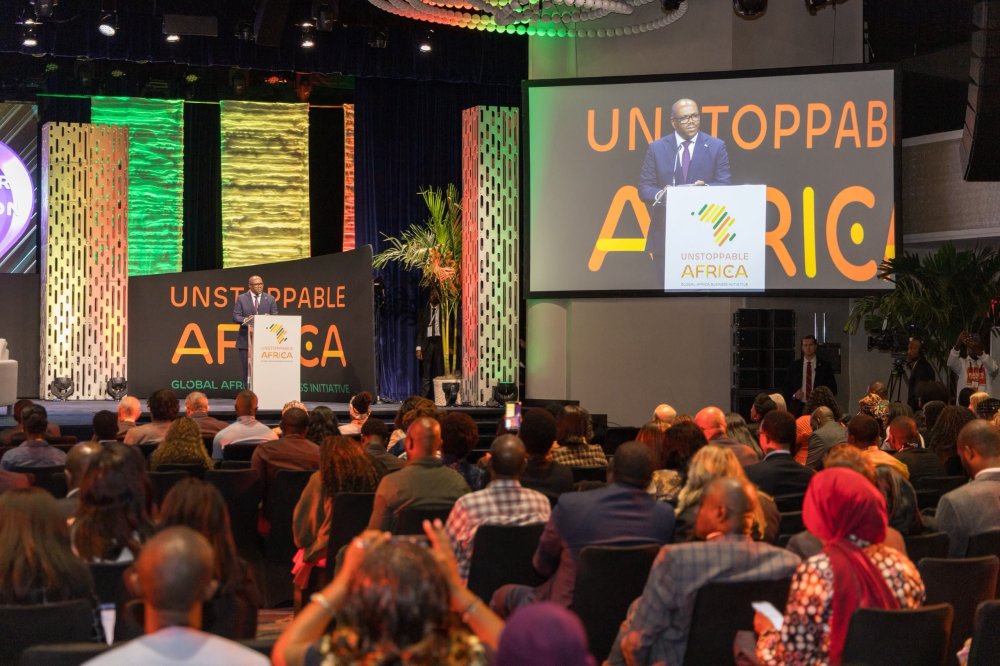
Speaking at the Unstoppable Africa 2026 forum in New York, Nsengiyumva said African countries should have greater control over the development and use of AI rather than remain mainly consumers of technologies created outside the continent.
“AI is often described as a major opportunity for Africa. That is true. But in many of our countries, it is still being used at a very low level compared with its potential,” he said.
“The question we need to ask is not only how AI is used, but who builds it and who has control over it.”
Nsengiyumva said Rwanda had been laying the infrastructure needed to increase its participation in the technology sector, citing the country’s fibre-optic network and 4G coverage, which he said had reached almost the entire population. Rwanda has also begun testing 5G technology, he said.
More than 250 government services have been put online, while the country has also developed a national digital payment system, according to the prime minister.
Rwanda adopted a National Artificial Intelligence Policy in 2023, becoming one of the first African countries to establish such a framework, Nsengiyumva said. In June 2026, the government also approved the creation of a national AI agency, which he described as the first of its kind in Africa.
But he said access to affordable equipment and energy remained among the obstacles facing countries seeking to develop AI and other digital technologies.
“Governments cannot afford to provide all the infrastructure their citizens need to carry out every digital activity,” he said.
For Rwanda to play a meaningful role in AI development, Nsengiyumva said the country would need skilled people and stronger access to data, computing capacity and energy.
“I assure you that Rwanda has an ambition to be an active partner in shaping the future of AI. But participating in this journey requires more than data, the ability to process it and energy. It requires people with knowledge and skills,” he said.
He called for greater cooperation among African countries, common rules across the continent and systems that allow digital products to expand across national borders.
“We are not satisfied with being only consumers of technology in Africa. We want to build it, adapt it to our circumstances and deploy it at scale according to the needs of our people and the opportunities we have,” he said.