
Rwanda is strengthening practical renewable-energy training at universities as it seeks to develop skills needed to expand the use of alternative energy and reduce reliance on costly conventional electricity.
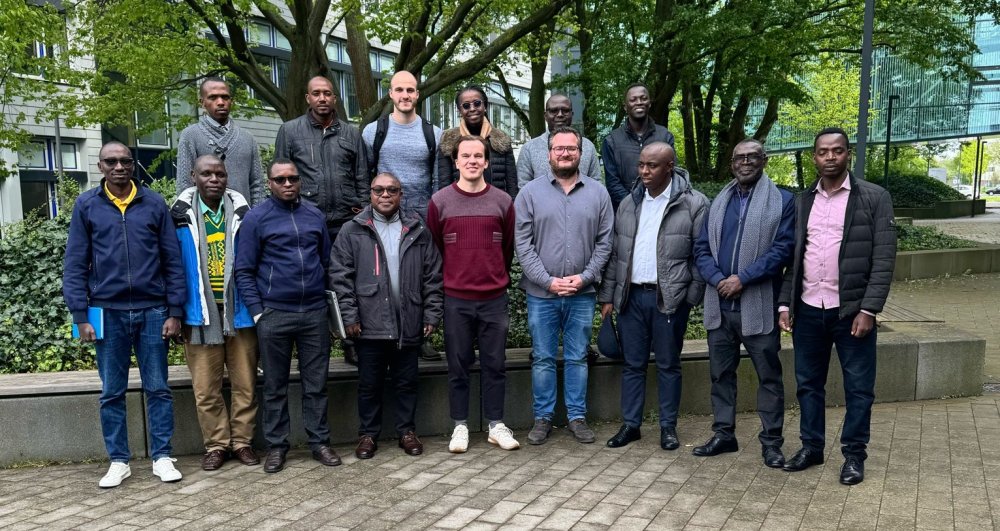
Twenty lecturers and six students from four Rwandan higher learning institutions have returned from training and academic exchanges in Europe under the three-year GREATER project, which links renewable-energy education to labour-market needs.
The participants are from the University of Rwanda, RP Tumba College, INES Ruhengeri and UTAB. The project brought the institutions together with four European universities and invested more than 1.3 billion Rwandan francs in staff and student exchanges, curriculum development and community renewable-energy projects.
Jean Bosco Hategekimana, a renewable-energy lecturer at RP Tumba College, said training at Hochschule Bonn-Rhein-Sieg in Germany had strengthened his practical skills.
“We learned how to make solar panels from scratch,” Hategekimana said at the project’s closing in Kigali on Sept. 3.
He said the training also covered technology for remotely monitoring electricity generated by solar panels.
The skills could help institutions cut electricity costs. Hategekimana said RP Tumba College spends about 4 million francs a month on electricity, compared with less than 1 million francs it could spend using a renewable-energy system.
The college has applied its experience in a project to install solar systems for residents of Muyanza Model Village in Rulindo district who previously could not afford electricity.
Eng. Pascal Gatabazi, a senior technical adviser at the Ministry of Education, said Rwanda was shifting its focus from increasing the number of university graduates to improving their skills.
“We need to move away from numbers and focus on skills,” he said, adding that higher education should offer programmes aligned with labour-market needs and provide students with trained lecturers and practical equipment.
Prof. Paolo Ciampolini, GREATER coordinator, said the project aimed to strengthen practical training so students could develop renewable-energy equipment locally, reducing reliance on expensive imports.
Rwanda aims to have renewable energy account for 50% of electricity used in the country by 2050.