

Rwanda is calling on countries to move beyond drafting artificial intelligence strategies and focus instead on implementing practical systems that deliver measurable public benefits.
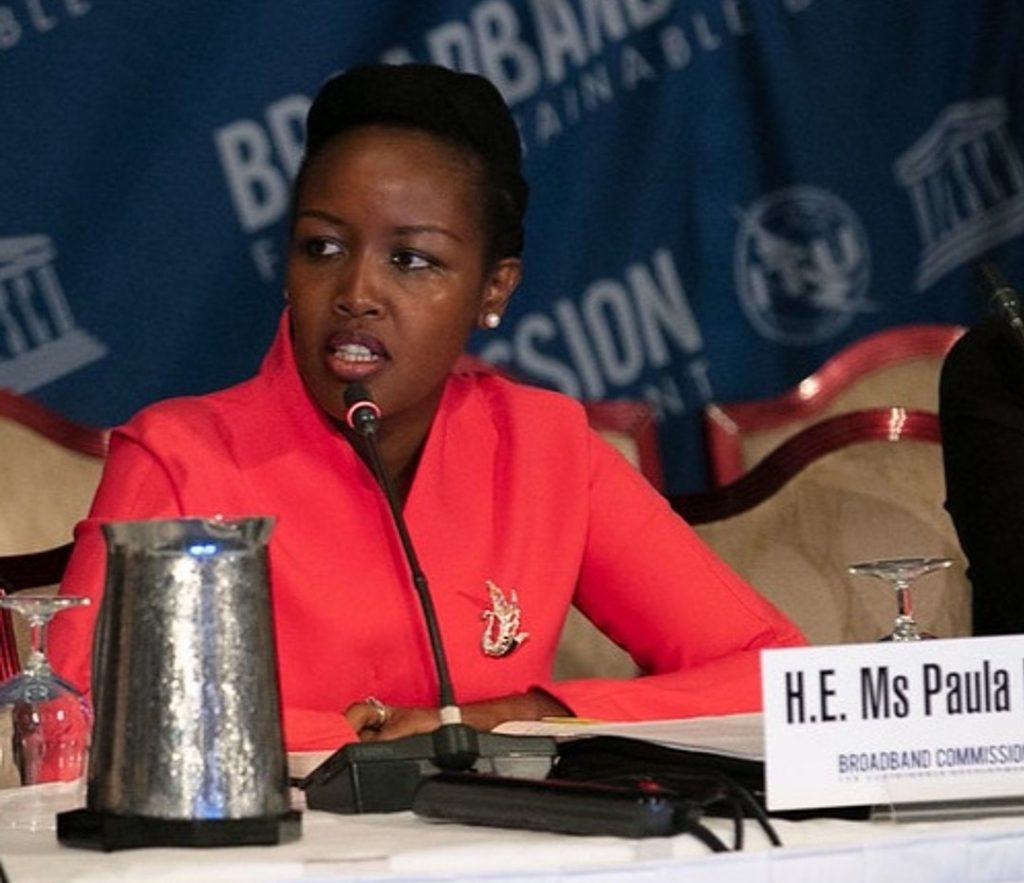
Speaking at the World Summit on the Information Society (WSIS) Forum 2026 in Geneva, Rwanda’s Minister of ICT and Innovation Paula Ingabire said governments risk falling short if AI remains at the level of policy design without effective execution frameworks.
Ingabire made the remarks during a panel discussion focused on how countries can translate national AI ambitions into operational systems that support public service delivery and economic development.
The session brought together policymakers and technology experts from across Africa, including Egypt, to examine gaps between AI policy formulation and implementation.
Speakers highlighted challenges such as limited technical capacity, infrastructure constraints and the need for stronger coordination between governments, private sector actors and development partners.
They also emphasized investment in digital skills and institutional capacity as key requirements for deploying AI in sectors such as healthcare, education and public administration.
Participants included Crystal Rugege of the Rwanda Centre for the Fourth Industrial Revolution (C4IR), Dr. Hoda Baraka, who leads implementation of Egypt’s national AI strategy, and John Kamara, CEO of CORTEX Africa and the AI Center of Excellence. The panel was moderated by Robert Kainamura.
Panelists said countries should not be judged by the number of AI strategies they produce, but by how effectively they implement them and the real-world impact achieved.
The WSIS Forum 2026, held in Geneva, brings together governments, development partners and technology stakeholders to discuss how digital technologies can accelerate sustainable development and improve public services.