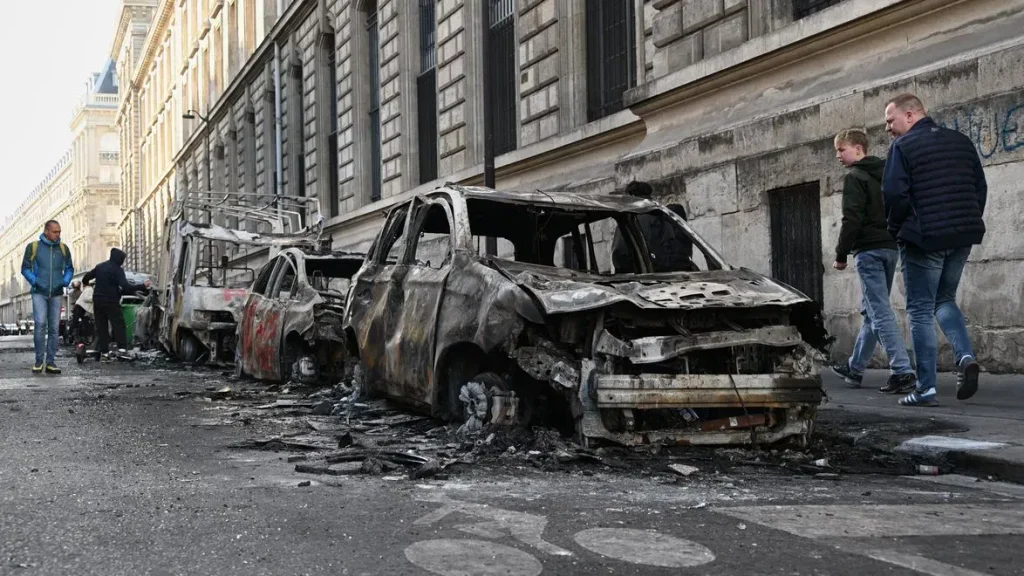

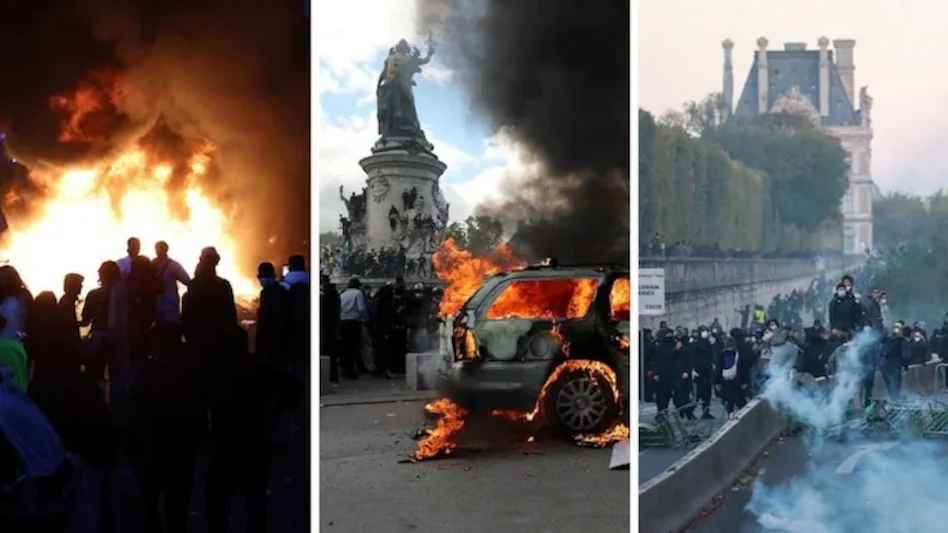
French authorities have imposed overnight curfews in Paris and several other cities after days of protests over the cost of living escalated into widespread rioting, looting and clashes with police.
Prime Minister Sébastien Lecornu said the restrictions had helped restore calm overnight, while warning that further curfews could be introduced where necessary.
“Targeted curfews have contributed to the calm of this night,” Lecornu wrote on X on Tuesday, thanking police officers, gendarmes and local officials for enforcing the measures.
He said decisions on further restrictions would be made locally by prefects in coordination with mayors.
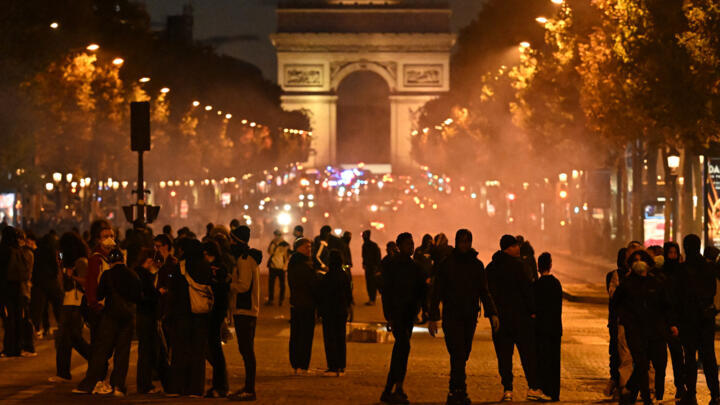
The curfews took effect on Monday night in cities including Paris, Bordeaux, Nice and Lyon, following a weekend of unrest that damaged businesses and public buildings. Demonstrators have also accused police of using excessive force.
Interior Minister Laurent Nuñez said on Monday that 2,513 people had been taken into custody during the protests, with 67 imprisoned. He added that dozens of judicial investigations remained underway.
Around 60,000 police officers and other security personnel had been deployed nationwide, Nuñez said. However, he acknowledged that authorities had struggled to contain the unrest in major cities, including Paris, Marseille and Lyon.
“You couldn’t look shopkeepers in the eye after hundreds of shops had been looted and say we hadn’t lost control,” he told French radio, blaming the violence on rioters, looters and what he described as ultra-left militants.
One of the most serious incidents occurred in Limoges, central France, where a historic town hall was set on fire on Saturday during the demonstrations.
Justice Minister Gérald Darmanin said the national anti-terrorism prosecutor’s office was assessing whether to take over the investigation into the blaze.
“The fire at Limoges town hall affects us just as much as that of Notre-Dame,” Darmanin wrote on X, referring to the 2019 fire that severely damaged Paris’s Notre-Dame Cathedral.
The demonstrations began in September as a student-led campaign for education reforms but have since broadened into a movement demanding action over rising living costs.
The unrest comes months before France’s presidential election in April 2027, which will mark the end of President Emmanuel Macron’s second term.
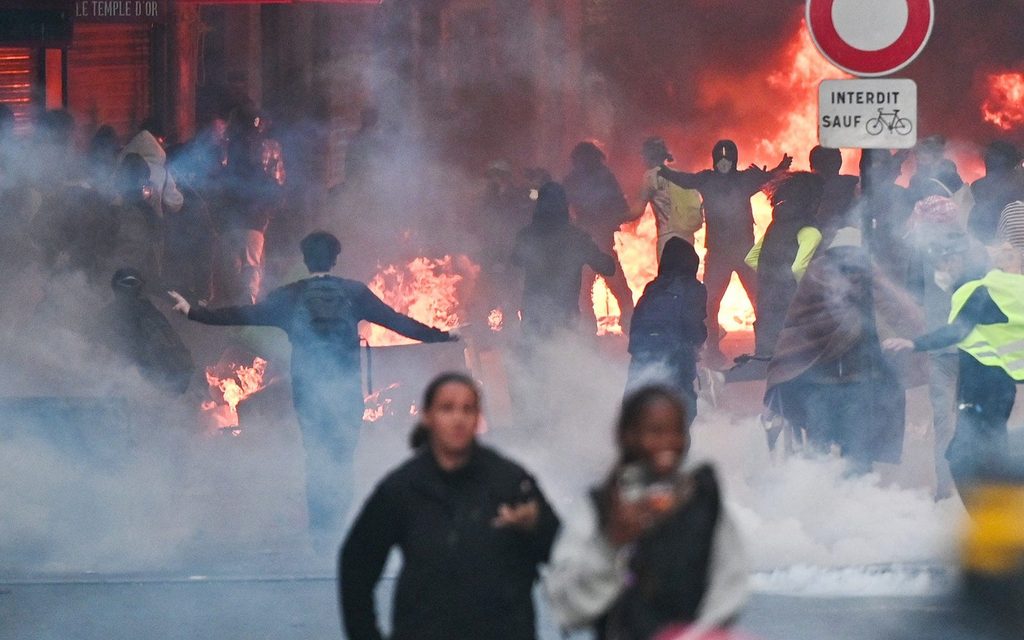
The protests are part of wider discontent over living costs across Europe. Demonstrations over education, housing and economic pressures were also reported over the weekend in Belgium, Spain, Portugal, Italy, Greece and Albania.
In Italy, Prime Minister Giorgia Meloni accused people she described as criminals of exploiting demonstrations to provoke confrontations and create disorder after clashes between protesters and police in Milan.
Some luxury shops in the city’s historic centre reportedly closed early on Monday and boarded up their entrances amid fears of further unrest.
In Lisbon, protesters established a tent camp in Rossio Square to demand government action on rising rents and property prices.
Portuguese Prime Minister Luís Montenegro acknowledged the concerns behind the demonstrations but warned against importing instability into Portugal.