
Rwanda and Pakistan’s diplomatic relationship, established in July 1962, has gradually evolved from modest post-independence engagement into a steadily expanding partnership anchored in diplomacy, trade, defence, education, and growing economic cooperation.
Over the decades, what began as limited contact has transformed into a more structured and practical relationship shaped by institutional engagement and increasing exchanges between the two countries.
For many years, the relationship developed at a measured pace, with a notable early milestone in 2000 when Rwanda appointed an Honorary Consul in Pakistan, signalling an initial step toward strengthening diplomatic outreach.
A more significant shift came in 2021 when Pakistan established its High Commission in Kigali, creating a permanent diplomatic presence in Rwanda and opening new channels for political and economic cooperation.
Until mid-2024, Rwanda’s diplomatic affairs in Pakistan were managed through its Embassy in Beijing, reflecting the absence of a resident mission in Islamabad at the time.
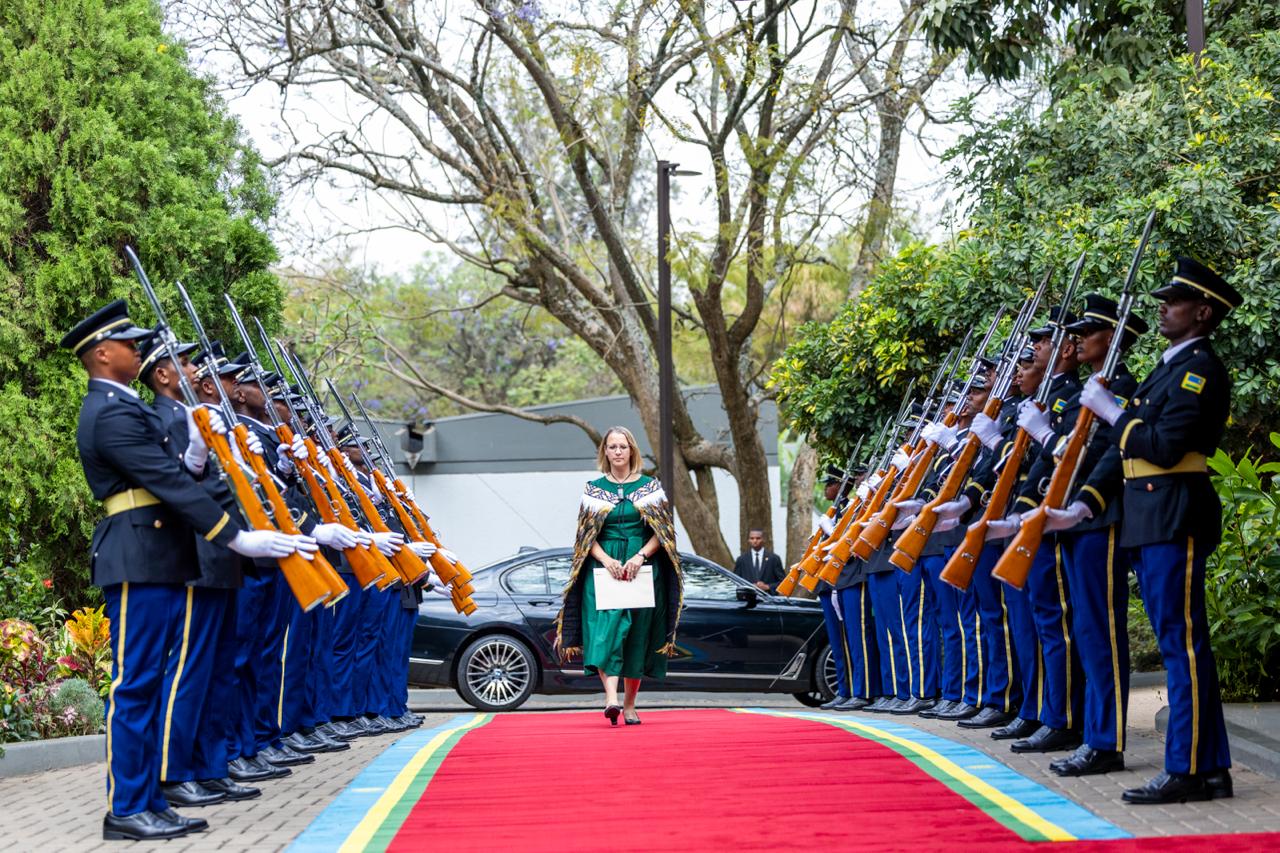
A turning point in the relationship came in 2024 when Rwanda appointed its first resident High Commissioner to Pakistan, Harerimana Fatou, who presented her credentials to President Asif Ali Zardari in Islamabad on July 15, 2024.
This development marked Rwanda’s full diplomatic presence in Pakistan for the f irst time, strengthening direct engagement between the two capitals and signalling a new phase in bilateral relations.
Since then, Pakistan’s diplomatic mission in Kigali, led by High Commissioner Naeem Khan, has continued to play an active role in advancing cooperation, particularly in trade and investment.
In recent years, political dialogue and institutional exchanges have intensified, supported by increased visits from senior officials, parliamentarians, and defence leaders.
These engagements have helped broaden cooperation beyond traditional diplomacy into more practical areas such as economic development and security collaboration.
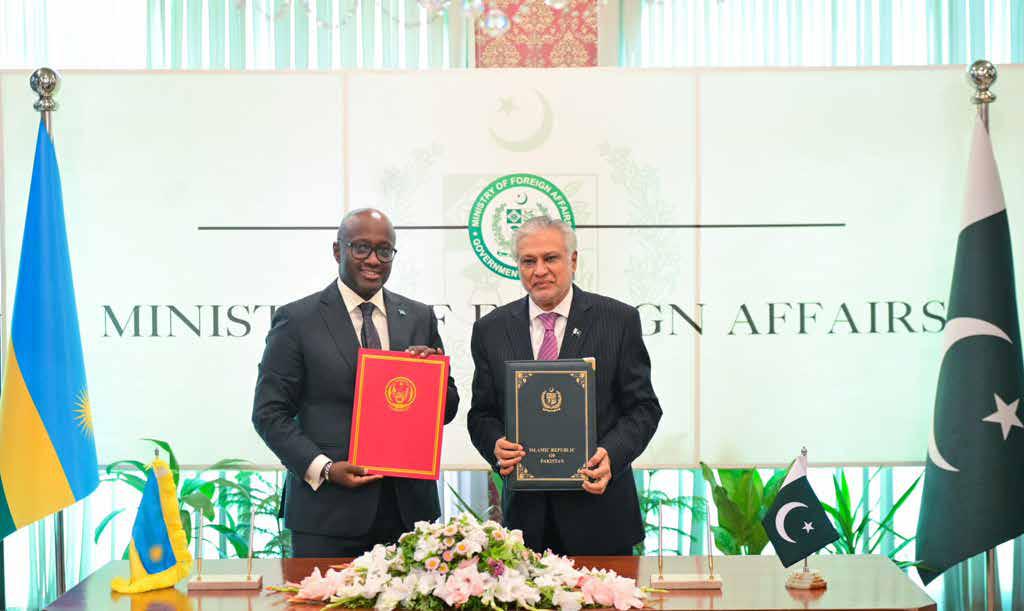
A major milestone in this process was the signing of a Memorandum of Understanding (MoU) on bilateral political consultations in January 2025, establishing a structured framework for regular engagement between the two foreign ministries The agreement further expanded cooperation into trade and investment, defence and security, agriculture, education, science and technology, and cultural exchange, reflecting a shared intention to institutionalize and diversify bilateral relations.
Following this, military-level engagements also gained momentum, with Pakistani defence officials visiting Rwanda for discussions with the Rwanda Defence Force, focusing on training cooperation and broader institutional collaboration.
The visits also included exchanges at key national institutions in Kigali, reinforcing the historical and diplomatic depth of the relationship. Trade has emerged as one of the most dynamic components of the partnership, recording notable growth in recent years.
Bilateral trade has increased from approximately 34 million US dollars to over 70 million US dollars, reflecting expanding commercial activity and growing confidence between business communities.
Rwanda’s tea remains a key export to Pakistan, while coffee has also gained increasing traction in the Pakistani market.
At the same time, Rwanda is exploring new export opportunities in agricultural commodities such as beans, lentils, pulses, and avocados, while Pakistan continues to export rice, textiles, surgical instruments, sports goods, and technology-based products to Rwanda.
High Commissioner Naeem Khan notes that the strength of the relationship lies in its complementary economic structure, emphasizing that both countries supply goods the other does not produce at scale.
“Pakistan does not produce coffee or avocados commercially, while Rwanda does not produce rice or cotton at scale. Yet both countries are major consumers of these products,” he observed, underscoring the natural economic synergy between the two economies.
Investment cooperation has also gained increasing attention, with Pakistan positioning Rwanda as a strategic gateway into East and Central Africa.
Leveraging Rwanda’s stability, governance, and access to the African Continental Free Trade Area, both sides are exploring joint ventures in sectors such as agroprocessing, textiles, pharmaceuticals, ICT, and manufacturing.
The idea of establishing production bases in Rwanda for re-export to regional markets is increasingly shaping the economic dimension of the relationship.
People-to-people and institutional ties are also gradually strengthening. Around 500 Pakistani nationals currently reside in Rwanda, engaged in sectors such as hospitality, automotive trade, and information technology, contributing to growing cultural and economic interaction between the two societies.
In parallel, cooperation between chambers of commerce and private sector institutions has expanded, supporting structured business engagement and facilitating investment dialogue. Education and skills development have also become an important pillar of cooperation.
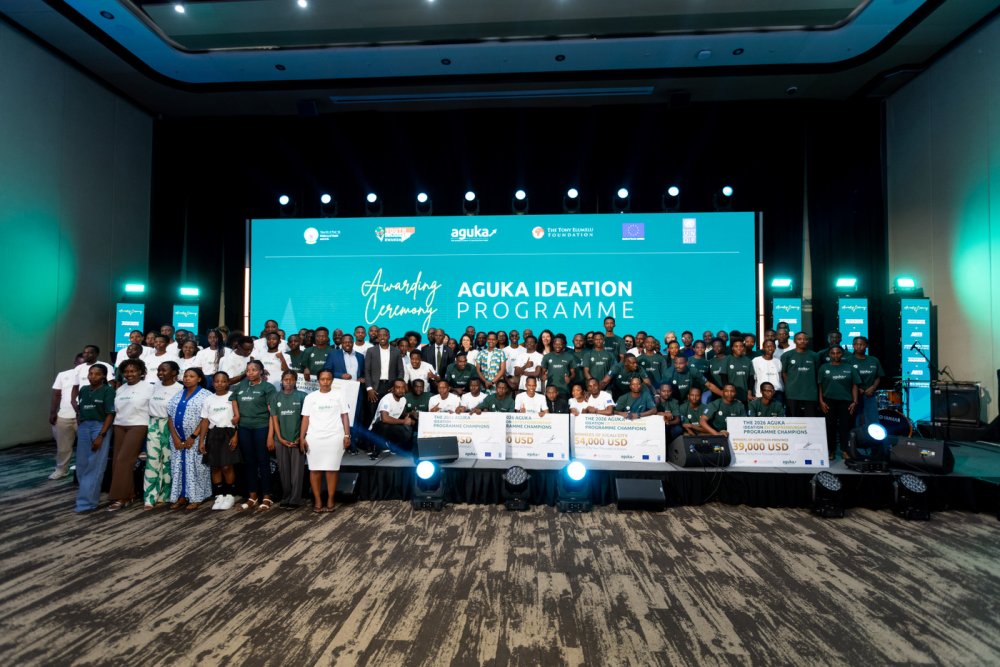
Through training programmes and exchange initiatives, Rwandan and African participants have gained exposure to diplomacy, communication, entrepreneurship, and international trade.Scholarship opportunities continue to expand, reflecting a growing emphasis on human capital development as part of the broader bilateral agenda.
Recent initiatives have further reinforced this momentum, including Rwanda’s first-ever coffee exhibition in Pakistan held in Islamabad in January 2026, which showcased Rwandan coffee to Pakistani buyers and investors.
The event highlighted Rwanda’s efforts to diversify export markets while strengthening its presence in South Asia, particularly within Pakistan’s large consumer base.
As both countries continue to deepen engagement across multiple sectors, the relationship is increasingly defined by practical cooperation and shared economic interests rather than formal diplomacy alone.
With embassies now operational in both capitals, trade steadily rising, and collaboration expanding into defence, agriculture, education, and investment, Rwanda–Pakistan relations are entering a more structured and opportunity-driven phase.
The trajectory suggests a partnership that is not only growing in scope but also becoming more strategically aligned with long-term development goals on both sides.