
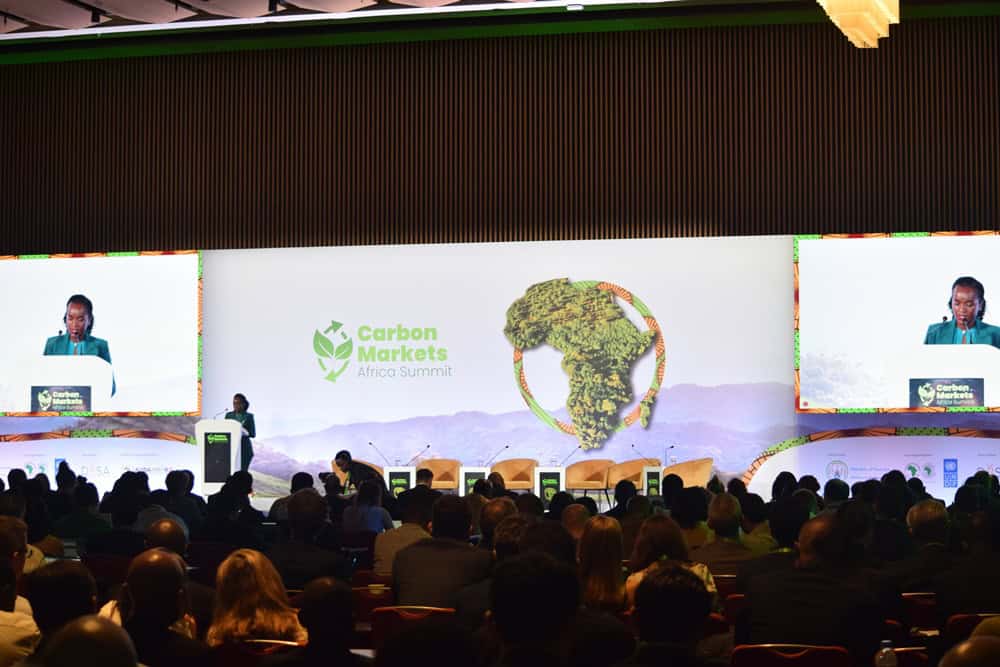
Rwanda is exploring a plan to use part of the revenue from carbon credit transactions to prepare and finance new climate projects, Environment Minister Dr. Bernadette Arakwiye said on Wednesday, October 14, at the Carbon Markets Africa Summit in Kigali.
The proposed arrangement would channel a share of the proceeds through the Rwanda Green Fund to help cover the early costs of developing projects, as the government seeks to expand carbon finance beyond a market dominated by improved cookstove initiatives.

“In Rwanda, we are exploring how a share of the proceeds from carbon transactions can be recycled through the Rwanda Green Fund into the preparation and pre-financing of new projects so that today’s credits help build tomorrow’s pipeline,” Arakwiye said.
The minister did not announce an approved scheme, a funding allocation or a timeline for implementation.
Project developers often need money for feasibility studies, baseline data, validation and monitoring systems before they can secure investors or generate verified carbon credits. Arakwiye said Rwanda continued to face difficulties in preparing promising projects for carbon finance and funding initiatives that were technically ready but unable to proceed.
Cookstoves dominate issued credits
Rwanda has registered 29 carbon market projects in sectors including forestry, agriculture, land conservation, electric mobility, waste management and renewable energy. However, improved cookstove projects account for about 87% of the country’s issued carbon credits, according to Arakwiye.
The figure is also recorded in Rwanda’s official carbon market data using figures through December 2020, meaning it should not be interpreted as a new breakdown of credits issued in 2026.
“This is an achievement worth recognizing, but it also tells us something important, that our markets remain too concentrated in interventions that are easier to measure, easier to finance, and easier to sell,” she said.
Arakwiye called for more investment in renewable energy, electric mobility, sustainable waste management, industrial decarbonisation and nature-based solutions. Agriculture, which supports millions of livelihoods across Africa, also offers opportunities to reduce emissions but remains difficult for many projects to finance.
Financing and transparency
The minister identified three barriers to expanding Rwanda’s carbon market: projects that have not been structured for carbon finance, a shortage of specialists able to assess project viability and monitoring requirements, and a lack of early-stage funding.
She called for carbon credit methodologies suited to African conditions, dedicated project-preparation funding and stronger long-term demand for high-quality credits. Buyers, she said, should offer fair prices and longer-term purchase agreements rather than rely on uncertain demand and short contracts.
Arakwiye also stressed that market growth must be accompanied by transparent transactions, credible verification and fair benefit-sharing arrangements. Governments should establish clear authorisation procedures and reliable systems for tracking credits, while project developers should disclose how revenues are distributed.
“Benefits cannot be fairly shared from revenues that cannot be seen,” she said.
Carbon credits represent verified reductions or removals of greenhouse gas emissions and can generate funding for climate-related projects. International transfers under Article 6 of the Paris Agreement require careful accounting to prevent the same emissions reductions from being counted more than once.
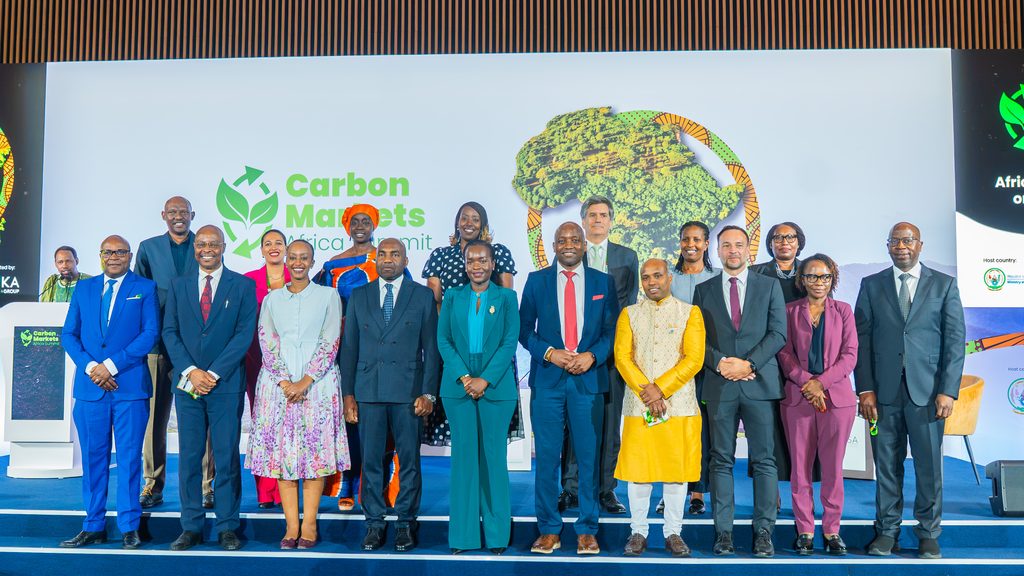
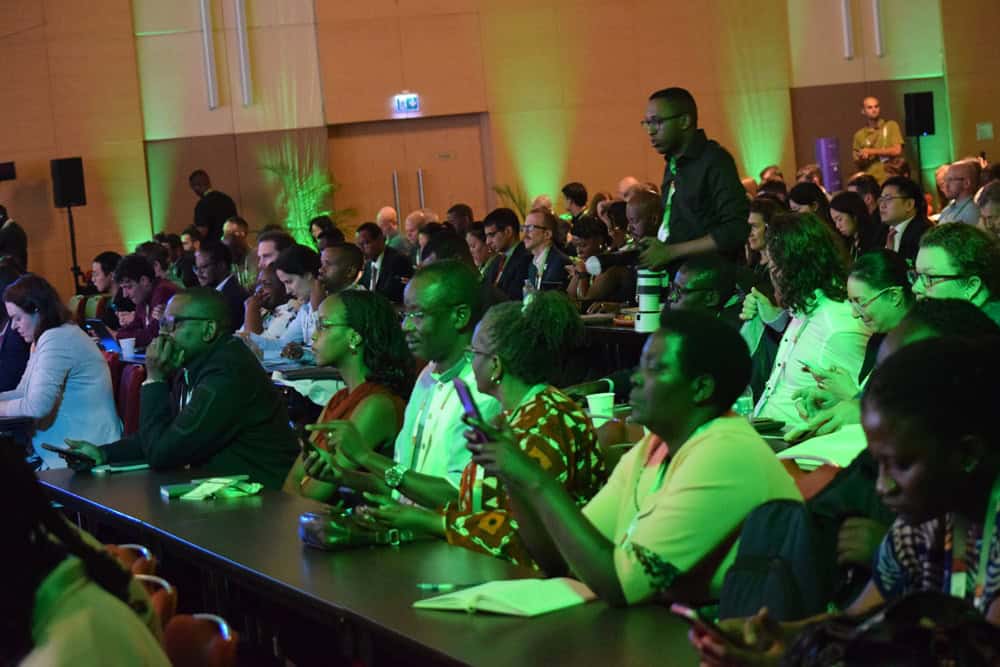
The Carbon Markets Africa Summit, running from October 13 to 15 in Kigali, brings together policymakers, investors, project developers and buyers to discuss financing, market integrity and the development of investment-ready projects.
Arakwiye said Rwanda was still exploring how carbon transaction revenue could be used to support new projects, but gave no details on the amount that might be channelled through the Rwanda Green Fund or when the proposed arrangement could begin.
John Mugisha.