
Rwanda is moving into a new phase of financial inclusion in which the focus is shifting from getting people into the financial system to ensuring they can use financial services to withstand economic shocks and improve their livelihoods.
Financial inclusion among adults has reached 96%, but only 10% are classified as financially healthy, highlighting a gap between access to financial services and the ability to use them effectively, Deputy Governor of the National Bank of Rwanda Nick Barigye said Thursday.
Barigye was speaking at the release of BNR’s Monetary Policy and Financial Stability Statement on Oct. 8, which reviewed economic and financial developments and outlined measures to strengthen the country’s financial system.
“Yes, it is good that financial inclusion has now reached 96%, but there is still the question of how that inclusion is working,” Barigye said.
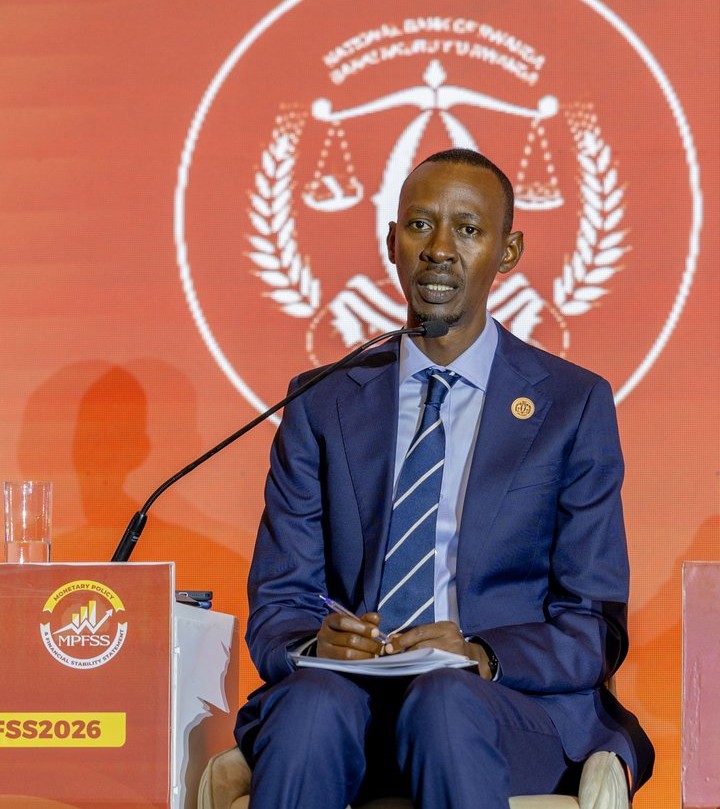
“The question today is not whether people have access to financial services, but whether those who have access are benefiting from them in the right way.”
The findings draw on Rwanda’s FinScope 2024 survey, which introduced a financial-health measure based on people’s ability to manage day-to-day needs, take advantage of opportunities, withstand financial shocks and maintain control over their finances.
The survey found that 10% of adults were financially healthy, while 57% were classified as financially coping, 31% as financially vulnerable and 3% as extremely financially vulnerable.
The figures have prompted BNR and the Ministry of Finance and Economic Planning to place greater emphasis on meaningful use of financial services rather than access alone. Rwanda’s National Financial Inclusion Roadmap 2026-2030 says the country has reached a point where access is no longer the main barrier and the priority is to ensure people actively use quality, regulated financial services in ways that strengthen resilience and long-term well-being.
Barigye said the next stage should include wider access to regulated insurance, credit and savings products, so that people who are financially included also have tools to manage risks and prepare for unexpected economic difficulties.
The shift comes as digital channels continue to play a major role in expanding access. Mobile money has become a major driver of financial inclusion, while the country’s overall financial inclusion rate rose to 96% in 2024, with formal financial inclusion standing at 92%.
Women and young people remain important targets in the next phase.
BNR’s roadmap identifies women and youth among groups requiring greater attention in access to formal financial services, including savings and credit. Data used by BNR and the Consultative Group to Assist the Poor show that women continue to have lower participation in some formal financial products, particularly bank accounts and credit.
Women account for a smaller share of formal borrowing, while young women face particularly limited progress in access to credit, according to recent analysis of BNR’s regulatory data. The central bank’s roadmap has consequently set targets to increase women’s participation in formal financial services, savings and credit.
For young people, Barigye said limited information and a lack of confidence from financial institutions can make it harder to use financial services productively. He encouraged young people to operate businesses formally and improve their understanding of financial products and opportunities.
The policy shift means that Rwanda’s next measure of financial inclusion will increasingly be whether people can save, borrow, insure themselves and withstand financial shocks, rather than simply whether they have an account or access to a payment service.