
Households living in areas at high risk of disasters will be given priority as the government gradually moves families living outside designated residential areas into planned settlements, a National Land Authority official has said.
Alexis Rutagengwa, head of the Land Use Management and Mapping Department at the National Land Authority, said the government would not immediately relocate all households living outside planned settlements.
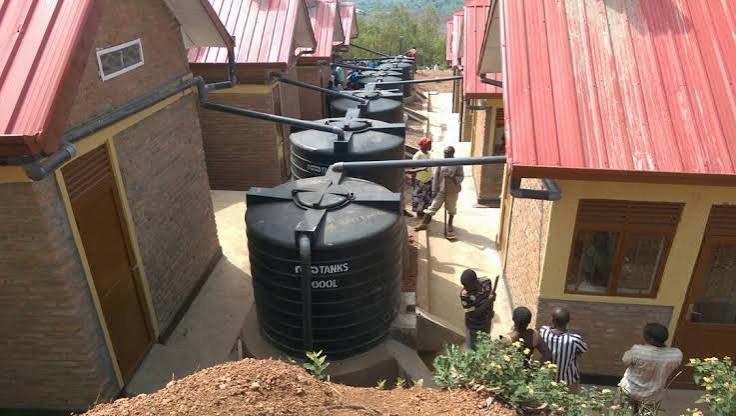
Instead, families will gradually move into planned rural settlement areas identified under Rwanda’s 2020–2050 National Land Use Master Plan as those areas are developed and equipped with roads, water, electricity and other basic services.
“The government’s approach is to gradually transform settlement patterns while avoiding unnecessary displacement,” Rutagengwa said.
Nearly one million rural households currently live outside designated settlement areas, according to officials. Rwanda has slightly more than 3.3 million households, including about 2.3 million in rural areas. About 65% of rural households live in planned settlements, while the rest live in scattered or spontaneous settlement patterns.
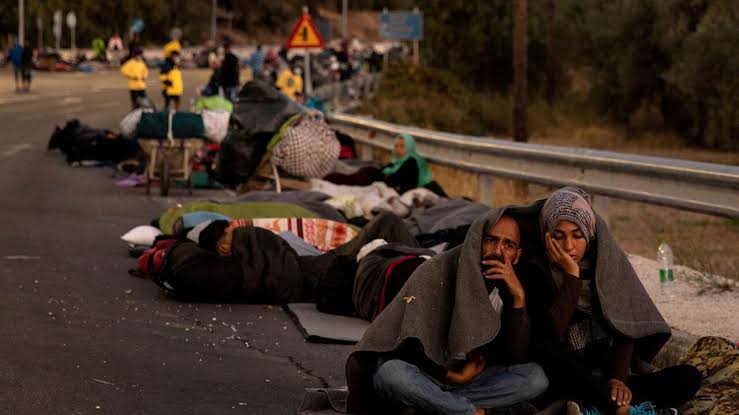
Rutagengwa said households living outside designated residential areas would not automatically be required to move. Priority would instead go to families living in places where relocation is necessary to protect lives and property.
“The most urgent priority is households living in high-risk zones and hazard-prone areas, where relocation may be necessary to protect lives and property,” he said.
Under the government’s 2024–2029 Urbanisation and Rural Settlement Sector Strategic Plan, more than 41,000 households are targeted for relocation into planned and serviced settlements by 2029. The target includes 32,000 households in scattered rural settlements, 3,436 in informal urban settlements and 6,089 in areas vulnerable to disasters.
The programme began in the 2024/25 financial year under the Second National Strategy for Transformation. Between 2017 and 2024, 144,628 households were relocated into planned settlements, according to officials.
The 2020–2050 land-use plan reduced the number of scattered settlement sites from about 14,000 to roughly 3,000. Rutagengwa said the 3,000 sites should not be viewed as entirely new settlements requiring infrastructure from scratch.
Rather, they represent a long-term settlement structure that can include several rural residential neighbourhoods, with infrastructure developed progressively.
The issue is particularly visible in Western Province, where more than 214,000 households, or about 29% of the province’s households, live outside areas designated for residential use.
Western Province Governor Jean Bosco Ntibitura said residents would gradually move to designated areas because those locations are planned for infrastructure and public services. But he said some sites still need to be developed before households can move.