
A fragile ceasefire between the United States and Iran appeared close to unraveling Thursday after a new wave of American airstrikes on Iranian targets was followed by Tehran’s attacks on U.S. allies in the Gulf, raising fears of a wider regional conflict.
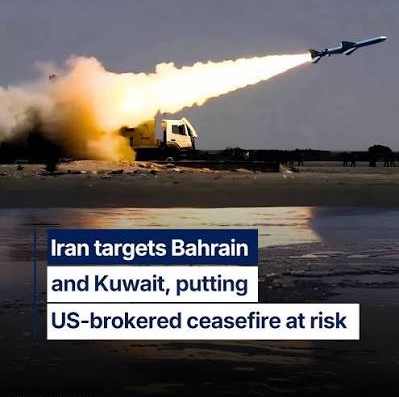
The latest escalation came after President Donald Trump said Iran’s recent strikes on commercial vessels in the Strait of Hormuz had effectively ended the temporary truce. Hours later, the U.S. military launched additional strikes inside Iran, while Iranian forces targeted Bahrain, Kuwait and Qatar, according to Iran’s military.
The attacks marked the most serious challenge yet to efforts aimed at halting weeks of fighting. Bahrain, which hosts the headquarters of the U.S. Navy’s 5th Fleet, reported multiple air raid alerts, though officials had not immediately reported damage.
Iran’s Health Ministry said Thursday that at least 14 people had been killed and 78 wounded in two days of U.S. strikes, providing the first nationwide casualty figures since the American campaign began.
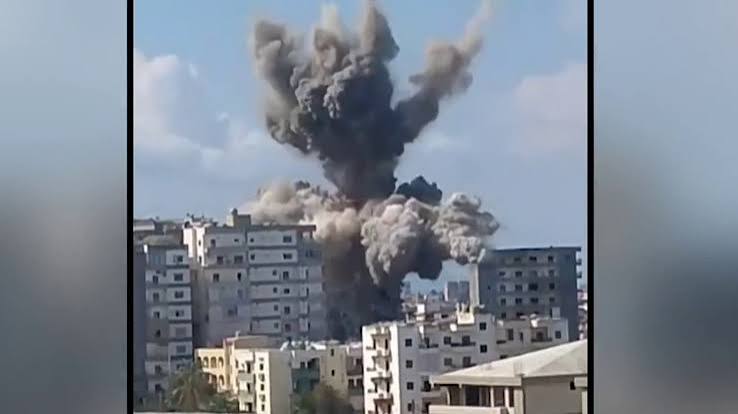
The U.S. military’s Central Command said it struck roughly 90 targets across Iran, releasing footage it said showed attacks on military infrastructure, including missile sites and an airport runway. The command said U.S. forces remained prepared for further operations.
“The United States remains vigilant, lethal and prepared to execute operations directed by the commander in chief,” Central Command said.
Washington said the strikes were aimed at weakening Iran’s ability to threaten freedom of navigation through the Strait of Hormuz, a critical shipping route that previously carried about one-fifth of global oil and natural gas supplies before the conflict began.
Iranian state media reported explosions in several areas, including near Bushehr, home to the country’s nuclear power facilities, as well as southern port cities including Chabahar, Konarak, Bandar Abbas and Sirik.
Authorities in Khuzestan province said at least three people were killed in Thursday’s strikes, while officials in Iranshahr reported the death of a firefighter at an airport. The latest deaths followed reports that at least nine members of Iran’s armed forces were killed in earlier U.S. attacks.
The strikes also appeared to expand beyond traditional military targets. Iranian state media reported an attack on a railway bridge in Golestan province, while the Islamic Revolutionary Guard said two bridges on the route to Mashhad were hit. The city was preparing for the burial of Iran’s late Supreme Leader Ayatollah Ali Khamenei.
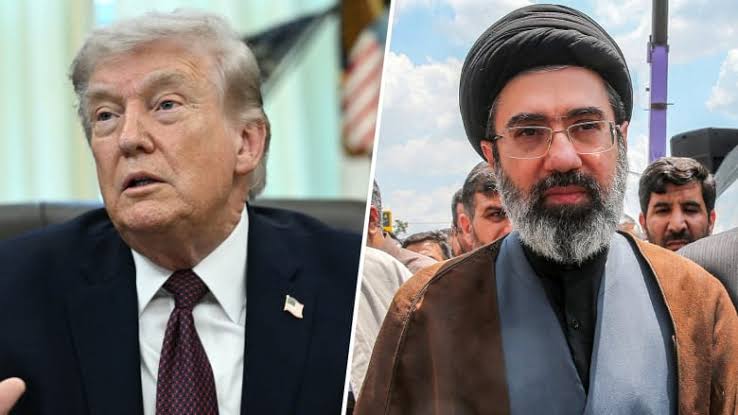
Trump, who was traveling after leaving a NATO summit in Turkey, posted videos on social media that he said showed explosions in Iran and warned Tehran against further attacks.
“This is in retribution for yesterday’s bombing of ships by Iran. If it happens again, it will get much worse,” Trump wrote.
Although Trump said the latest fighting would not necessarily lead to a prolonged military campaign, he also suggested the United States could escalate further.
“Anything that happens is going to happen very fast,” he said, while adding that the U.S. could “just finish the job.”
The president also renewed threats to target Iran’s civilian infrastructure, including power facilities and desalination plants, and again raised the possibility of seizing Kharg Island, the country’s main oil export hub.
The confrontation follows attacks on three commercial tankers in the Strait of Hormuz earlier this week. The U.S. responded with strikes on Iranian targets, and Tehran retaliated by targeting American military positions in the Persian Gulf.
Iranian officials have argued that the interim ceasefire agreement gives Tehran authority to regulate maritime traffic through the strategic waterway. Parliament Speaker Mohammad Bagher Ghalibaf, a key figure in negotiations, warned that further U.S. attacks would bring retaliation.
“America still hasn’t learned that bullying and breaking promises are no longer cost-free,” Ghalibaf wrote on X.
Trump’s declaration that the ceasefire was effectively over added further uncertainty to diplomatic efforts. While he said negotiations could continue, he questioned whether talks would lead anywhere.
“For me, I think it’s over,” Trump said. “They can talk, but I think they’re wasting their time.”
Iranian Deputy Foreign Minister Kazem Gharibabadi, who has been involved in negotiations, rejected Trump’s comments, saying they reflected a failure of U.S. policy rather than strength.
The dispute over Kharg Island has become a central point of tension. The facility handles the majority of Iran’s oil exports, making it a potential target in any broader escalation.
The latest violence has also exposed divisions within Iran’s leadership. Hard-line factions have pushed for greater control over the Strait of Hormuz, while more moderate officials have sought a lasting agreement that could reduce sanctions and improve economic conditions.
Negotiations on a permanent settlement had been expected to resume after Khamenei’s funeral, a period officials hoped would bring a reduction in tensions. Instead, the renewed strikes and retaliatory attacks have raised new doubts about whether the temporary truce can survive — or whether the conflict is moving toward a wider confrontation.