
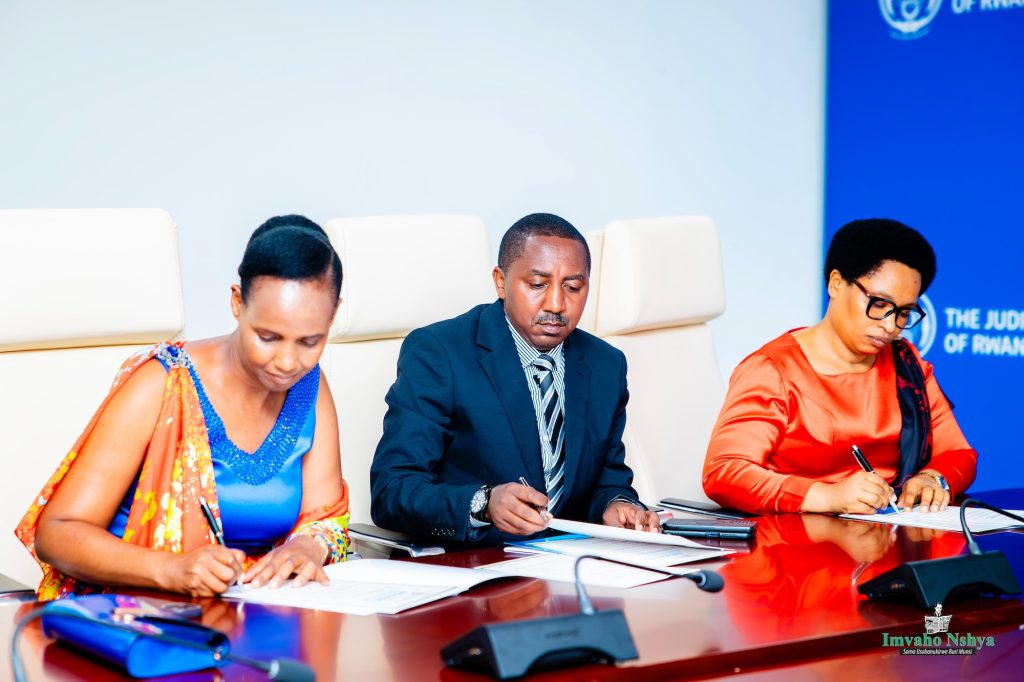
Three newly appointed commissioners of Rwanda’s National Commission for Human Rights (NCHR) have taken oath, pledging to promote and protect human rights in the country.
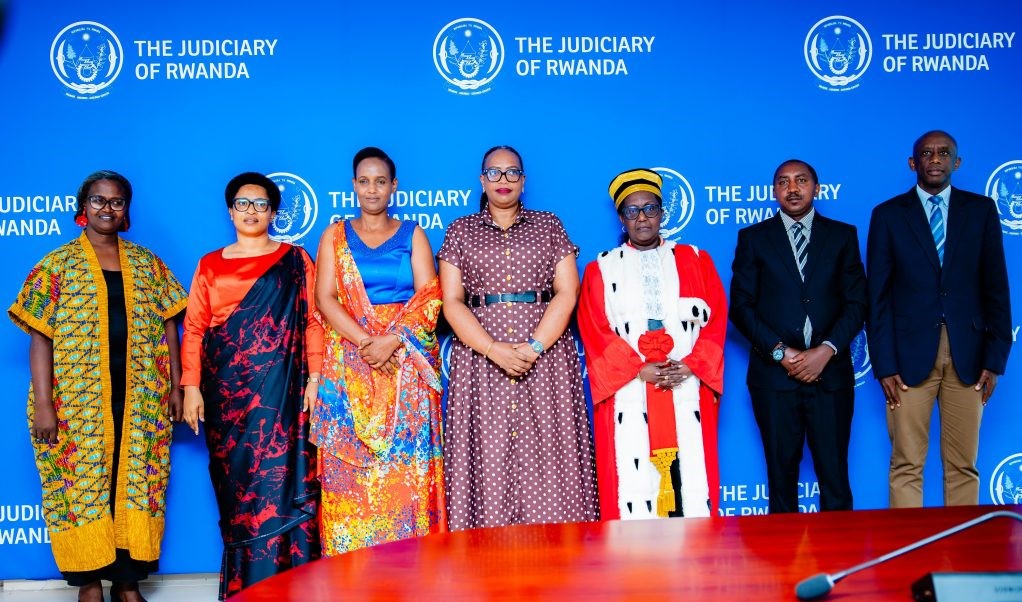
Nyiragwaneza Athanasie, Bangayandusha Viateur and Umutoni Aissa were sworn in on November 2, 2026, in a ceremony presided over by Chief Justice Domitilla Mukantaganzwa.
Receiving their oaths, Mukantaganzwa reminded the commissioners that their commitment was a pledge to the country and its people, carrying the responsibility to monitor, promote and protect human rights.
“The oath you have taken is a commitment you have made to Rwanda and, in particular, to Rwandans. It gives you the responsibility to monitor, promote and protect human rights, which is the main duty you have sworn to undertake under the law establishing the National Commission for Human Rights,” she said.
Mukantaganzwa said the commissioners’ professional backgrounds in public administration, law and decision-making were expected to strengthen the work of the institution.
She noted that Umutoni had already been working with the commission and would continue serving in a new capacity. Nyiragwaneza’s experience as a former member of Parliament, she said, would be useful in carrying out the commission’s mandate, while Bangayandusha brought experience from teaching law at the Institute of Legal Practice and Development (ILPD).
The Chief Justice urged the commissioners to carry out their duties with commitment and integrity, keeping in mind the country’s development and the welfare of its people.
Speaking after the ceremony, Bangayandusha said his experience at ILPD would help him contribute to public awareness of human rights and the laws that protect them.
He said the commissioners would work to ensure that people understand the rights provided for under Rwanda’s laws and international conventions to which the country is a party.
“We will work to publicise and promote human rights, ensuring that every Rwandan and every person knows their rights as provided for under national laws and international laws to which Rwanda is a signatory,” he said.
Bangayandusha added that the commission would also conduct research into specific human rights challenges, particularly those affecting certain groups, and work with government institutions and other stakeholders to seek solutions.
Nyiragwaneza said her experience in Parliament would help her understand the work of public institutions and contribute to addressing issues that affect people’s rights.
She said the commissioners would work together to receive and follow up complaints from members of the public, advocate for the protection of rights and provide input on legislation where necessary.
She also identified public education and training on human rights, including attention to women and persons with disabilities, among the areas they intended to prioritise.
The three commissioners were approved by the Senate on October 29, 2026, after being assessed by its committees responsible for reviewing candidates for leadership positions.