


Rwanda is seeking to attract more Indian businesses by positioning the country as a base for companies looking to expand into markets across Africa, the Rwanda Development Board (RDB) has said.
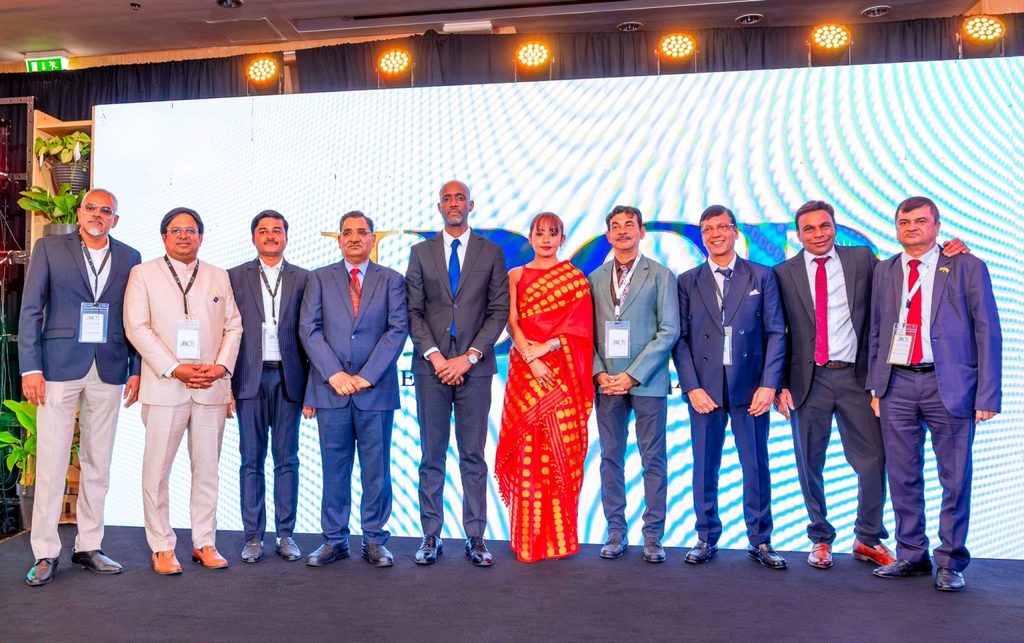
RDB Chief Executive Officer Jean-Guy Afrika made the remarks on Saturday, October 10, during the launch of the Indian Business Chamber in Rwanda (IBCR), an initiative aimed at strengthening commercial ties between businesses in the two countries.
“For Indian companies, the opportunity is not simply to invest in Rwanda for the Rwandan market. It is to establish a base from which they can build, test, expand and serve markets across Africa,” Afrika said.
The chamber brings together Indian and Rwandan business leaders and investors at a time when trade and investment remain important parts of the two countries’ economic relationship.
Bilateral trade reached $112.44 million in the 2024/2025 financial year, according to India’s Ministry of External Affairs. Rwanda imported goods worth $98.74 million from India, while its exports to the Asian country were valued at $13.69 million.
India was Rwanda’s second-largest source of registered investment in 2024, after China. Indian investors committed $445.1 million across 35 registered projects, according to investment figures published by the RDB and India’s Ministry of External Affairs.
The two countries have also identified opportunities to expand cooperation in mining, healthcare, information and communication technology, manufacturing and agriculture.
Rwanda’s membership in the East African Community (EAC) and the Common Market for Eastern and Southern Africa (COMESA), alongside the African Continental Free Trade Area (AfCFTA), offers Indian businesses potential access to markets beyond Rwanda.
The chamber is expected to strengthen links between private-sector players, help businesses identify partners and create opportunities for trade and investment.
The launch comes as Rwanda seeks to attract more Indian companies into sectors such as manufacturing, healthcare, mining and agriculture, building on existing trade ties and investment commitments.