
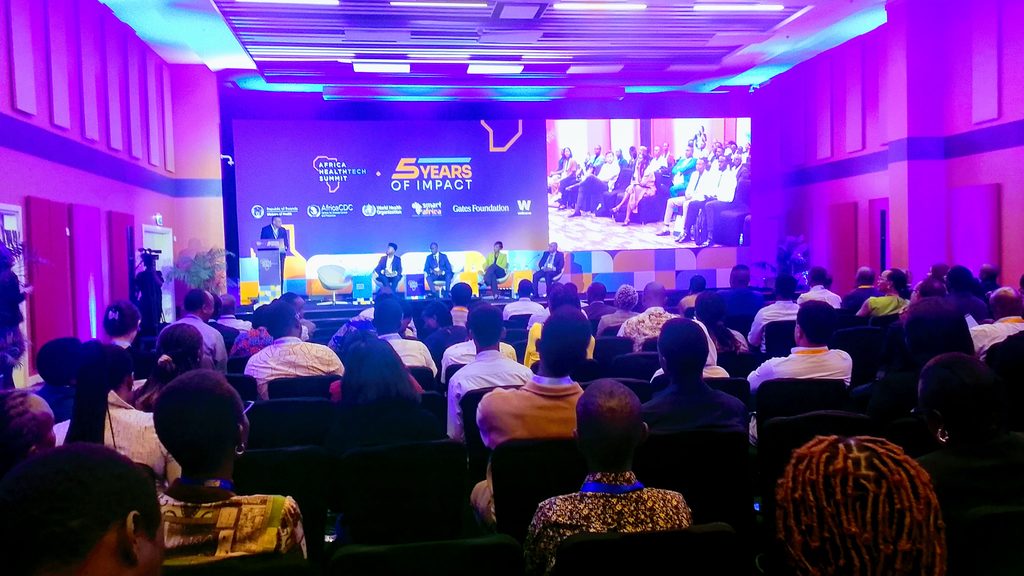
African health systems could use artificial intelligence to predict medicine shortages, improve procurement and reduce waste, experts said on Friday, Oct. 2, at the Africa HealthTech Summit in Kigali.
The experts said AI and integrated logistics management information systems could help health supply chains move from reacting to shortages to identifying risks earlier and making better use of available commodities.
The discussion came during a session on strengthening health commodity supply chains through AI and integrated LMIS, led by the Gates Foundation on the third day of the summit, which ran from Sept. 30 to Oct. 2.
Allan Gakwandi, director of programme development at Rwanda Medical Supply (RMS), said AI-powered market intelligence could combine information from suppliers, manufacturers, regulators, logistics providers and global markets to support procurement decisions.
He said such systems could identify potential cost savings and help redirect funds towards buying more medicines and improving financial sustainability.
AI could also track regulatory information on approved suppliers and manufacturers, including warnings issued by bodies such as the World Health Organization, the US Food and Drug Administration and the Rwanda FDA, Gakwandi said.
It could also help determine where to source commodities and which freight companies to use, while market information from sources such as Bloomberg, Reuters and Devex could provide early signals of disruptions and pandemics.
Such early information would allow health systems to act proactively rather than reactively, he said, including by buying commodities ahead of expected shortages.
Chitundu Mbao, a senior pharmacist at Zambia’s National Supply Chain Coordination Unit, said AI could also help identify imbalances between health facilities.
One facility may have excess commodities while another faces a shortage, without either knowing about the other, he said. Intelligence systems could help identify facilities in need and support redistribution while also helping identify commodities at risk of expiry.
Clarisse Uwibambe, project manager at RMS, said AI should strengthen rather than replace human decision-making.
She said users should be involved from the beginning, understand the data behind the systems and compare AI forecasts with actual outcomes.
“The AI solution won’t replace the human judgment,” Uwibambe said. “The solution will provide the insight, the forecast, but the business users will remain accountable for the judgment.”
Philip Lule, founder and CEO of Systems For Development, said countries should first assess whether they have the data, infrastructure and technical capacity needed to use AI effectively.
He said solutions should be adapted to local conditions rather than copied from one country to another.
Lule also called for strong data governance and investment in local technical capacity, digital infrastructure and skills as countries develop more AI applications for health supply chains.
Mbao said leadership commitment would be critical to whether such solutions are developed and used.
The experts also said continued investment could become more sustainable as countries develop more use cases and shared digital infrastructure.