

Rwanda has improved its budget transparency, public participation and oversight of public finances, but gaps remain in the timely publication and accessibility of budget information, according to the International Budget Partnership’s Open Budget Survey 2025.
Rwanda scored 55 out of 100 for budget transparency, up from 50 in 2023 and 45 in 2021. The country ranked second in East Africa behind Kenya, which scored 56, and sixth among countries in sub-Saharan Africa.
The survey assesses public access to budget information, opportunities for citizens to participate in the budget process and oversight by legislatures and supreme audit institutions.
Rwanda’s public participation score rose from 16 to 26, the largest single-round improvement recorded by the country, although participation remains its weakest area.
Its overall budget oversight score increased from 56 to 61. Legislative oversight rose from 44 to 47, while audit oversight recorded a larger increase, from 78 to 89.
Despite the gains, the survey found that some key budget documents are not published within required timelines and that the quality and completeness of information vary.
The biggest delay was recorded in the Year-End Report. Rwanda’s consolidated financial statements for the 2022-23 fiscal year were published about 17 months after the end of the fiscal year, beyond the survey’s 12-month benchmark.
The assessment also identified gaps in information on historical fiscal performance, fiscal risks, tax expenditures and public assets, as well as weaknesses in procedures for informing citizens and providing feedback during budget processes.
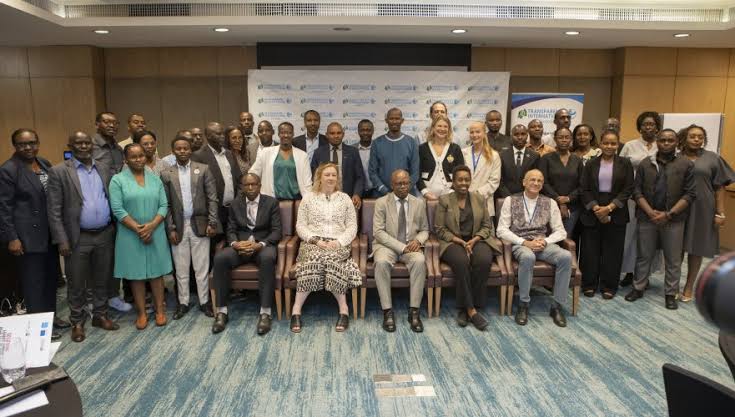
Apollinaire Mupiganyi, executive director of Transparency International Rwanda, said the progress should be matched by efforts to make budget information timely, comprehensive and accessible.
“Progress should go beyond producing budget documents to ensuring that information is published on time, is comprehensive and accessible, and that citizens have meaningful opportunities to participate,” Mupiganyi said.
Jeanette Rwigamba, head of the budget department at the Ministry of Finance, said authorities would work to address issues raised through the assessment, including creating a platform where citizens can access budget information from preparation through implementation and expenditure.
The survey assessed 82 countries. Globally, the average score was 47 for budget transparency, 18 for public participation, 45 for legislative oversight and 60 for audit oversight.