
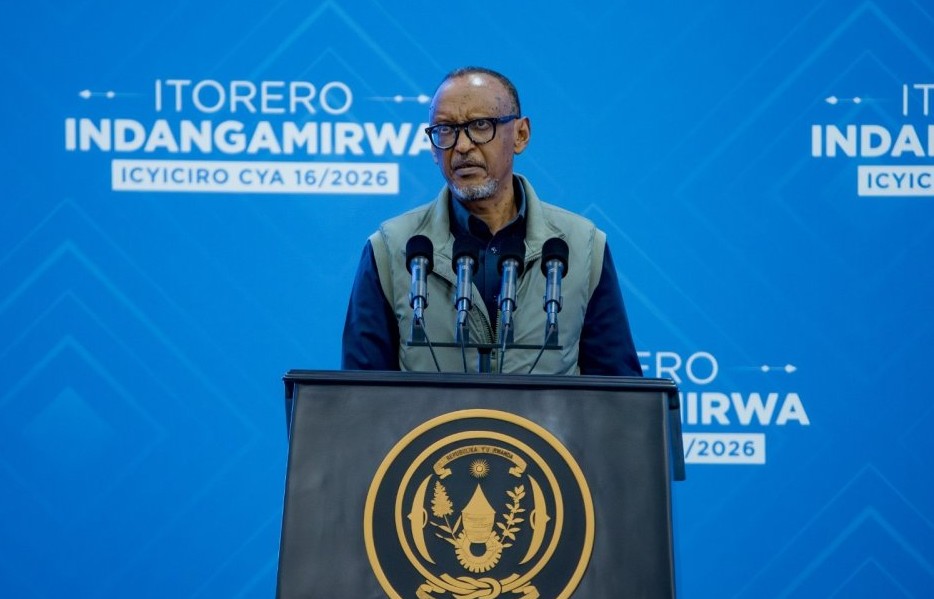
President Paul Kagame on Tuesday urged young Rwandans to safeguard the country’s achievements and take responsibility for its future, warning that decades of progress could be reversed if the next generation fails to uphold the values that have driven Rwanda’s transformation.
Addressing 769 participants attending the 16th Indangamirwa civic education programme at the Gabiro Military Training Centre in Gatsibo District, Kagame said the responsibility for Rwanda’s future now rests with its youth.
“The time now belongs to you,” Kagame told the participants. “Those of us who came before you are gradually stepping aside. As we do, we look at those who are coming after us and ask whether they will continue building what has already been achieved. The answer is you.”
He cautioned that the country’s achievements should never be taken for granted, saying young people stand to lose the most if Rwanda’s progress is allowed to unravel.
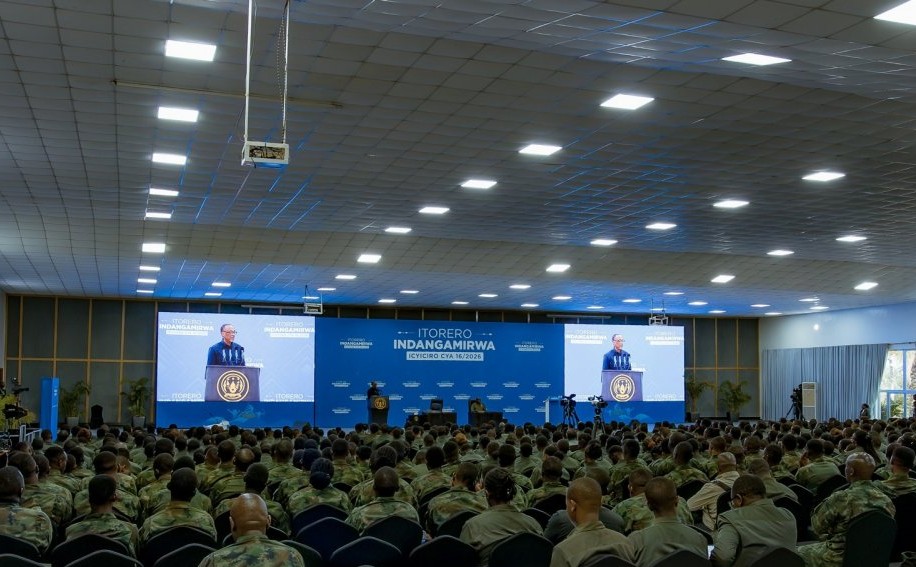
“If you fail to protect what has been built, the consequences will ultimately fall on you,” he said. “Do not allow everything that has been achieved to collapse.”
Kagame said Rwanda’s history demonstrates the importance of vigilance, pointing to the 1994 Genocide against the Tutsi as a reminder of the devastating consequences of division, poor leadership and hatred. He urged the youth to draw lessons from the country’s past and remain committed to unity, good governance and national development.
He also stressed that Rwanda’s future depends on its citizens rather than outside assistance.
“No one else will develop Rwanda for us,” Kagame said. “That mindset must change completely. Our future depends on our own determination and our willingness to solve our own problems.”
Reflecting on his own experience as a refugee, Kagame said he was forced to leave Rwanda as a child following anti-Tutsi violence that began in 1959. He said the refusal by the government of former President Juvénal Habyarimana to allow Rwandan refugees to return home led him and others to launch the liberation struggle.
“I could not accept that Rwandans would permanently be denied the right to return to their own country,” he said. “That is why we chose to fight for Rwanda’s liberation.”
Kagame said the struggle was directed at restoring the rights of Rwandans rather than targeting countries that had hosted refugees.
He also spoke about the military training provided during the civic education programme, including firearms instruction, saying such skills should only be used when circumstances demand and never irresponsibly.
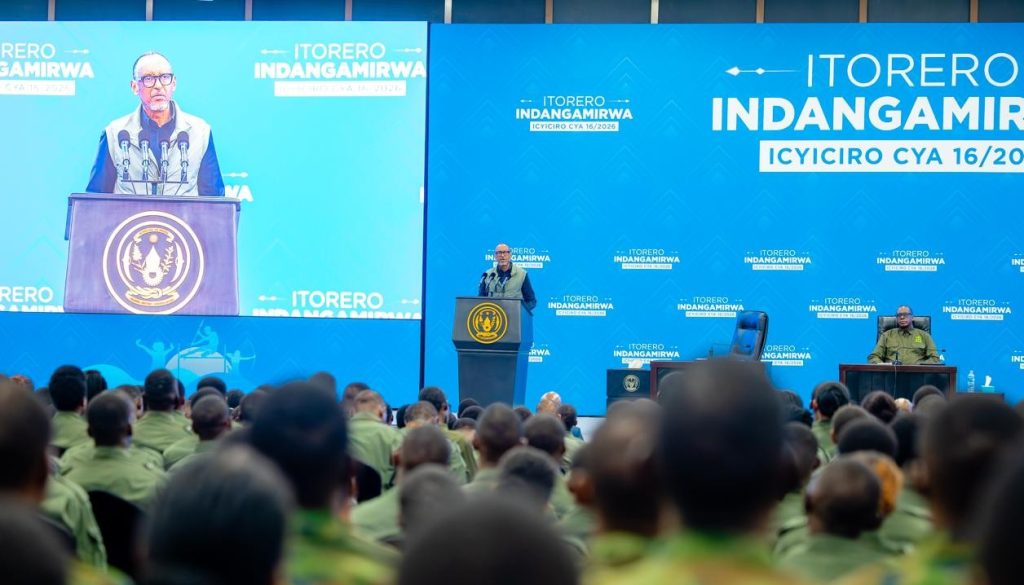
“There is a proper time to use weapons,” he said. “Before that time comes, there is no reason to use them. But when people are denied their rights and every peaceful option has been exhausted, circumstances can change.”
Minister of National Unity and Civic Engagement Jean Damascène Bizimana said the latest intake brings the total number of graduates from the Indangamirwa programme to more than 5,900 since it was launched.
Bizimana said this year’s programme was expanded significantly, with nearly twice as many participants as previous editions. It was also held at the Gabiro Military Training Centre instead of the traditional venue in Nkumba.
He said the training encourages young people to rely on their own abilities and take responsibility for Rwanda’s continued development rather than expecting solutions from others.
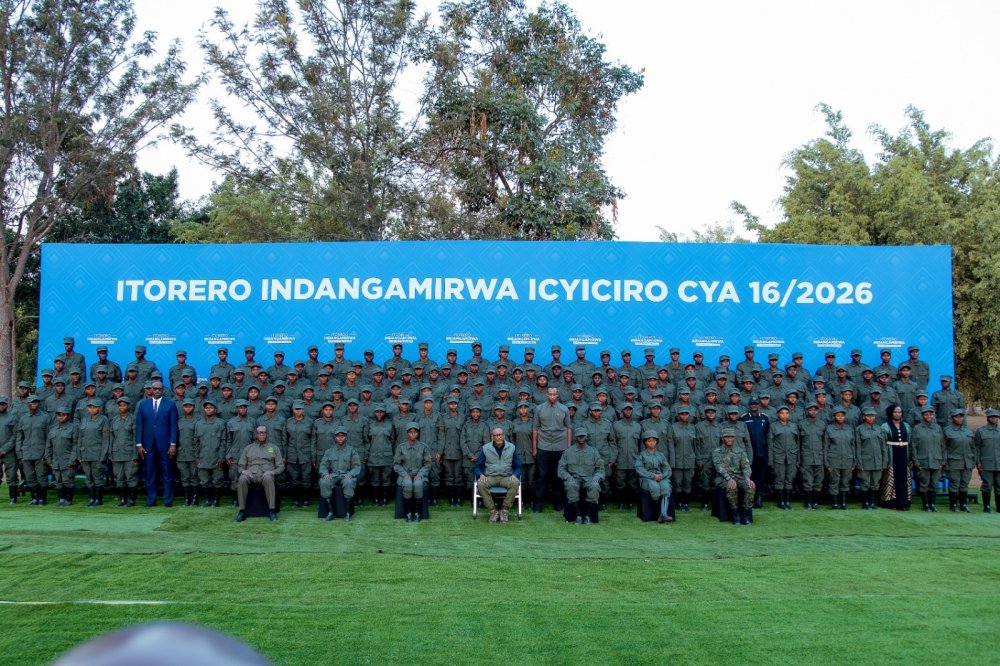
The 16th Indangamirwa cohort comprises 769 young Rwandans drawn from universities, international secondary schools, the Rwandan diaspora and top performers from the 13th Inkomezabigwi National Service programme.
Closing his address, Kagame urged the participants to remain guided by patriotism, discipline and a shared commitment to protecting Rwanda’s unity and sustaining the country’s development for future generations.