
Rwanda and Russia have signed a new cooperation framework on Small Modular Reactors (SMRs), marking a significant step in Kigali’s plans to introduce nuclear power as part of its electricity supply by the early 2030s.
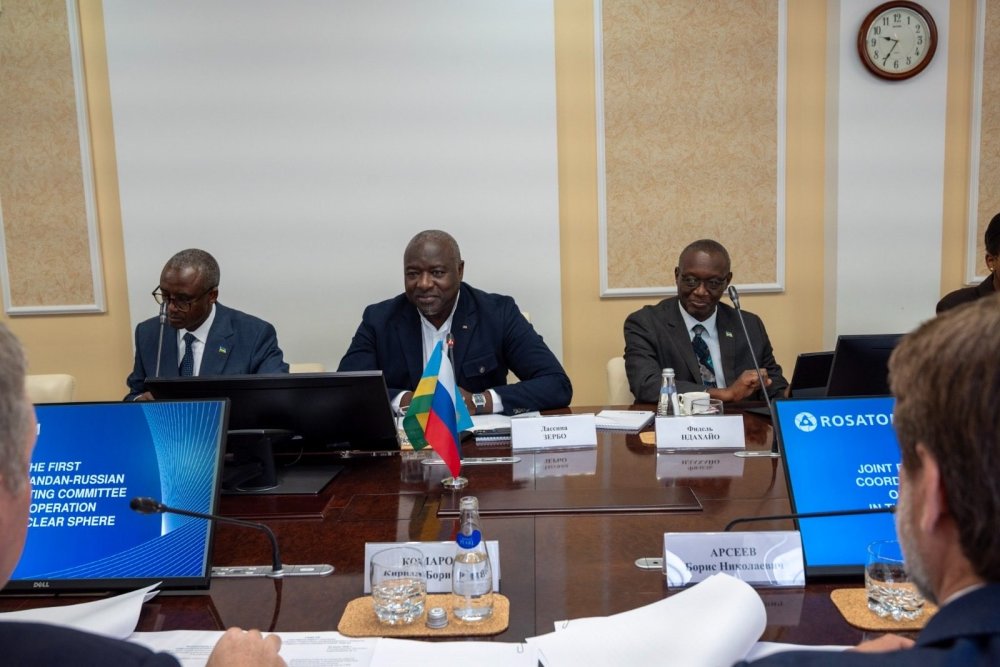
The agreement was reached during the first meeting of the Joint Coordinating Committee on the peaceful use of nuclear energy, held in Moscow on June 29. Officials from the Rwanda Atomic Energy Board (RAEB) and Russia’s state nuclear corporation, Rosatom, reviewed progress on joint projects and agreed to expand cooperation from policy commitments to implementation.
The move comes as Rwanda seeks to diversify its energy sources to meet growing electricity demand while building the infrastructure and expertise needed to support a civilian nuclear energy program.
“Our priority is to integrate nuclear power into our national electricity supply by the early 2030s so that we can meet Rwanda’s rapidly increasing demand for energy,” Dr. Lassina Zerbo, special adviser to President Paul Kagame on energy and chairperson of the RAEB board, said in a statement.
The two sides said their cooperation will extend beyond electricity generation to include the establishment of a Nuclear Science and Technology Center, development of nuclear research, training of Rwandan specialists and expansion of the country’s nuclear infrastructure.
Kirill Komarov, Rosatom’s first deputy director general for corporate development and international business, said the partnership had entered a new phase focused on delivering tangible projects.
“We are moving from broad agreements to practical cooperation across multiple areas, from workforce training and nuclear infrastructure development to research projects and Small Modular Reactors,” Komarov said.
Rwanda and Russia have cooperated on the peaceful use of nuclear technology since 2018, when they signed agreements covering the development of a Nuclear Science and Technology Center and related laboratories. The latest meeting coincided with a visit by a Rwandan delegation to Rosatom facilities and an international youth forum in Russia as both countries seek to deepen collaboration on nuclear technology.