
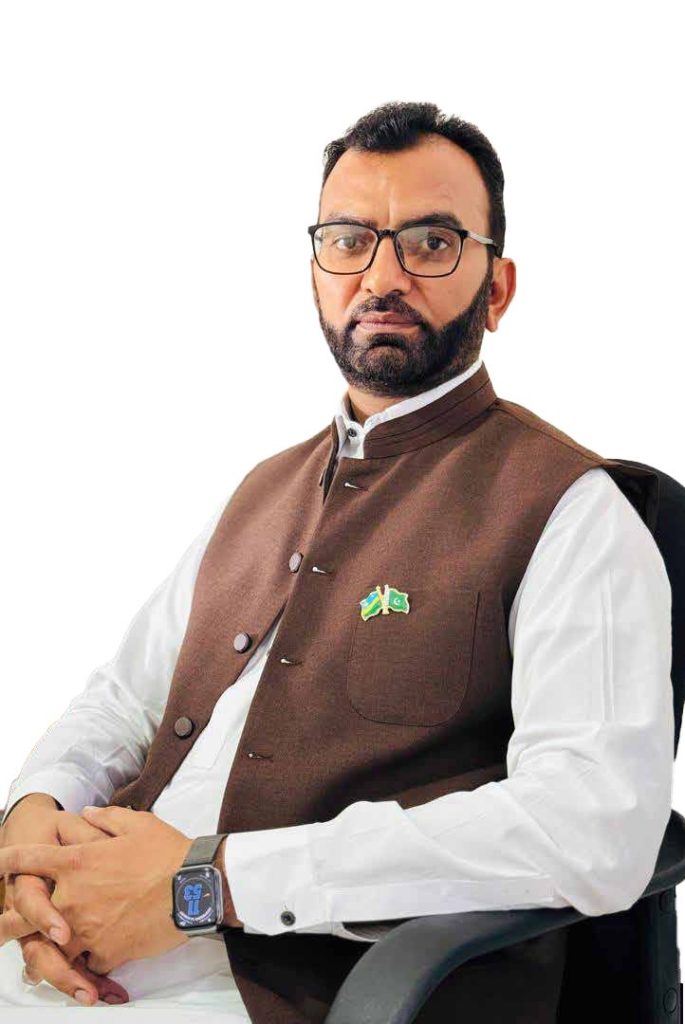
When Hafiz Mohammad Irfan left Pakistan for Rwanda in 2013, he was not just relocating but he was betting on a country he believed held untapped opportunity.
More than a decade later, that bet has paid off. Irfan has built a successful car import and sales business under Pak Motors Rwanda Ltd.
Serving a wide range of clients, including government officials and institutions.
Over the years, he has also expanded into agriculture, launching a poultry project focused on egg production in Bugesera District in Eastern province as part of his long-term investment strategy. “I started with car sales, and I am still doing that,” Irfan said. “But now I am also investing in agriculture.”
With 13 years of experience in vehicle importation, Irfan sources most of his cars from Dubai, which accounts for about 90% of his business.
He has also diversified his supply chain to include Europe, the United States and South Korea, adapting to market demand and customer preferences.
His client base is largely local, with a strong presence among government and institutional buyers.
He estimates that he has sold vehicles to more than 100 individuals in senior positions across public institutions. “This business is very good,” he said. “There is profit, and the environment here supports business growth.”
Beyond profitability, Irfan points to Rwanda’s stability and social environment as key factors behind his success. He describes the country as peaceful, respectful and secure, noting that trust plays a central role in both business and daily life.
In his experience, cases of default have been rare, and he emphasizes the reliability of his local clients. “I have had very good experiences with Rwandans,” he said.
Irfan said his experience reflects a broader sentiment among the Pakistani community in Rwanda, where many say they value the strong sense of cooperation and unity among Rwandans.
That sense of security extends beyond business. Irfan points to his agricultural project in Bugesera, located about 30 minutes off the main road, where he says he and his family feel safe traveling at any time, even late at night. “You can’t imagine the level of security,” he said. “We go and come back even at midnight without concern.”
His expansion into agriculture, launched about a year ago, reflects both confidence in Rwanda’s economy and a desire to diversify his investments while contributing to local development.
Irfan also highlights the importance of long-term relationships, pointing to employees who have worked with him for over a decade.
He says these relationships, built on trust and mutual respect, are a reflection of the broader community he has found in Rwanda.
While he describes the business environment as largely supportive, Irfan notes some operational challenges, particularly related to tax compliance.
He points to difficulties with the requirement for Electronic Billing Machine (EBM) receipts, explaining that some landlords and small-scale suppliers do not provide the necessary documentation. “It is not that the rules are wrong,” he said. “But sometimes there needs to be flexibility, especially for small and medium businesses.” Despite this, he maintains that Rwanda remains an attractive destination for investment, citing its stability, safety and ease of doing business.
For Irfan, Rwanda is no longer just a place of opportunity.
It is a place of trust, stability and longterm possibility of a foundation on which he continues to build.