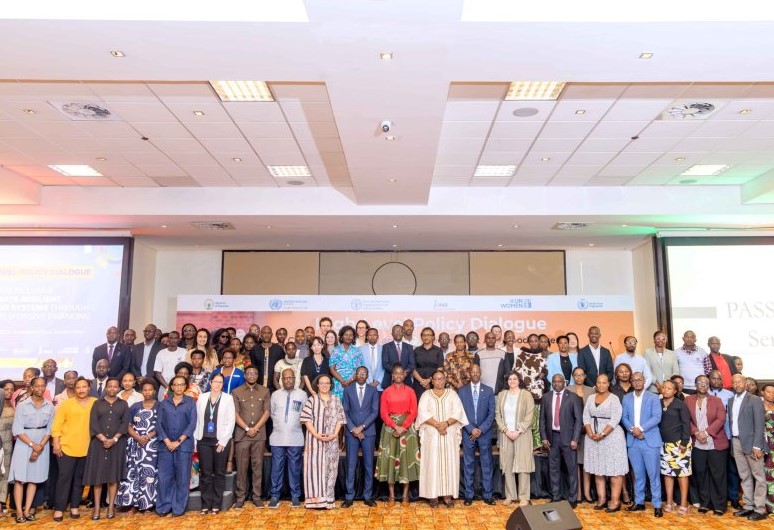

Rwanda’s rural communities are experiencing steady progress in development and resilience, driven in part by the work of the Peace and Development Network (PDN).
The organization focuses on fostering sustainable growth and peace at the grassroots level through collaboration, capacity building, and inclusive development initiatives.
As a result, it continues to play a meaningful role in transforming rural livelihoods while contributing to national cohesion.
PDN brings together five peace building combines peacebuilding, sustainable development, and community resilience, with particular attention given to farmers and rural households.
At the core of PDN’s work is the empowerment of smallholder farmers through targeted training in agriculture, conflict resolution, family dynamics, and nutrition.
The organization maintains that strengthening food security improves household well-being and reinforces peace within communities.
For this reason, its initiatives deliberately connect agricultural support with training that addresses both livelihoods and relationships at the household level.
Guided by its theory of change which says that if farmers apply CA+ techniques (CA techniques and Good Agronomic Practices) with access to VLSA’s (i.e., access to capital) then food security (availability of food, accessibility to food, utilization of food, and resilience to shocks) will increase.
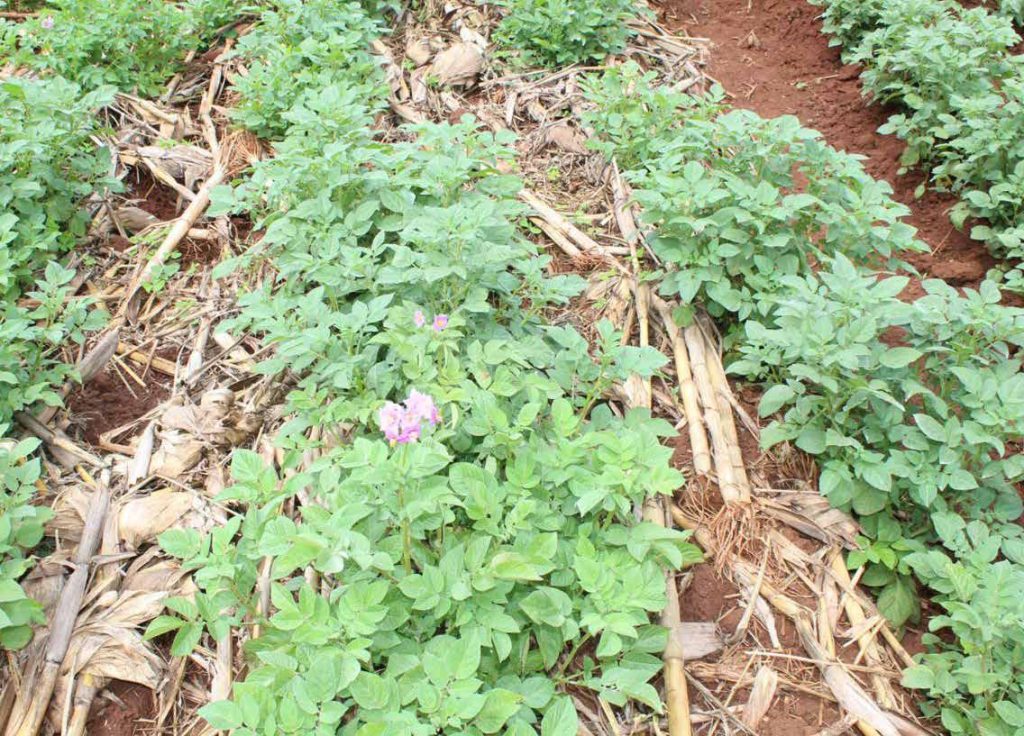
PDN promotes the adoption of Conservation Agriculture (CA) techniques alongside Good Agronomic Practices (GAP), while also facilitating access to Village Savings and Loan Associations (VSLAs).
PDN plays a central role in promoting Conservation Agriculture (CA), leading the extension and f ield implementation component within the Regenerative Conservation Agriculture coalition.
Working in close collaboration with key stakeholders such as the World Food Programme (WFP) and SNV, and under the overall leadership of the Ministry of Agriculture, PDN supports the dissemination, adoption, and scaling of sustainable agricultural practices among farming communities.
Its understanding of food security goes beyond production, encompassing availability, accessibility, proper utilization, and resilience to shocks.
In this way, the focus extends not only to increasing yields but also to ensuring longterm stability and preparedness for future challenges.
These efforts have already produced tangible results.
PDN reports that more than 63,920 farmers have directly adopted conservation agriculture practices, with an additional 3,261 households benefiting indirectly.
To support hands-on learning, the network has established 110 Farmer Field Schools, which provide practical training in conservation methods.
Consequently, crop yields have increased by between 30% and 50%.
In addition, 60 master trainers many of them young people have been equipped with skills in conservation agriculture and adult learning methodologies.
Nutrition also remains a central pillar of PDN’s work. Over 3,087 farmers have received training on nutrition and the preparation of balanced diets, helping to improve overall household health.
Alongside this, the organization promotes livestock development, having distributed more than 1,000 livestock to participants and facilitated the transfer of over 100 animals through Farmer Field School groups.
These efforts contribute to improved manure availability and create additional income opportunities. Economic empowerment is another key component of PDN’s approach.
The network has supported the formation of more than 1,280 savings groups, bringing together 27,775 members who have collectively saved over Rwf 56,522,438 through their contributions.
Women make up more than 76% of these participants, reflecting a strong emphasis on gender inclusion and the promotion of women’s leadership within communities.
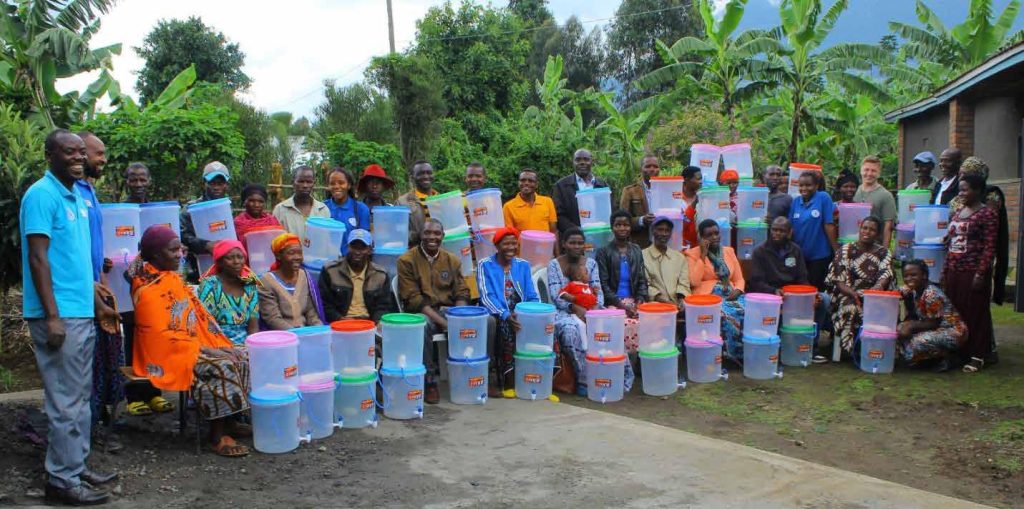
In the area of public health, PDN has implemented the “Mighty Water” Water, Sanitation, and Hygiene (WASH) initiative, which has distributed over 2,000 water filtration kits.
This intervention has significantly improved access to clean drinking water, helping to reduce waterborne diseases and support healthier living conditions.
Overall, through its coordinated and communitydriven efforts, PDN continues to contribute to peacebuilding, agricultural development, economic empowerment, and public health.
Its focus on sustainability, participation, and inclusion, particularly of women and youth, positions the network as an important actor in advancing resilient and prosperous rural communities across Rwanda.