
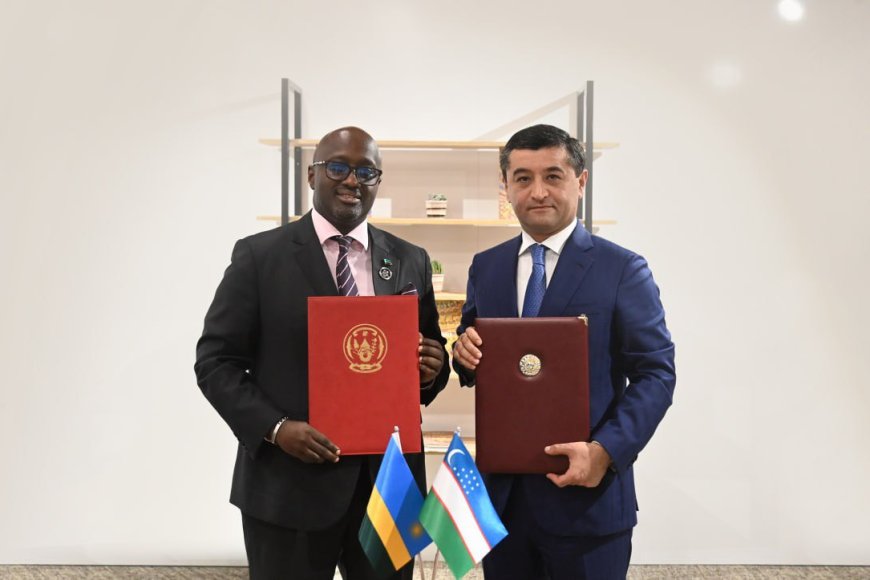
The agreement was signed on the sidelines of the Antalya Diplomatic Forum 2026, where Rwanda’s Foreign Affairs Minister Olivier J.P. Nduhungirehe and his Uzbek counterpart Bakhtiyor Saidov formalised ties through the signing of a joint communiqué.
The signing made Rwanda the 167th country with which Uzbekistan has established diplomatic relations. A Memorandum of Understanding between their ministries further established a framework for regular political consultations—often the first step toward deeper economic and institutional engagement.
While such agreements can appear procedural, this one reflects a broader shift in Rwanda’s foreign policy— one that is increasingly outward-looking and focused on building diverse, non-traditional partnerships. A strategic partner beyond geography Uzbekistan’s relevance lies not just in its geography, but in its trajectory.
With a population of about 38.3 million, compared to Rwanda’s roughly 14 million, it represents a significantly larger consumer market.
Economically, Uzbekistan’s GDP exceeded €133bn in 2025. The country has been growing at a faster pace, recording about 7.7% GDP growth in 2025, with projections of 6.8% in 2026.
Rwanda, while smaller in scale, has maintained steady growth in the range of frequently exceeding 7–8% in recent years, positioning itself as one of Africa’s more resilient economies.
Rwanda offers agility, reform-driven governance, and a gateway into African markets, while Uzbekistan brings scale, industrial capacity, and access to Central Asia.
Trade, industry and shared opportunities
The most immediate potential lies in trade and industrial cooperation.
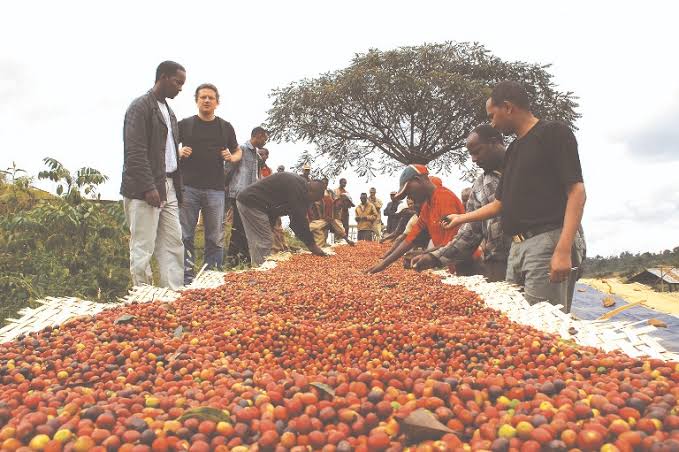
Rwanda’s economy remains anchored in agriculture, which contributes about 35% of GDP and employs close to 70% of the population.
Key exports such as coffee and tea could find new markets in Central Asia, particularly as Uzbekistan diversifies its import base.
On the other side, Uzbekistan’s economy is strongly supported by natural resources and industry. It is among the world’s top gold producers and has substantial natural gas reserves, while its textile sector built on cotton production has expanded into highervalue manufacturing.
This creates room for partnerships, especially as Rwanda pushes its “Made in Rwanda” agenda and seeks to grow its garment and agro-processing industries.
Energy, tourism and a wider exchange Energy is another area where cooperation could take shape. Uzbekistan is targeting 25% renewable energy generation by the end of 2026, with a strong focus on solar power.
Rwanda, though operating on a smaller grid, has also prioritised clean energy, with renewables already accounting for a growing share of its energy mix.
This shared direction opens the door for technical collaboration and investment.
Tourism adds a softer but equally important dimension. Uzbekistan aims to attract up to 12 million visitors annually by 2026, driven by its Silk Road heritage and cultural investments.
Rwanda welcomed 1.49 million visitors in 2025, up from 1.36 million in 2024, representing a 9 per cent increase.
The country generates high-value tourism revenue through premium experiences such as gorilla trekking.
The contrast again suggests complementarity—volume versus value—offering space for shared learning and joint promotion strategies.
What it means for Rwandans For Rwandans, the impact of this new relationship will unfold gradually, but the direction is clear.
In the near term, the focus will likely be on building institutional links—business forums, trade missions, and policy dialogue.
Over time, this could translate into expanded export markets, particularly for agricultural products, and new investment f lows into sectors such as manufacturing and energy.
Opportunities may also emerge in education and skills development, as both countries look to strengthen human capital in support of economic transformation.
For entrepreneurs, especially, Uzbekistan represents an untapped market of over 38 million people—one that is still building its global trade connections and may offer early entry advantages.
More broadly, the partnership reinforces Rwanda’s strategy of diversifying its economic alliances. As global trade patterns shift and new corridors emerge, connections like KigaliTashkent could become less about geography and more about shared ambition.
In that sense, this new diplomatic relationship is a practical opening—one that, if effectively pursued, could translate into real economic gains, broader market access, and a stronger global presence for Rwanda.