

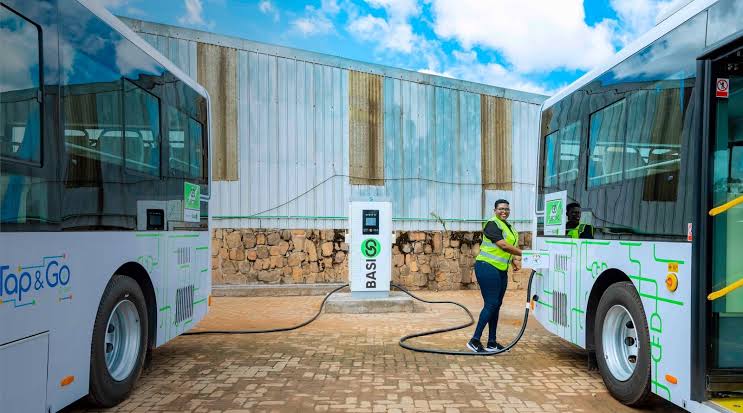
Rwanda’s push to expand electric public transport is increasing the need for charging stations beyond Kigali, with the government now planning to widen the infrastructure supporting electric vehicles and encourage local vehicle assembly.
The plans were outlined on Thursday, Oct. 8, by Minister of State for Infrastructure Col. Claudien Bizimungu during a meeting with lawmakers reviewing progress on medium-term urban development and housing programmes.
Electric buses have begun extending their reach to longer-distance routes. In June, BasiGo introduced 18 new buses intended to serve routes including Kigali-Rusizi and Kigali-Rubavu, following successful tests on the Kigali-Rusizi journey.
The expansion has brought charging infrastructure into sharper focus. Rwanda plans to establish additional charging stations in different parts of the country, including Huye, where buses travelling from Rusizi could recharge before continuing their journeys.
Beyond public transport, the government wants to attract private investment in assembling electric vehicles locally and continue encouraging their adoption as an alternative to petrol- and diesel-powered transport.
In April, public institutions were directed to ensure that at least 30% of newly purchased vehicles are fully electric, part of efforts to reduce fuel dependence and greenhouse gas emissions.
The country’s second National Strategy for Transformation sets a target of cutting greenhouse gas emissions by 38%, equivalent to 4.6 million tonnes of carbon dioxide.
The planned infrastructure expansion is intended to support that transition by making electric vehicles more practical for journeys beyond the capital.