
How well are Rwandan students able to use what they learn in school to solve problems in their daily lives?
That is one of the questions raised by Rwanda’s first participation in the Programme for International Student Assessment (PISA), which found that only 3% of students who took the test reached the minimum proficiency level in reading, mathematics and science.
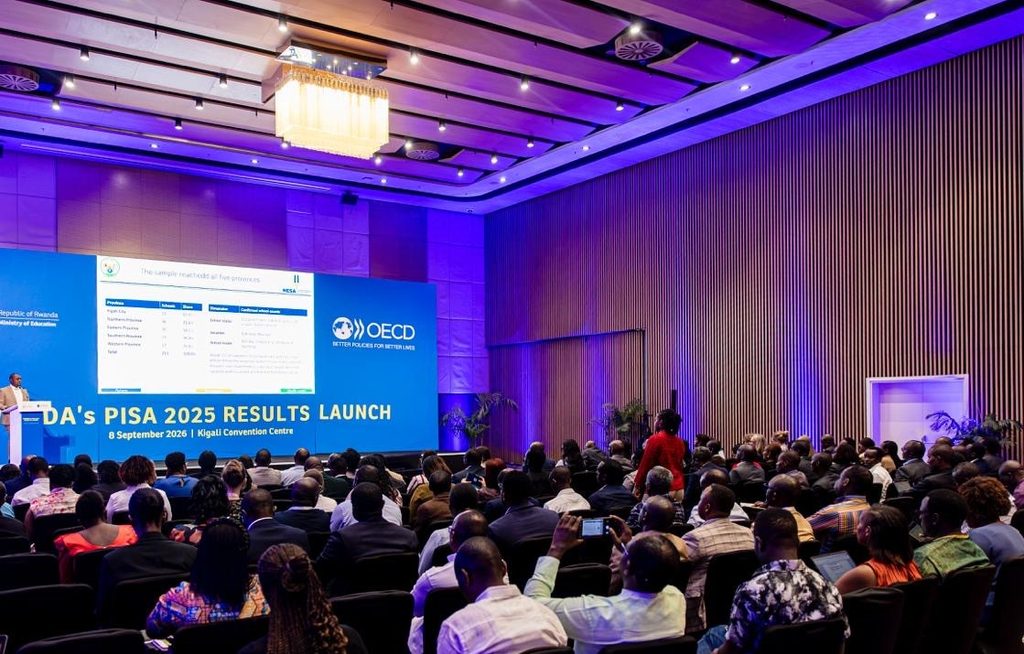
The assessment, whose results were released on Sept. 8, tested 15-year-olds not only on what they know but also on their ability to apply that knowledge to unfamiliar and everyday situations.
Rwandan students scored 317 points in science, 312 in mathematics and 301 in reading. Only 12.7% reached the baseline proficiency level in science, compared with 7.7% in mathematics and 3.9% in reading.
Education Minister Joseph Nsengimana said the results showed that Rwanda still had work to do, but that the findings should be used to understand where students are struggling and what needs to change.
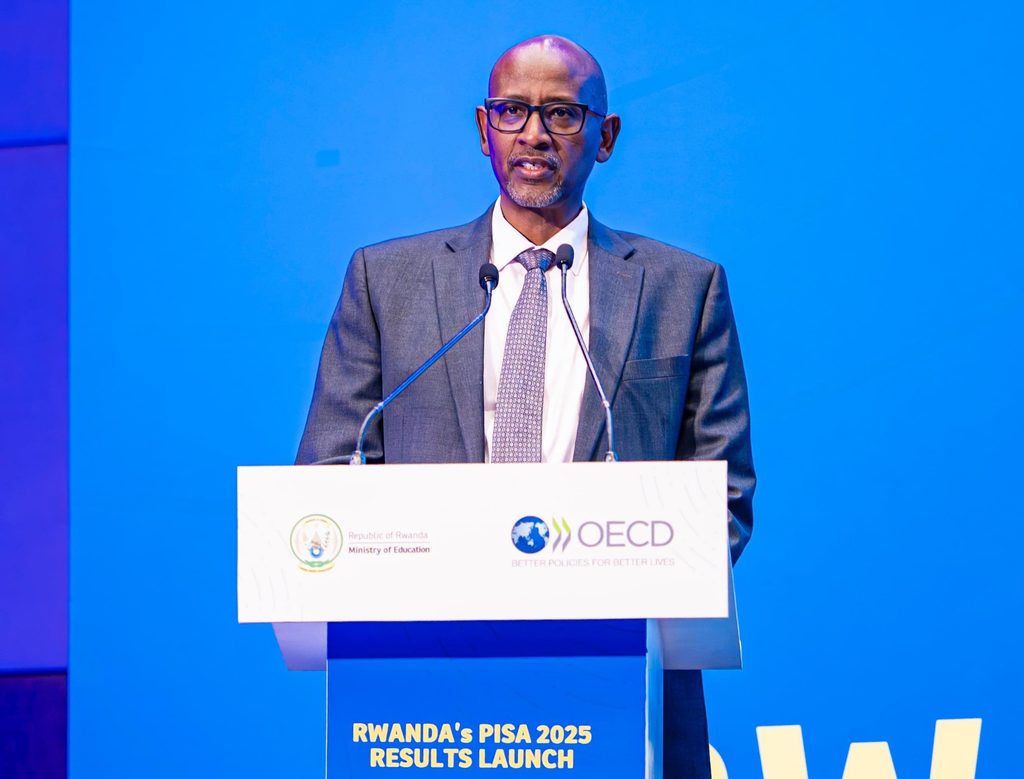
“When we look at how Rwanda performed, we are not where we want to be,” Nsengimana said.
He said the Ministry of Education would study students’ responses, set targets for improving learning outcomes and look at countries that have managed to improve their PISA performance.
Nsengimana said the findings were also consistent with areas of concern identified through Rwanda’s national assessments.
The results come as Rwanda continues to implement a competence-based curriculum, which places emphasis on developing skills that students can use beyond the classroom.
Didas Kayihura Muganga, acting vice chancellor of the University of Rwanda, said PISA offered an opportunity to examine whether the curriculum was producing the intended results.
“It is not only about how we teach in classrooms, but also about the impact of what students learn. Are they able to translate that knowledge into problem-solving?” he said.
Muganga said parents also have a role in supporting learning, although their ability to do so differs depending on their own level of education.
“Some Rwandan parents may not even be at the level of their children and may not be able to ask the right questions. That support cannot always be expected from them,” he said.
The assessment was conducted from April 28 to June 7, 2025, in 213 schools across Rwanda. Of the 7,455 students selected, 6,622 completed the assessment.
The schools included 57 in the Southern Province, 57 in the Western Province, 46 in the Northern Province, 30 in the Eastern Province and 23 in Kigali. Of these, 164 were rural schools and 49 were urban.
Government-aided schools accounted for 112 of the participating schools, while 81 were public, 18 private and two international.
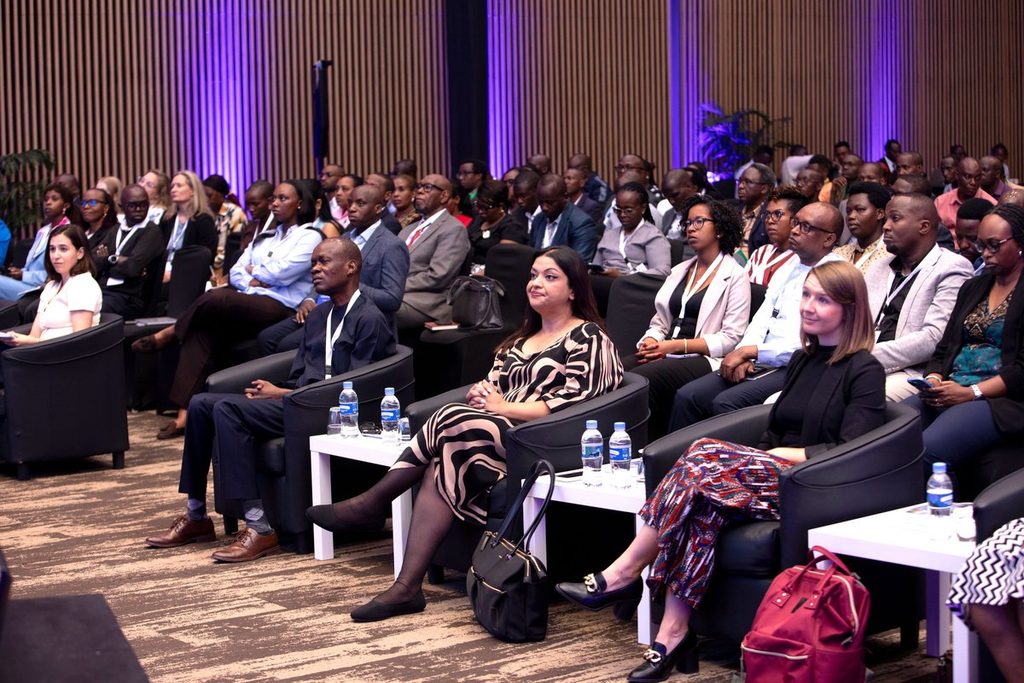
Soumaya Maghnouj, an analyst in the PISA Directorate for Education and Skills at the Organisation for Economic Co-operation and Development, said the results give Rwanda an opportunity to examine its education system against international evidence and identify areas that require attention, including teaching, school resources and student support.
Muganga said the results would provide a baseline for Rwanda before its next participation in 2029.
“This is the first of its kind. When we do the second one in 2029, we should be able to see whether the investments we are making to address the gaps are producing results and whether we are improving our education system,” he said.
Globally, more than 760,000 students in 91 countries and economies took part in PISA 2025.