

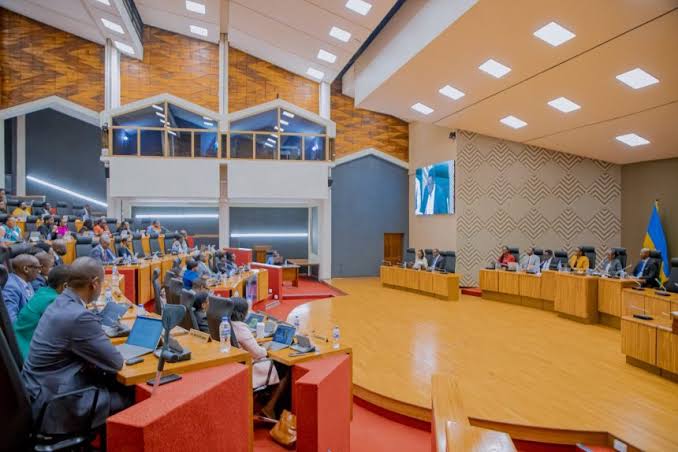
Rwanda’s Parliament has raised concerns over delays in implementing public projects worth Rwf61.6 billion, blaming slow contract reviews and centralized procurement for holding up development projects and increasing government costs.
The concerns were raised on Tuesday as the Parliamentary Public Accounts Committee (PAC) presented its analysis of the Auditor General’s report for the 2024/25 financial year.
PAC found that contracts worth Rwf61.559 billion, awarded by nine government institutions, had not progressed to implementation because of delays in reviewing and finalizing agreements.
Lawmakers said the findings exposed weaknesses in public procurement management.
MP Beth Murora said each of the nine institutions was handling contracts averaging about Rwf6.8 billion, making the delays difficult to justify.
“These are not small amounts for institutions mandated to oversee public procurement. It raises serious questions about how procurement responsibilities are being managed,” she said.
Murora also argued that Rwanda’s centralized procurement model has made government contracts more expensive while limiting opportunities for small contractors.
She cited procurement managed by the Rwanda Information Society Authority (RISA), saying services such as document scanning and printing can cost up to four times more than when institutions procured them independently.
PAC Chairperson Valens Muhakwa echoed those concerns, saying consultations with RISA confirmed that large, centralized tenders often exclude smaller firms.
He also attributed project delays to centralized purchasing of equipment. Muhakwa said districts sometimes award contracts but must wait months for RISA to procure essential items such as computers before work can begin.
“You ask why a project has not started, and they tell you the contract was awarded nine months ago but they are still waiting for the equipment,” he said.
Muhakwa said RISA had informed the committee that it plans to split large tenders into smaller lots, a move expected to allow more local contractors to compete while speeding up project implementation.
The recommendations come as Rwanda reviews its public procurement law to improve efficiency, competition and value for public spending.