

Rwanda’s financial sector continued to expand in the first half of 2026, with total assets rising to Rwf17.5 trillion as lending, pension contributions, insurance and digital payments all recorded strong growth, the National Bank of Rwanda said Thursday.
The expansion has come alongside strong capital and liquidity positions across financial institutions, giving the sector greater capacity to support economic activity while absorbing potential shocks, according to the central bank’s latest Monetary Policy and Financial Stability Statement.
Financial-sector assets increased 22.8% from June 2025, raising the sector’s assets-to-GDP ratio to 68%, from 66% a year earlier.
Lending also increased, with loans issued by financial institutions rising 22% to Rwf7 trillion. The quality of those loans remained broadly sound, with non-performing loans at banks and microfinance institutions staying below the regulatory maximum of 5%.
Banks reported a capital adequacy ratio of 22% and a liquidity coverage ratio of 279% in June. Microfinance institutions recorded ratios of 30% and 65%, respectively, all above regulatory requirements.
The pension and insurance sectors also recorded gains. Pension contributions reached Rwf457 billion in June, up 51.7% from a year earlier, while private insurers recorded underwriting returns of Rwf8.3 billion.
Digital payments continued to expand as financial services became more interconnected. Electronic payments during January-June were equivalent in value to 341% of GDP, compared with 321% in the same period of 2025.
The e-Kash interoperable payment system had 10.3 million active accounts by September and had processed 28.9 million transactions, with an average success rate of 97.8% since its rollout.
Financial inclusion has reached 96%, Deputy Governor Nick Barigye said. But he said the next challenge was to turn access to financial services into greater financial well-being.
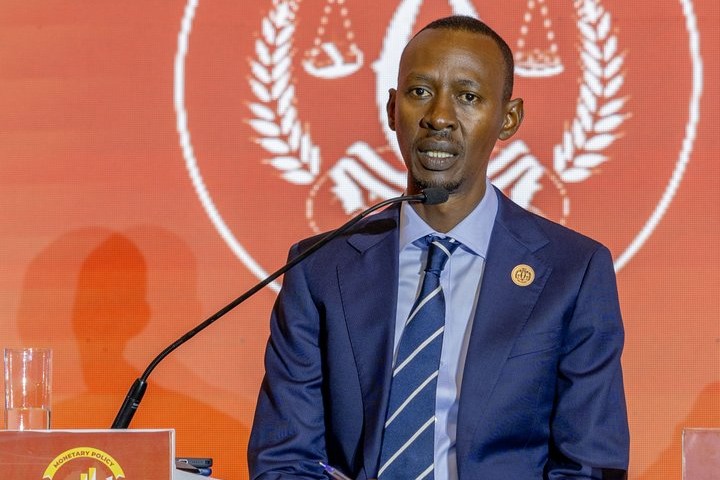
That would require strengthening financial health and resilience, expanding access to insurance and credit and helping households prepare for future economic shocks, he said.
The expansion of financial services comes as Rwanda’s economy continues to grow rapidly but faces persistent inflationary pressure.
Real GDP grew 9.7% in the first half of 2026, supported by services, industry and agriculture, with construction and manufacturing among the key contributors, Governor Soraya M. Hakuziyaremye said.
But headline inflation averaged 11.2% during the first half of the year, up from 7.3% in the second half of 2025, before reaching 15.7% in August.
Hakuziyaremye said the central bank had limited ability to influence fuel prices because they are largely determined by international markets, where supply disruptions and geopolitical tensions can push prices higher.
“On petroleum product prices, I don’t see what the National Bank of Rwanda can do because these are international prices,” she said while responding to journalists after presenting the statement.

She said Rwanda had nevertheless managed to maintain fuel supplies despite disruptions linked to the war in the region. A government arrangement to pool petroleum imports could further strengthen fuel security and allow domestic prices to benefit when international oil prices fall, she said.
Food prices are another major source of inflationary pressure, Hakuziyaremye said. Increased access to subsidised fertiliser and preparations for the agricultural season could help raise domestic food production and ease price pressures in the coming year.
The central bank expects inflation to remain above its 2%-8% target range in the second half of 2026 before easing in 2027 as domestic cost pressures subside and earlier shocks fade. Adverse weather and continued tensions in the Middle East remain key risks.

The bank raised its Central Bank Rate to 8.75% in August as part of efforts to contain inflation. The average interbank rate rose to 7.43% in the first half of 2026, from 6.54% in the same period a year earlier.
Hakuziyaremye said Rwanda’s ambition to become an upper-middle-income country by 2035 would require the country to build resilience and sustain growth above 9% under the second National Strategy for Transformation.
The central bank said it would continue monitoring risks including global uncertainty, concentration of credit and deposits, investment concentration among non-bank financial institutions, fraud and cyber threats as it works to safeguard financial stability and confidence in the financial system.