

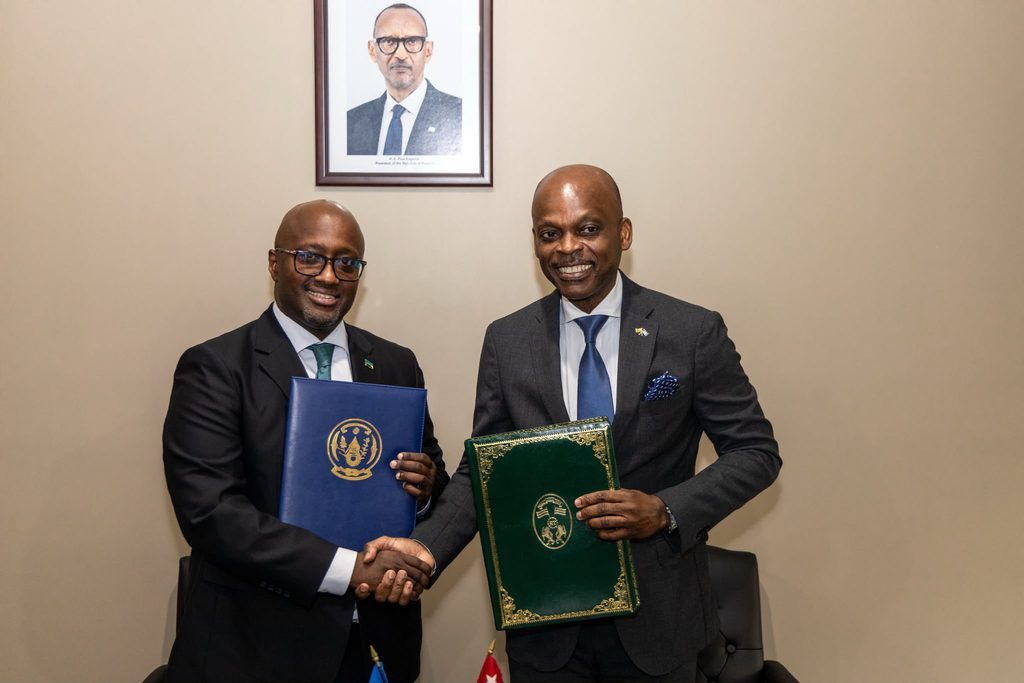
Rwanda and Togo have signed a series of agreements aimed at strengthening political cooperation and expanding ties between the two countries, as Kigali looks to deepen its links with West African markets.
The agreements were signed in New York on the sidelines of the United Nations General Assembly by Rwanda’s Foreign Minister Olivier Nduhungirehe and his Togolese counterpart Robert Dussey.
The package includes arrangements for political consultations, the establishment of a joint commission to oversee bilateral cooperation and agreements covering cooperation in several areas.
The two ministers expressed their governments’ commitment to strengthening relations in ways that benefit their citizens and support wider African integration.
For Rwanda, the partnership with Togo could provide an additional route into West African markets through trade, investment and transport links, while giving both countries an opportunity to make greater use of the African Continental Free Trade Area.
The agreement builds on recent discussions between the two countries on expanding trade, adding value to products and increasing agricultural exports. Rwanda’s trade and industry minister held talks with Togolese officials in May on those areas.
Togo occupies a strategic position in West African commerce, with the Port of Lomé serving as an important regional gateway. Rwanda, a landlocked country, could use the port to connect its businesses to markets in the region.
The two countries also see scope for cooperation in agriculture, technology, financial services and climate-related initiatives.
Togo produces commodities including cotton, coffee, cocoa, soybeans and cashew nuts, while Rwanda has identified agriculture and value addition as areas with potential for increased trade.
The countries also intend to explore cooperation on biodiversity conservation and responses to climate change.
The latest agreements add to efforts by Rwanda and Togo to deepen economic and political links as African countries seek to increase intra-African trade and regional connectivity.