
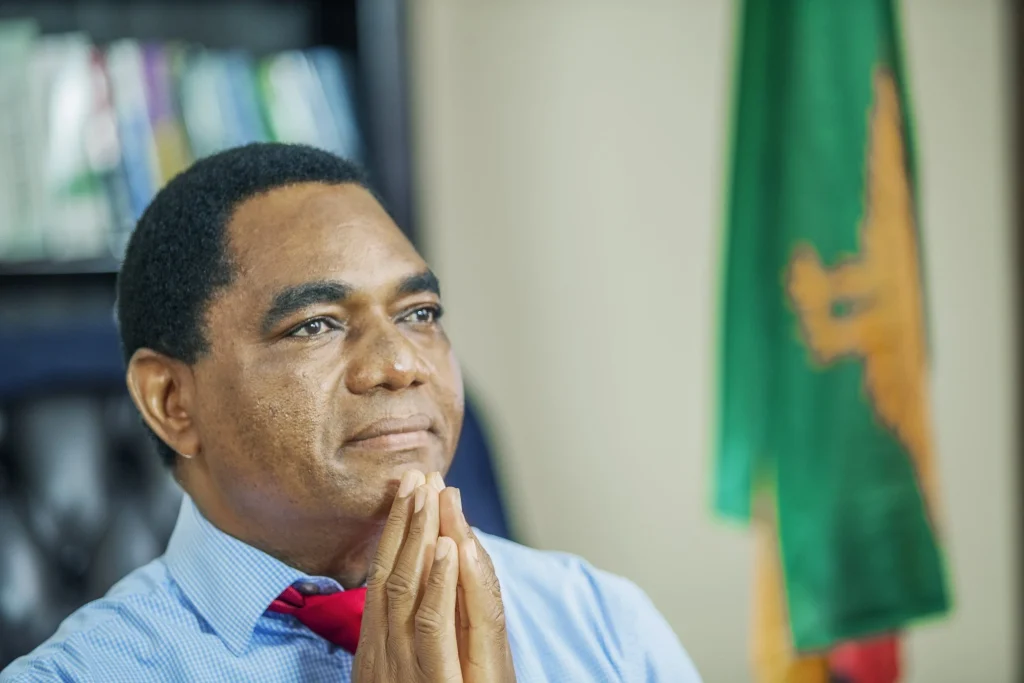
Zambian President Hakainde Hichilema has secured a second five-year term, giving him another mandate to turn an economic recovery into broader gains for a population still struggling with the cost of living.
The Electoral Commission of Zambia declared Hichilema the winner Tuesday with 61.4% of the vote, or 2,965,326 votes, against 38% for his closest challenger, opposition leader Brian Mundubile.
The result extends Hichilema’s political comeback after years as an opposition leader and follows a first term in which his government made debt restructuring and economic stabilization central priorities.
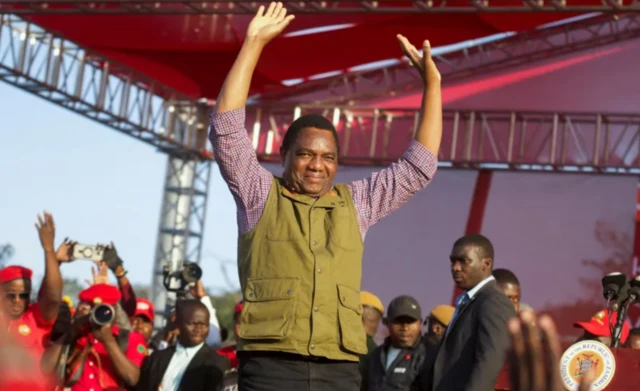
When Hichilema took office in 2021, Zambia was emerging from a severe debt crisis after becoming the first African country to default on its sovereign debt during the COVID-19 pandemic. His government subsequently reached agreements with creditors, worked with international lenders and sought new investment in mining and other sectors.
But the economic improvements have not translated into an equally strong sense of relief for many Zambians. High living costs, unemployment and pressure on household incomes became major issues during the election campaign and helped the opposition mount a stronger challenge than some had expected.
Hichilema, 64, has also staked much of his second-term agenda on Zambia’s mineral wealth. The country is Africa’s second-largest copper producer and wants to raise annual output to 3 million metric tons, while attracting investment into copper, cobalt, nickel and manganese.
Investors have welcomed his re-election as a sign of policy continuity, but his next challenge will be converting economic stability into faster growth, jobs and improved living standards.
Hichilema’s political journey has been unusually long. He contested the presidency several times before defeating then-President Edgar Lungu in 2021. He has said he was arrested 15 times during his political career and spent four months in a maximum-security prison in 2017 after being charged with treason. The charges were later dropped.
Before politics, Hichilema built a business career spanning finance, ranching, property, health care and tourism. Raised in a poor family in southern Zambia, he studied economics and business administration at the University of Zambia before earning an MBA from the University of Birmingham in Britain.
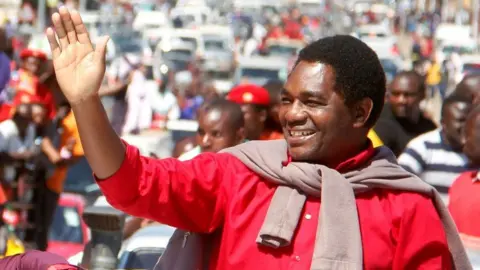
He has often described himself as a “cattle boy,” reflecting his upbringing and continuing involvement in ranching.
His second term will test whether the businessman-turned-politician can deliver the next stage of Zambia’s recovery — one that is felt beyond economic statistics and reaches ordinary households.