
Rwanda has signed an agreement with Tanzania to import refined petroleum products through the Port of Tanga, expanding its fuel supply network as the government moves to diversify import routes and strengthen the country’s energy security.
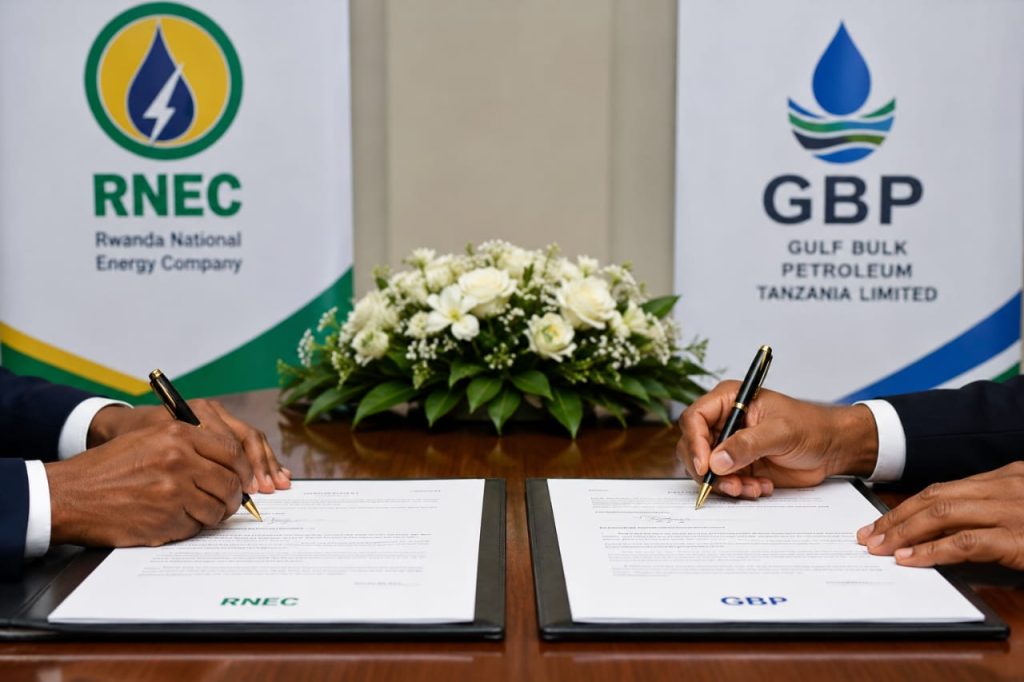
The agreement was signed between the Rwanda National Energy Company (RNEC), the state-owned company responsible for petroleum imports and distribution, and Gulf Bulk Petroleum Tanzania Limited (GBP). Under the deal, gasoline and diesel will be imported through the Port of Tanga, adding another key corridor to Rwanda’s fuel supply network.
The agreement follows a similar deal Rwanda signed with Kenya on June 29, 2026, giving the country access to petroleum storage facilities, transportation infrastructure and pipeline services linked to the Port of Mombasa. Together, the agreements are part of Rwanda’s broader strategy to reduce dependence on a single fuel import route and strengthen the resilience of its petroleum supply chain.
According to the Ministry of Trade and Industry, the Tanga agreement will facilitate the importation of refined petroleum products through Tanzania while expanding the country’s supply corridors.
Rwanda imports all of its petroleum products through neighboring countries because it is landlocked. Most fuel enters the country through the ports of Dar es Salaam in Tanzania and Mombasa in Kenya.
The addition of the Port of Tanga provides Rwanda with another route for importing fuel, complementing the existing corridors through Dar es Salaam and Mombasa. Officials say expanding the number of supply routes is intended to improve the reliability of fuel deliveries, reduce logistical bottlenecks and strengthen long-term energy security.
The agreement also reflects growing regional cooperation on energy and trade within the East African Community by strengthening links between Rwanda, Tanzania and Kenya in the movement of petroleum products.
RNEC was established to oversee the importation and distribution of petroleum products in Rwanda. The company is responsible for ensuring a reliable and sustainable fuel supply to support transportation, industry and broader economic development.
The agreement comes as Rwanda continues to experience higher fuel prices alongside volatility in global energy markets. Over the past three months, the price of gasoline has increased by 949 Rwandan francs ($0.66) per liter, representing a 47.7% rise, while diesel has climbed by 979 francs ($0.68) per liter, or 50.3%, underscoring the importance of securing stable and diversified fuel supply routes.