
Chinese Premier Li Qiang has called for stronger international cooperation to improve access to traditional medicine and help countries respond to global health challenges.
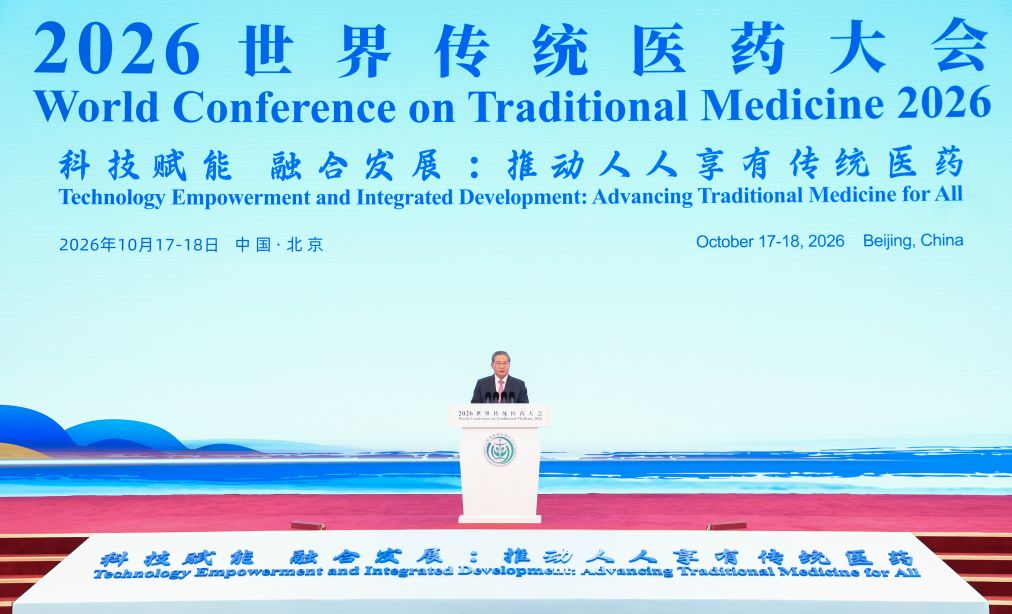
Speaking at the opening of the World Conference on Traditional Medicine 2026 in Beijing on October 17, Li said countries should make better use of traditional medical knowledge while strengthening scientific research and exchanges.
He described traditional medicine as an important resource for protecting human health and preserving cultural heritage, saying its development could also strengthen cooperation and understanding among nations.
Li said China was ready to deepen collaboration with foreign research institutions and businesses, including through efforts to improve the conservation and use of medicinal resources. He also called for more inclusive access to traditional medicine and greater efforts to narrow inequalities in global healthcare.
The conference, held on October 17–18 at the China National Convention Center in Beijing, brought together government representatives, researchers and other stakeholders to discuss the development of traditional medicine and its relationship with modern healthcare.
Its theme was “Technology Empowerment and Integrated Development: Promoting Traditional Medicine for All”. The programme included discussions on evidence-based research, regulation, education, medicinal plant conservation, artificial intelligence and the integration of traditional and modern medicine.
The World Health Organization worked with Chinese institutions to convene the conference, which was intended to advance international dialogue on traditional medicine.
Li also drew a comparison between traditional medicine’s emphasis on holistic treatment and the need for inclusive international economic governance. He said countries should favour cooperation and shared progress over approaches that place one country’s interests at the expense of others.
The conference’s discussions reflected wider efforts to examine how traditional medical practices can be researched, regulated and incorporated into healthcare systems while improving access and supporting cooperation across countries.