
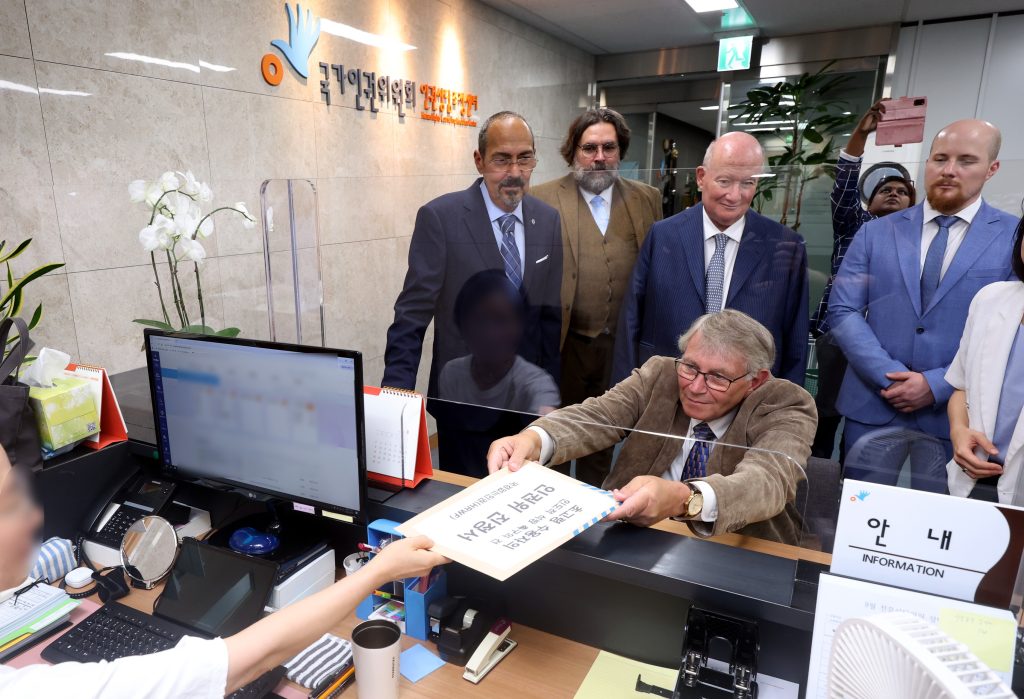
International human rights organizations and scholars called Friday for the release of Shincheonji Church Chairman Lee Man-hee from pretrial detention, citing his age and concerns about proportionality, due process and freedom of religion.
Human Rights Without Frontiers (HRWF), CAP Liberté de Conscience, FOREF, CESNUR and Bitter Winter made the appeal at a press conference at the Seoul Foreign Correspondents’ Club focused on freedom of religion or belief and freedom of expression in South Korea.
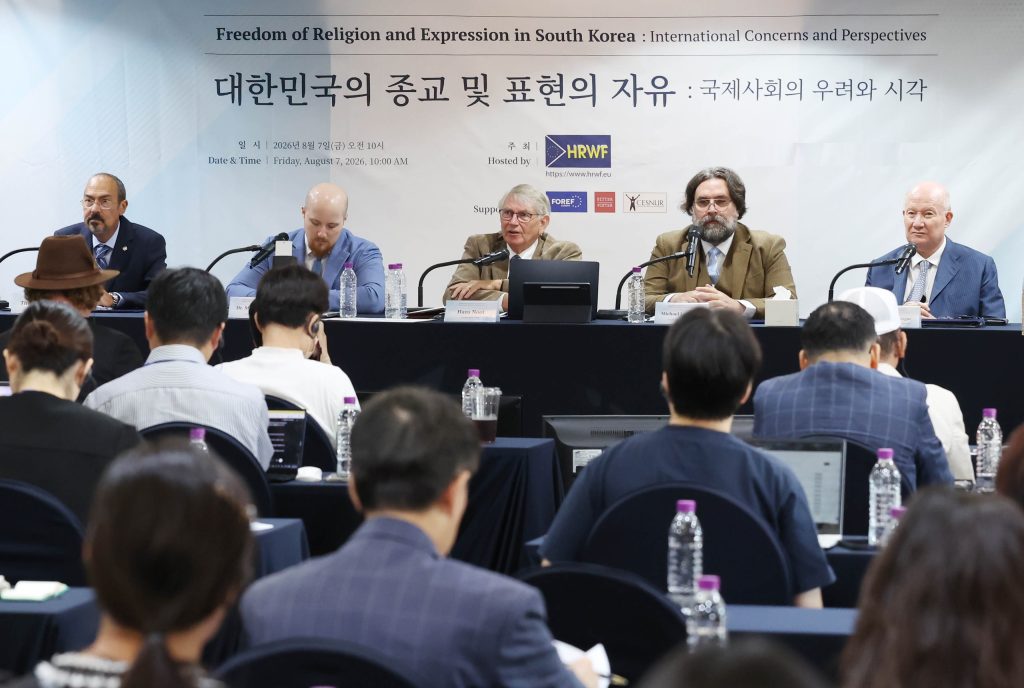
The groups questioned whether keeping Lee, 95, in custody is necessary and proportionate and urged South Korean authorities to consider alternatives that would allow him to stand trial without being detained. They also raised concerns about the treatment of other elderly religious figures, including 83-year-old Hak-ja Han Moon of the Family Federation.
Hans Noot, associate director of HRWF, said the issue was not about defending a particular religious movement but about ensuring that fundamental rights apply equally to all.
“The issues at stake lie at the heart of democratic society,” Noot said.
Thierry Valle, president of CAP Liberté de Conscience, questioned whether Lee’s detention was consistent with South Korea’s international human rights obligations. He referred to the country’s ratification of the International Covenant on Civil and Political Rights in 1990 and the Convention Against Torture in 1995.
Valle said the presumption of innocence must be respected and that democratic countries have less restrictive measures available for elderly defendants. He cited the 2022 release on bail of Cardinal Joseph Zen in Hong Kong and the treatment of Vietnamese Buddhist Patriarch Thich Quang Do as examples.
Michael Langhans, executive director of FOREF Germany, questioned whether Lee’s detention was necessary given the evidence gathered by authorities. He also raised concerns about whether the case had been influenced by descriptions of Shincheonji as a “sect” or “cult.”
Márk Nemes, deputy director of CESNUR, said the issue had implications beyond South Korea because Shincheonji has congregations in countries around the world. He referred to recent research involving congregations in Europe, Argentina and Australia and said hostility toward the movement had increased.
Massimo Introvigne, managing director of CESNUR and editor in chief of Bitter Winter, said international standards, including the U.N. Mandela Rules, should be considered in Lee’s case. He argued that alternatives to imprisonment should be considered for an elderly defendant accused of a nonviolent offense.
The conference also addressed wider religious-freedom issues in South Korea, including conscientious objection to military service, opposition to a mosque project in Daegu, religious accommodation in education and reported scrutiny of Segero Church in Busan.
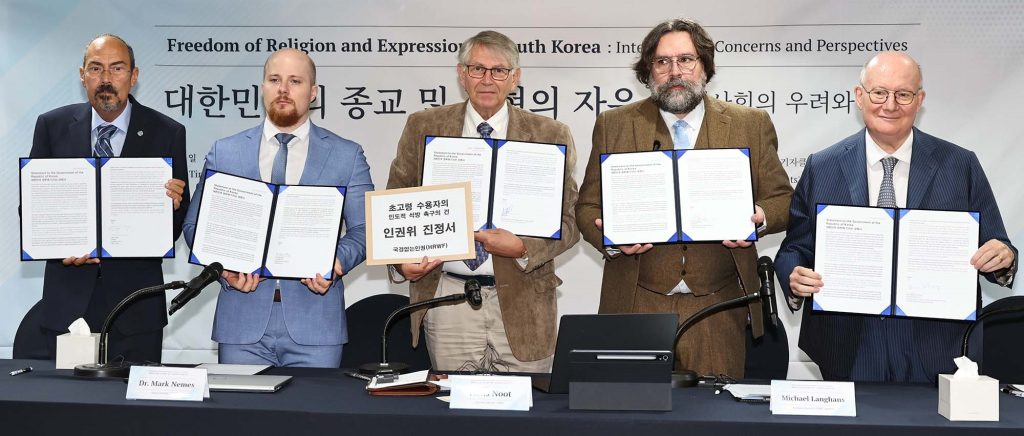
Ryu Jae-sik, head of the Seoul branch of the Association of Korean War Veterans, said he was not asking authorities to overlook possible wrongdoing but questioned whether fundamental rights were being applied equally.
Ryu said Shincheonji had provided assistance to Korean War veterans over the years and noted that Lee was himself a Korean War veteran.
“No matter how strict legal procedures may be, they cannot take precedence over human dignity and life,” Ryu said.
At the end of the conference, Noot, Introvigne, Valle, Langhans and Nemes signed a joint statement calling for Lee’s immediate release.
The scholars said three of them had met Lee at his place of detention on Aug. 6. They said they respected South Korea’s judicial institutions but urged authorities to consider less restrictive measures, including house arrest, while allowing the case to proceed.
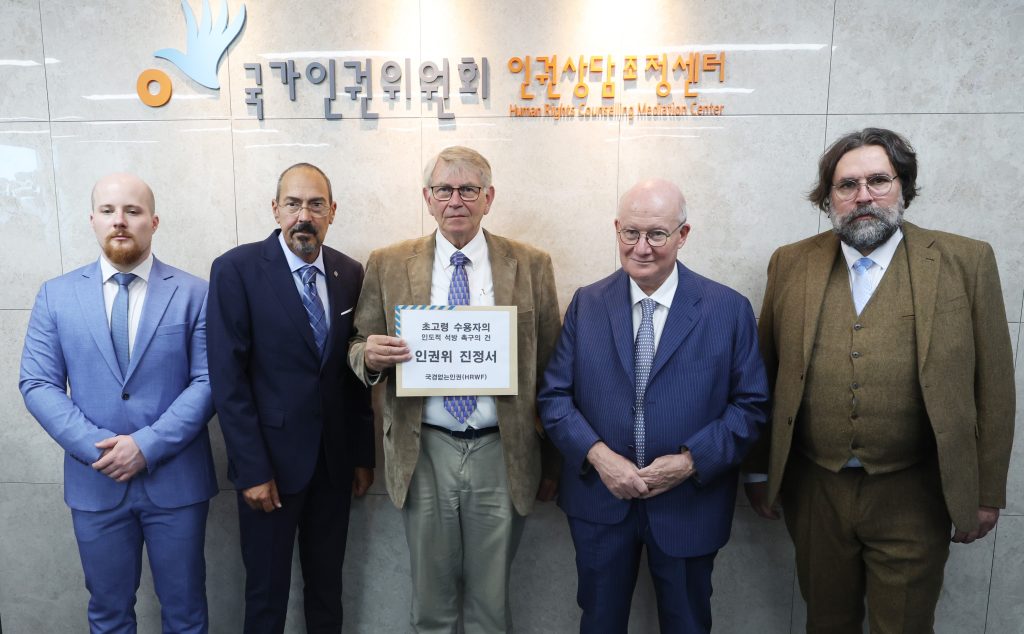
The organizations said they would continue to document developments concerning freedom of religion or belief in South Korea.