

Poor agricultural harvests and prolonged dry spells are reducing the ability of some rural households in Rwanda to save, with residents in Kayonza District saying lower earnings and rising living costs have left them with less money to contribute to savings groups.
Nyirahabimana Deborah, a resident of Gahini Sector, said her weekly contribution to a community savings group had dropped from Rwf2,000 to Rwf500 after a poor farming season. There are also weeks when she cannot contribute.
She said better rainfall and improved harvests would help her return to saving more regularly.
Her experience reflects the difficulties faced by households that depend on agriculture for income and whose ability to save is affected by weather conditions.
Pudence Rubingisa, Governor of Eastern Province, said prolonged dry conditions had affected agricultural production in several parts of the province, particularly Mwiri, Ndego and Nasho sectors.
He said authorities were encouraging farmers to grow crops that can withstand changing weather conditions and mature within shorter periods.
These include cassava, sweet potatoes and fast-maturing bean varieties that require less rainfall.
Rubingisa said irrigation projects were also being implemented in areas frequently affected by drought to help farmers improve production. Authorities are also seeking to promote other income-generating activities so that household livelihoods do not depend entirely on rain-fed agriculture.
The issue was raised during celebrations marking International Savings Day in Mukarange Sector, Kayonza District, on Thursday, November 5, under the theme “Saving, the Foundation of Development”.
Figures presented by the Ministry of Finance and Economic Planning show that savings through community savings groups, Umurenge SACCOs and the Ejo Heza long-term savings scheme have exceeded Rwf445 billion.
Hategekimana Cyrille, Director General in charge of banking at the ministry, said more than 15,000 registered savings groups hold over Rwf54 billion, while Umurenge SACCOs have accumulated Rwf301 billion from more than 4.4 million members. Ejo Heza savings have surpassed Rwf90 billion.
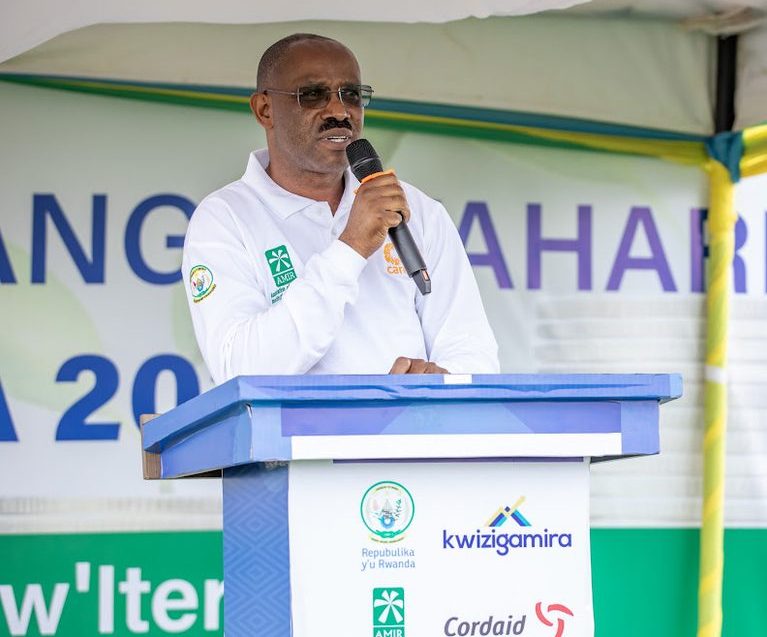
He urged residents to continue saving even when they face economic difficulties, saying households should make saving a habit rather than waiting until they have money left over.
However, another resident, Rumenerangabo Jean Paul of Mukarange Sector, said higher food prices had forced him to reduce his weekly savings from Rwf10,000 to Rwf5,000.
Data from the National Institute of Statistics of Rwanda show that consumer prices rose by 17.2 per cent in September 2026 compared with the same month in 2025.
The 2024 FinScope survey put Rwanda’s savings at 12.4 per cent of gross domestic product, against a government target of 25.9 per cent by 2029.

The figures show the importance of savings groups and financial institutions in mobilising household resources, while the experiences of rural residents point to the role of reliable agricultural production and more diverse sources of income in helping families save consistently.