
Off-grid solar systems are expected to play a key role in efforts to provide electricity access to every Rwandan by 2029, alongside expansion of the national grid, the Ministry of Infrastructure has said.
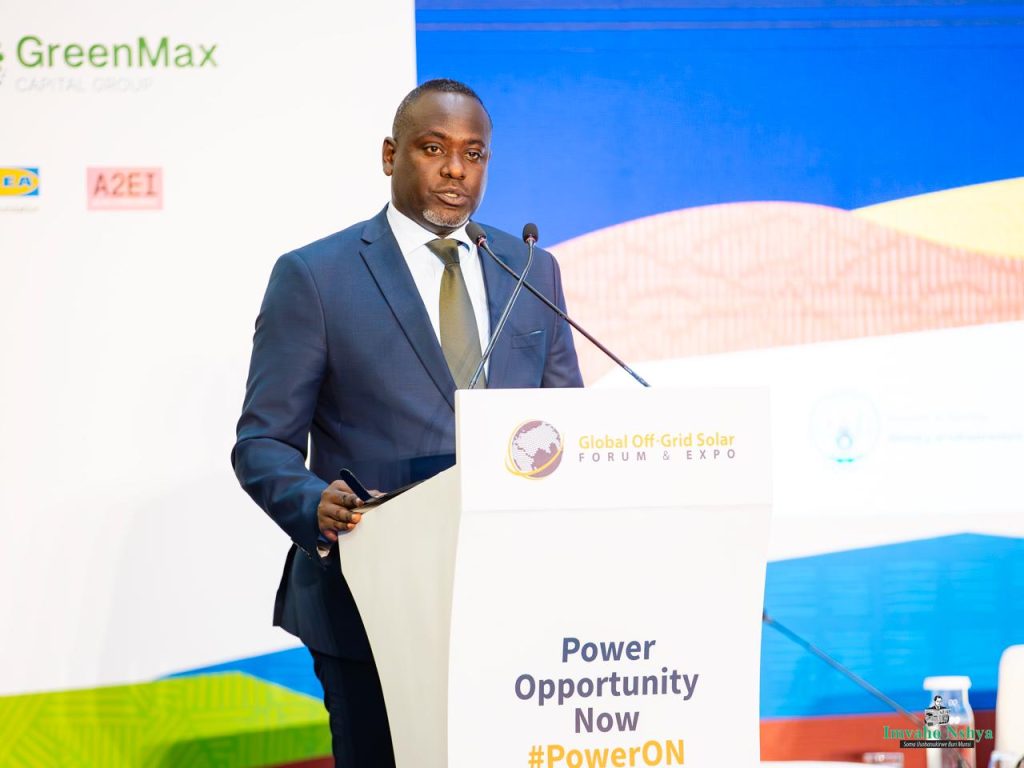
Zingiro Armand, State Minister in the ministry, outlined the approach on October 27 at the opening of the Global Off-Grid Solar Forum & Expo 2026 in Kigali.
Figures from the ministry show that 84.6 per cent of households had access to electricity by the end of July 2025. Grid connections accounted for 59.6 per cent, while 25 per cent relied on off-grid sources, mainly solar.
Zingiro said expanding access alone was not enough, arguing that electricity must also be affordable and reliable and support productive activities.
“Our goal is not simply to bring electricity into homes, but to enable productive economic activities, create jobs and improve people’s livelihoods,” he said.
He identified solar-powered irrigation, cold storage and food processing as areas where electricity could help farmers increase production and reduce post-harvest losses.
However, the minister said reaching universal access would require more investment and stronger cooperation between governments, private companies and development finance institutions.
About 600 million people worldwide still lack electricity, most of them in sub-Saharan Africa, according to figures cited at the forum.
Zingiro urged governments to develop projects capable of attracting investors, improve access to credit, introduce mechanisms for sharing investment risks and maintain predictable policies to encourage private-sector participation.
“Africa does not lack sunshine that can be converted into electricity; our challenge is mobilising enough investment to turn that opportunity into benefits for our people,” he said.
A report released at the forum estimates that off-grid solar could offer the least-cost electricity solution for at least 398 million people without power. It estimates that about $11.4 billion would be needed to reach those populations by 2030.
The report highlights affordability as a major obstacle, with many households unable to pay for solar systems even when instalment-based financing is available.
Dr Daniel Alexander Schroth, head of the African Development Bank’s renewable energy division, said the bank would continue providing financial instruments and technical assistance to support energy projects. He also highlighted efforts to reduce investment risks and increase lending in local currencies.
The three-day forum, running from October 27 to 29, brought together government officials from 24 African countries, four regional organisations, investors and other energy-sector stakeholders to exchange experience and explore ways to accelerate electricity access.