
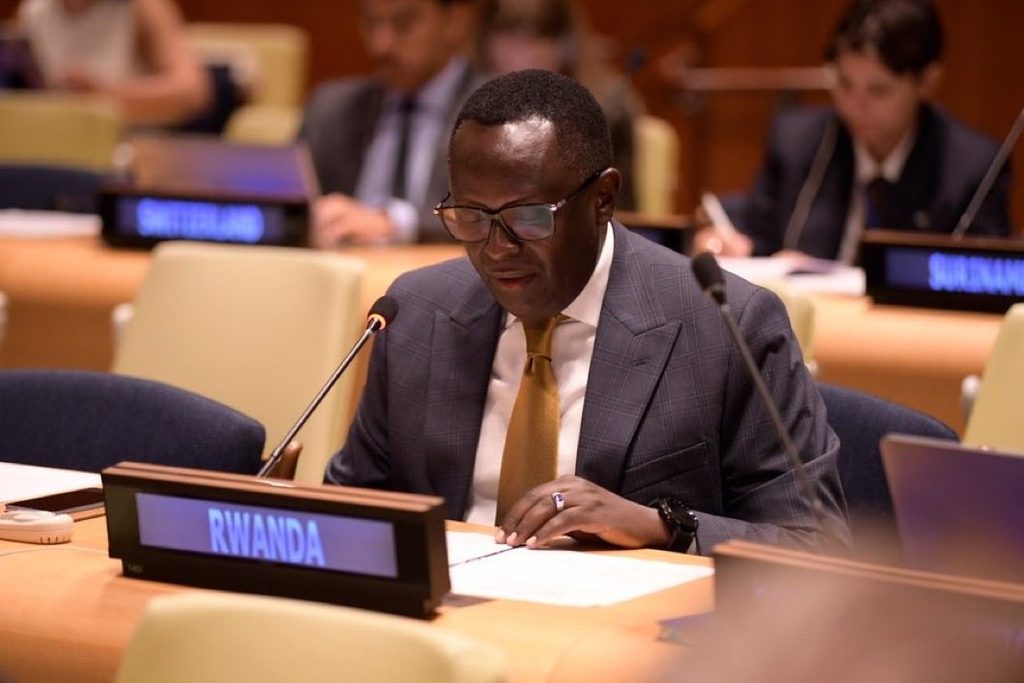
Rwanda’s ambassador to the United Nations, Martin Ngoga, has called on governments to act against hate speech before it develops into discrimination, violence or other abuses, saying those who promote such narratives should be held accountable.
Speaking at a UN global conference on countering hate speech in New York on Sept. 17, Ngoga said governments should not wait for the issue to become an international crisis before responding.
“Hate speech is a problem that all countries are required to fight, without tolerance,” he said, calling for political commitment and clear leadership to identify early warning signs and address them at national level.
Ngoga said hate speech can take different forms, including language that dehumanises people or targets communities on the basis of ethnicity, region or other characteristics.
He said political leaders have a particular responsibility because the use of identity, fear and historical grievances for political purposes can give hateful narratives greater legitimacy. He also called for people who engage in hate speech to be held accountable.
Rwanda’s experience of the 1994 Genocide against the Tutsi, he said, showed the consequences of allowing discriminatory and dehumanising rhetoric to take root.
“Before the Genocide against the Tutsi in 1994, language that stripped some Rwandans of their humanity and promoted discrimination had already been normalised,” Ngoga said.
He recalled that media outlets were later used to encourage people to participate in killings, contributing to the genocide in which more than one million people were killed, according to Rwanda’s government and other historical accounts.
Ngoga said preventing similar violence requires countries to address the underlying causes of hate speech and ensure that political leaders and others do not use social divisions to advance their interests.
The UN conference brought together governments and other stakeholders to discuss interreligious and intercultural dialogue, tolerance and measures to counter hate speech. The UN has said hateful narratives can fuel discrimination, violence and, in extreme cases, atrocity crimes.
The UN has also highlighted the role of digital technologies, including artificial intelligence, in accelerating the spread of hateful content while calling for governments, technology companies, media organisations and civil society to strengthen prevention efforts.