
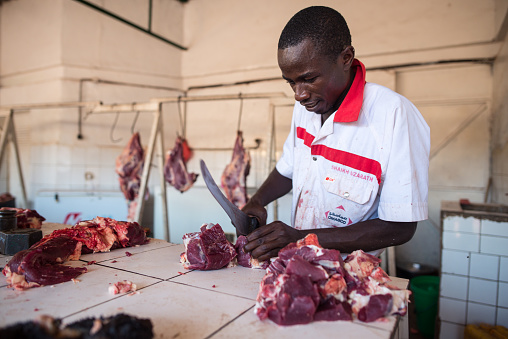
The cost of meat in Rwanda’s urban areas rose by more than a third over the past year, adding to a broader increase in food prices that is putting pressure on household budgets.
Meat prices climbed 33.8% in July 2026 from a year earlier, while the price increase accelerated sharply within the month, rising 17.8% between June and July, according to the latest Consumer Price Index from the National Institute of Statistics of Rwanda, or NISR.
The increase made meat one of the fastest-rising food categories tracked in the monthly inflation report.
NISR does not give a specific reason for the sharp rise in meat prices. But meat traders in some parts of the country say supply disruptions have contributed to higher prices, amid measures introduced in areas affected by Rift Valley fever, a livestock disease that can also infect humans.
Some traders said a kilogram of meat that previously sold for about 7,000 Rwandan francs is now selling for between 12,000 and 13,000 francs in some markets.
The government has introduced measures in affected areas to contain Rift Valley fever, including controls on livestock movement and restrictions on activities that could facilitate the spread of the disease.
However, the NISR data does not establish a direct link between those measures and the increase in meat prices.
The rise in meat prices comes against a broader increase in food costs. Prices for food and non-alcoholic beverages in urban areas were 13.1% higher in July than a year earlier, although the category increased by a more modest 1.5% from June.
Vegetables recorded an annual increase of 19.8%, despite falling 0.8% between June and July. Bread and cereals rose 7% over the year, while milk, cheese and eggs increased 5.9%.
Meat accounts for 2% of the basket used to calculate Rwanda’s Urban Consumer Price Index. NISR estimates that the increase in meat prices contributed 1.1 percentage points to the annual increase in the urban CPI.
Overall, consumer prices in urban areas rose 14.5% in July compared with July 2025, while the monthly increase was 0.9%.
Across Rwanda, the CPI increased 13.8% over the year, compared with a 13.3% increase in rural areas.
NISR collects prices each month for 1,622 goods and services from sources including markets, shops, hospitals and schools. The data is used to measure changes in the prices of goods and services purchased by households.