
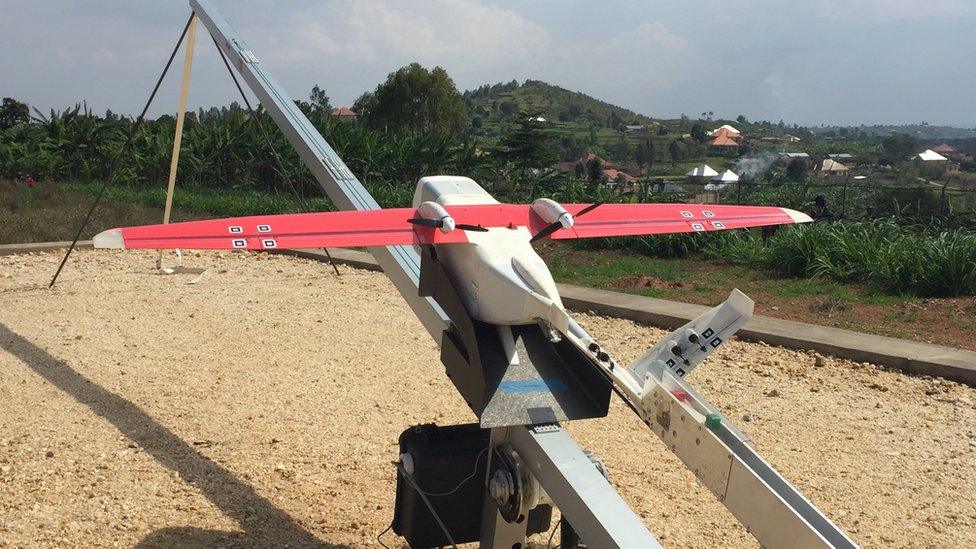
Rwanda is set to lead a major expansion of Zipline’s AI-powered medical drone network in Africa, backed by $150 million from the U.S Department of State.
The investment will help scale deliveries of blood, vaccines, and medicines across four African countries, starting with a new hub in Karongi.
The hub will serve districts that previously lacked reliable drone access. Karongi’s location will allow drones to reach Nyamasheke, Rusizi, and Bugarama, improving delivery speed to hospitals and clinics in the western region.
Zipline, a U.S. based company, has been operating in Rwanda since 2016, with hubs in Muhanga and Kayonza.
“Finally, we can reach every corner of our districts,” said Pierre Kayitana, Country Director of Zipline Rwanda.
“The new Karongi hub fills a gap that has left communities in the western region underserved. We’re bringing life-saving supplies closer to the people who need them.” Zipline reports that its autonomous drones have completed 1.8 million deliveries without a single safety incident.
Health officials say the service has helped cut maternal deaths by up to 56% in supported facilities and reduced stockouts of essential medicines by 60%.
“Before Zipline, we sometimes had to wait hours or even days for blood to arrive from larger hospitals,” said Francine Uwimana, a medical assistant from Kirehe District.
“Now, a patient in critical condition can receive the blood they need within an hour.” Nurse Alice Mukamana added, “Patients could die waiting.
With Zipline, help arrives so much faster. It’s life-changing.” Clinics report improvements in vaccine availability as well.
Albertine Uwajeneza, a flight and cold-chain technician at Zipline Rwanda, said staff are being trained to prepare for drone-based vaccine deliveries. “The vaccines transported by drones are kept in a cold system so that they move from the national centre to health centres without spoilage. We use ice packs to maintain vaccine temperatures,” she said.
Expanding to Western Rwanda
Karongi was selected because of its strategic location. The region’s hilly terrain and limited road infrastructure make traditional deliveries slow and unpredictable.
The new hub will allow drones to carry blood, vaccines, medicines, and diagnostic samples directly to hospitals and clinics.
“We looked at population density, health facility needs, and geography,” Kayitana said. “Karongi is central to the underserved western districts, and this hub allows us to deliver more efficiently and reliably.” Health workers emphasise that timely delivery can make the difference between life and death.
Clinics can now plan treatments with confidence, knowing that supplies will arrive on time.

Next-Generation Drones
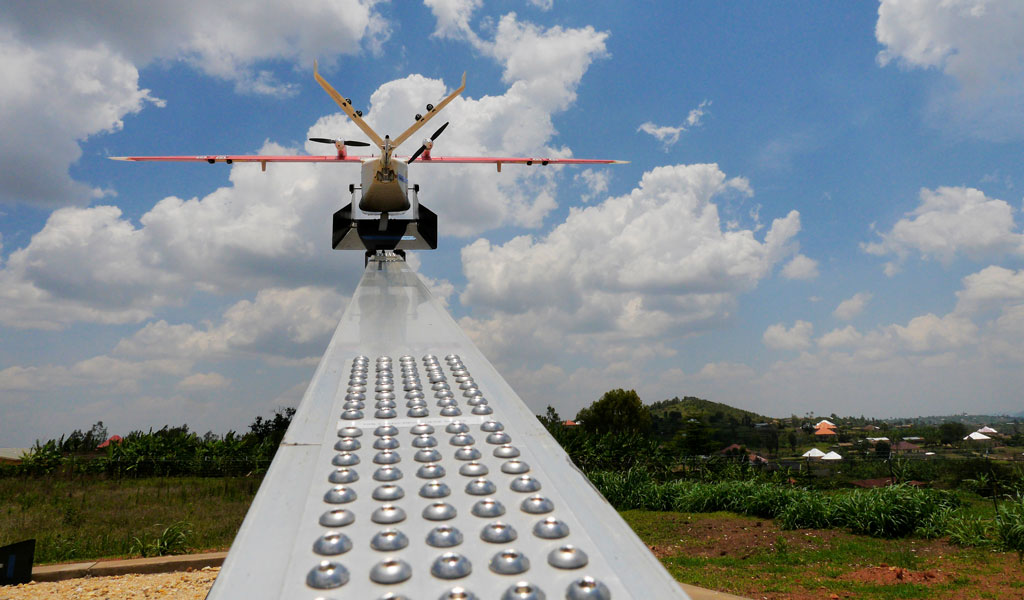
Zipline is preparing to test its next-generation Platform 2 (P2) drones in Kigali next year.
Unlike previous models that dropped packages via parachute, the P2 drones lower goods safely using a tether system, making them suitable for urban areas with high-rise buildings.
Each P2 drone can carry 4-5 kilogrammes enough food or medicines for roughly ten people and travel 20 to 25km per trip at speeds of up to 100km per hour.
“We are confident that in 2026 we will be able to offer Kigali residents this new home-delivery service,” Kayitana said.
“We are very excited and are finalising testing before the official launch.” The drones are fully electric and autonomous, which reduces environmental impact and delivery costs.
Once operational, they will also support deliveries for groceries, pharmacies, and e-commerce platforms.
Vaccine Delivery and Cold-Chain Innovation
Researchers in Rwanda are testing how drones can improve vaccine delivery. Rural clinics often face unreliable electricity and refrigeration, which can compromise vaccine effectiveness.
The Africa Centre of Excellence for Sustainable Cooling and Cold-Chain (ACES) is working with Zipline to implement a “just-in-time” delivery model, where vaccines arrive shortly before they are needed rather than being stored for long periods.
“The use of drones will ensure vaccines are transported directly from the national centre for vaccines to health centres for immediate vaccination,” said Jean Pierre Musabyimana, Head of the One Health Department at ACES.
Musabyimana said the approach improves efficiency, reduces energy use, and maintains proper cold-chain conditions. “Health systems depend on reliable cold chains to safeguard vaccines and medicines.
In many rural African areas, the cold chain faces major challenges such as unreliable refrigeration equipment, shortage of trained technicians, and unstable electricity supply. These problems often lead to vaccine spoilage and waste,” he noted.
Balancing Innovation and Concerns
Some experts have raised questions about relying heavily on a U.S -based company for essential health logistics, citing concerns over long-term affordability and vendor lock-in. Zipline emphasises that all hubs are staffed by local workers and that Rwandan investment demonstrates the model’s sustainability.
The U.S. funding is structured as a pay-for performance programme, rewarding measurable outcomes rather than simply financing operations. Officials say Rwanda’s leadership in adopting the model will serve as a blueprint for other countries in the region.
Rwanda as a Model for Africa
Rwanda has partnered with Zipline for nearly a decade. At the 9th Aviation Africa Summit in Kigali, President Paul Kagame praised the collaboration. “This technology does not only save time, it saves lives,” he said, noting that drone deliveries could also help drive the future of digital commerce in Africa.
Kayitana highlighted the broader potential of drone deliveries beyond healthcare. “Once the aircraft is ready for commercial use in Kigali, we will discuss with different merchants, restaurants, shops, supermarkets, and pharmacies on a price that f its the budget of customers in Rwanda,” he said.
By 2026, Zipline plans to launch urban deliveries in Kigali, while the Karongi hub ensures faster medical supply delivery to western districts.
Residents and health workers say the expansion could significantly reduce preventable deaths and improve access to essential supplies. “Our mission is to reach everyone who needs help, no matter where they live,” Kayitana said. “Every flight we make brings someone hope, and that is what drives us forward.”