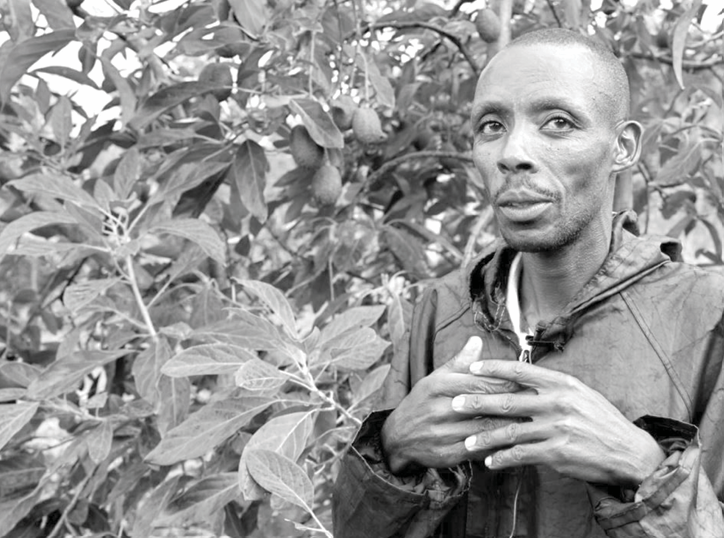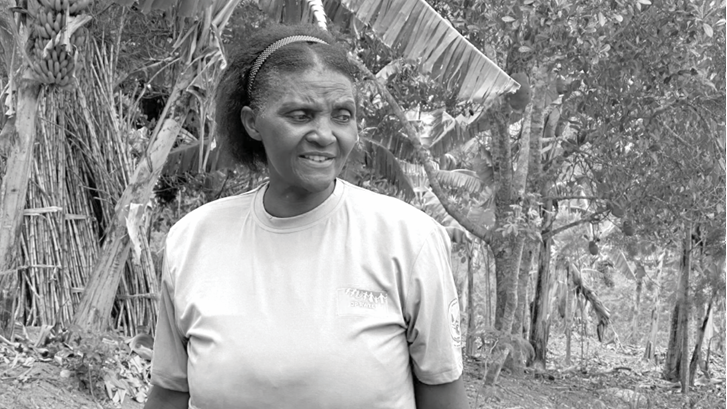

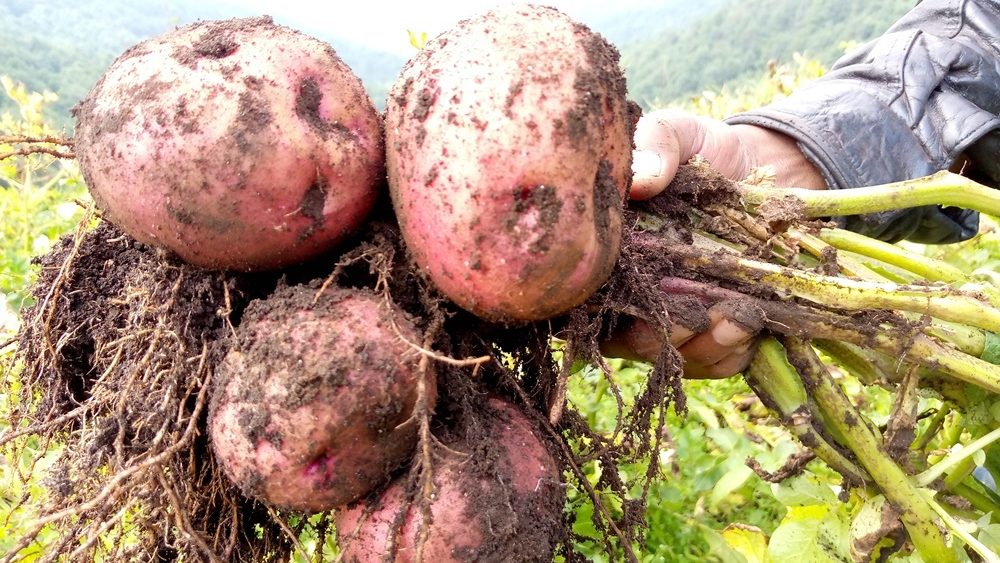

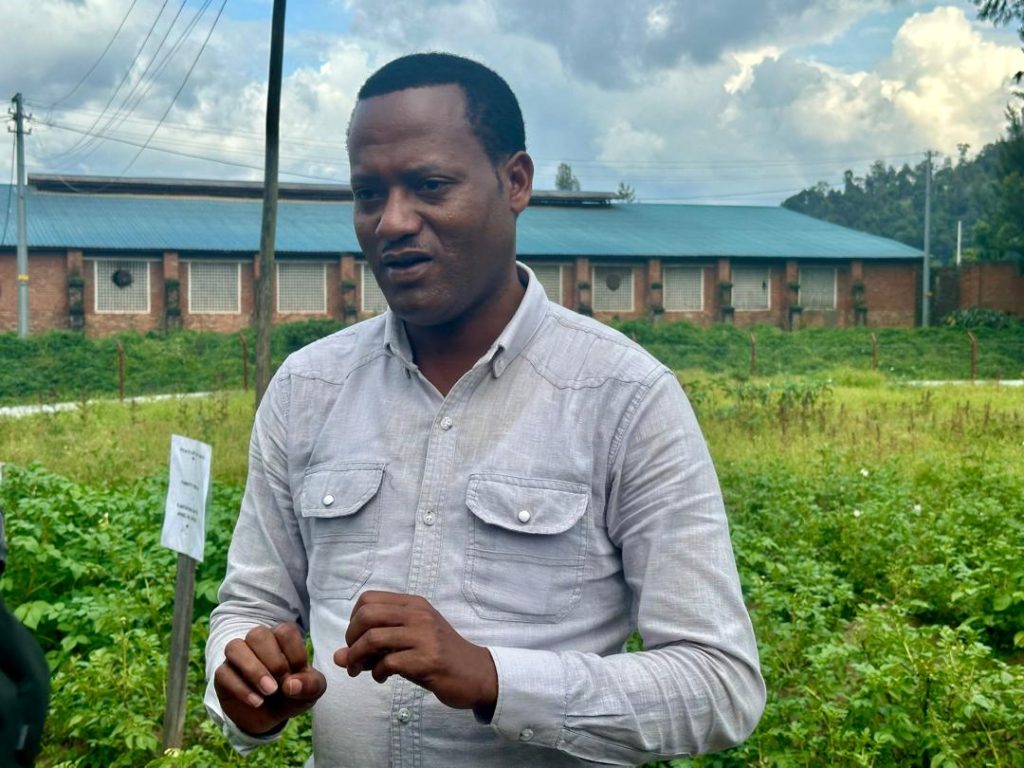
In the misty highlands of Kinigi that span Musanze District in the Northern Province of Rwanda, where volcanic soils have fed generations, 47-year-old farmer Leonidas Zimurinda begins his day long before the clouds lift.
His morning ritual is never optional: a 20-litre sprayer strapped to his back, its weight as familiar as the hoe his father once carried.
In these hills, survival depends on how often a farmer can stand between his potatoes and the disease that threatens them: late blight. He sprays as many as 15 times each season sometimes twice a week because a single missed application could undo months of labour.
His hands, stained with a permanent brown from years of mixing fungicides by hand, tell the story long before he does. “It is both exhausting and dangerous,” Zimurinda says, wiping sweat from his brow. “If I miss even one spraying, I can lose everything.” He is not exaggerating.
Fungicides cost Rwandan smallholder farmers nearly Rwf 175,000 per hectare each season, eating up almost 40 percent of their production expenses. And even with relentless spraying, the diseases always resurface. Sadly, the hidden cost is borne not only by farmers, but by the pollinators the bees that sustain Rwanda’s wider food system
A new kind of potato, a new kind of hope
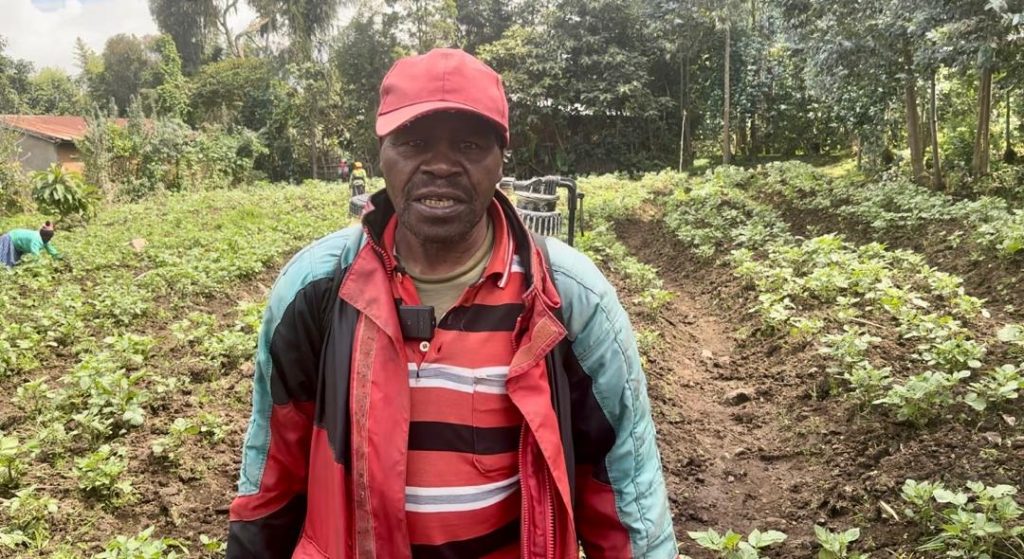
In Musanze, on a small research plot run by the Rwanda Agriculture and Animal Resources Development Board (RAB), a quiet revolution is unfolding. Rows of Irish potatoes sway gently in the wind green, lush, and untouched by late blight. For the first time in decades, they have not received a single drop of fungicide.
These are genetically engineered (GE) potatoes, developed by African researchers at RAB and the International Potato Centre (CIP). They carry natural resistance genes borrowed from wild potato relatives once found in the Andes.
“These varieties may look like the ones we know, but the science inside them is extraordinary,” says Dr. Eric Magembe, a biotechnologist at CIP, Kenya-Rwanda. “They are built from African knowledge, by African scientists, for African problems.”
Field trials across Rwanda, Kenya, Uganda, and Nigeria show the same pattern: zero blight infection, zero chemical sprays, and yields reaching up to 50 tonnes per hectare far above what farmers like Zimurinda can achieve when they cannot afford constant fungicide use. “This could restore dignity to farming,” Magembe adds.
“Farmers will no longer be victims of disease or chemicals. They will be empowered producers.” Beekeepers sense a turning point The implications ripple far beyond potato fields. “This season, I only lost one hive,” says Ndashyikirwa, cautiously optimistic.
“If we can reduce chemical use across crops, we will bring back the bees.” Beekeepers know that healthier farms mean healthier pollinators and healthier ecosystems. With fewer toxins in the landscape, fruit trees, vegetables, and wild plants can recover their symbiotic rhythm with bees.
Can the pollinator bees return to gardens?
Rwanda’s new biosafety era behind the scenes, a policy shift made this progress possible. Rwanda’s updated biosafety law, enacted in February 2024, opened the door for scientifically regulated trials of modern biotech crops.
“We are ahead of many nations,” says Athanase Nduwumuremyi, the senior researcher at RAB and country coordinator of the Open Forum on Agricultural Biotechnology (OFAB). “Were using science-based policy to ensure innovations are safe and effective.”
RAB is now expanding trials across more agro ecological zones. If results remain consistent, Rwanda could approve national release of GE potatoes as early as next year. Such a move would mirror Kenya, which has already approved blight-resistant biotech potatoes for commercial cultivation setting a regional precedent.
A food system under pressure Rwanda harvested 475,785 tonnes of Irish potatoes in 2025 Season A3 percent increase from the previous year, driven by improved seed and irrigation investments, according to the National Institute of Statistics of Rwanda (NISR).
However, climate volatility, shrinking farmland, and rising input costs have stretched farmers thin. Biotechnology represents a new frontier one that could reduce losses, improve affordability, and expand opportunities for export to markets like Burundi and the DR Congo.
Environmental benefits are equally compelling. Reports by the Food and Agriculture Organisation (FAO) and Intergovernmental Science-Policy Platform on Biodiversity and Ecosystem Services (IPBES) warn that pollinator declines threaten global food security.
By slashing pesticide use, GE potatoes offer farmers a chance to produce more food, while equally healing ecological wounds. Safety, science, and public trust Are GE crops safe? Decades of research indicate ‘yes’. Global authorities, including the World Health Organisation and FAO, affirm that approved GM foods undergo rigorous testing and show no negative health impacts.
Magembe reinforces this: “The taste, shape and nutritional value are all the same. The only difference is these ones are disease resistant.” The future many are waiting for Back in Kinigi, Zimurinda dreams of a farm where his mornings no longer begin with the weight of a sprayer on his shoulders. “If I can grow potatoes without spraying, I will focus on improving my soil, my seeds, my future,” he says. “And I will not dread Nduwumuremyi every rainy day.”
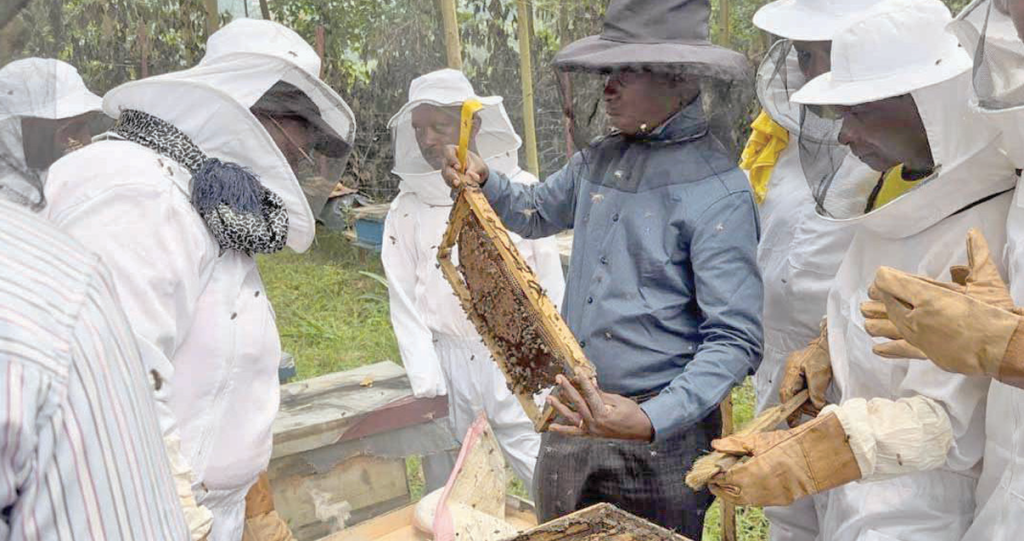
For beekeepers like Ndashyikirwa, the stakes are generational. “It is about balance. Healthier farms mean healthier bees, and that means hope for our children,” he says.
Pacifique Nshimiyimana, the Executive Director of Alliance for Science Rwanda, sums it up in an old proverb: “Roho nzima itura mu mubiri muzima” a healthy soul lives in a healthy body. The same is true for crops – a healthy plant yields abundantly.
In a nation built on resilience and ingenuity, biotech potatoes are more than a scientific achievement. They represent a new vision for Rwanda’s food systems one where farmers prosper, ecosystems recover, and the quiet hum of bees continues to stitch life across the hills. For Zimurinda, the future looks lighter. For the bees, it may finally be brighter.