

Across Rwanda, a quiet transformation is unfolding in how people manage their money.
While some still stash cash at home, more Rwandans are turning to formal f inancial tools, including mobile money and long term savings plans. According to a 2024 FinScope survey, 96 per cent of Rwandan adults are now “financially included”, meaning they use at least one financial service.
Formal financial inclusion through banks, mobile money, or pension products has risen to 92 per cent, up from 77 per cent in 2020. Yet old habits die hard. The survey reveals that a significant number of people continue to save in ways that leave no trace in the formal sector.
Informal saving mechanisms remain widespread, and some adults continue to keep cash at home. “This report is not just data; it’s a roadmap for prosperity,” says financial analysist Alice Mukamutoni. She encourages financial institutions and regulators to use the insights to develop products that meet the everyday needs of Rwandans.
Access to Finance Rwanda (AFR) also sees the shift as more than symbolic. Jean Bosco Iyacu, AFR’s Chief Executive Officer, notes that the survey reflects a move from “mere access” to true inclusive finance, where people not only have accounts but use them to meet real goals. On the ground, the change is visible in Kigali.
Jeanne Mbabazi, a resident of Kigali, says she used to hide stacks of cash in her dresser. Today, she deposits part of her money into a mobile money wallet. “When my money is in the app, I don’t touch it as much,” she says, adding that the digital buffer helps her avoid impulsive spending.
In rural areas, Pierre Bizimana, a small-scale farmer, has struck a balance. He still contributes to a community savings group (a tontine), but also saves using mobile money. For him, the tontine provides trust and accountability, while the digital account offers security and flexibility. But why do many Rwandans still hold cash at home? For some, it comes down to trust and familiarity.
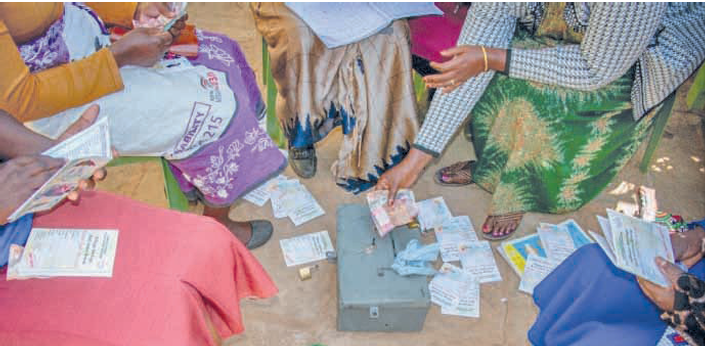
Informal networks such as village savings and loan associations (VSLAs) remain deeply embedded in communities. Even as more people adopt formal f inancial services, these systems continue to feel reliable and personal. Another barrier lies in income patterns, with nearly half of adults who do not save formally say they “do not have the money to save or invest.”
A large portion of savings, according to the survey, is for short-term needs, such as covering emergency expenses, rather than building long-term wealth. Government intervention Thankfully, the Government is responding in equal measure to boost the formal savings structures and initiatives.
In October this year, Rwanda launched its Financial Sector Development Strategy (2025–2030), aiming to deepen financial inclusion, increase savings, and channel more domestic resources into productive investments. A key component is Ejo Heza, a voluntary long-term savings scheme managed by the Rwanda Social Security Board (RSSB).
The programme is open to both salaried and self employed Rwandans, with contributions possible via mobile phones. Lower-income savers may also qualify for a government co-contribution. Financial education is being expanded as well.
Policymakers are working with fintechs and financial institutions to make guidance simple, accessible, and relevant, especially for rural and lower-income populations.
Mukamutoni says changing savings behaviour is about more than personal f inance; it has broader economic consequences. When Rwandans save formally, banks and financial institutions can use those funds for loans, investments, and development projects. “The shift from cash at home to formal accounts is not automatic; it requires trust, incentives, and products that reflect the realities of everyday people,” she notes, adding that despite the persistent challenges, the future of Rwanda’s financial inclusion agenda looks brighter.”