
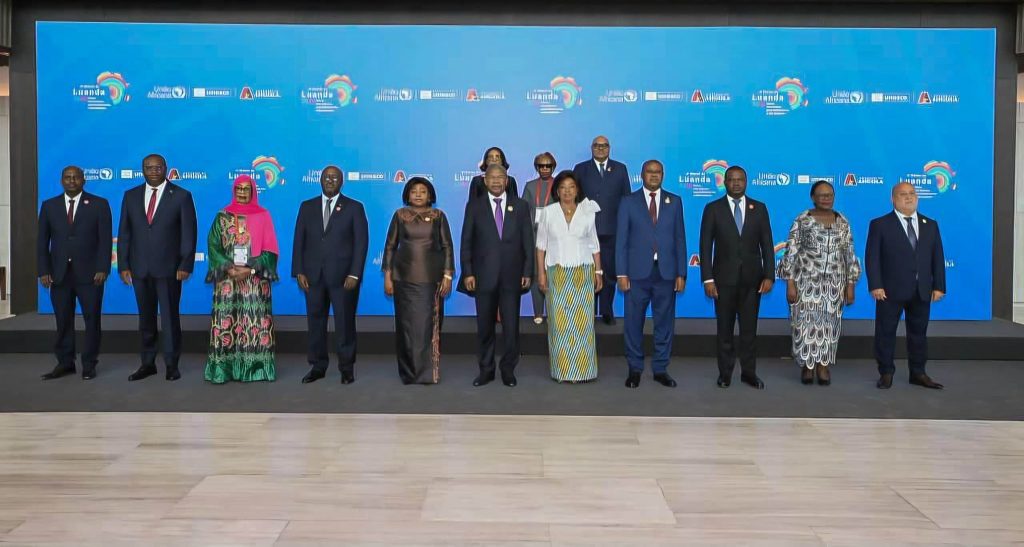
Rwanda’s Foreign Affairs and International Cooperation Minister Olivier Jean Patrick Nduhungirehe is attending an African forum in Angola examining how water management can help prevent conflicts and strengthen peace across the continent.
The fourth Luanda Biennale, also known as the Pan-African Forum for the Culture of Peace and Non-Violence, is being held in the Angolan capital from Oct. 22-23, bringing together African stakeholders and international partners to discuss ways to promote peace through dialogue, cooperation and cultural exchange.
This year’s theme focuses on strengthening water governance as a means of preventing disputes among communities and countries that share water resources.
Water is essential to agriculture, livestock farming, industrial production and economic development across Africa. However, competition over access to water and weak management systems can fuel tensions, particularly in areas where communities and countries depend on the same rivers and other water sources.
The forum is expected to examine cooperation in managing shared water resources, public participation in decision-making, the effects of climate change and changing settlement patterns on water availability, investment in water infrastructure and the capacity of institutions responsible for water management.
The discussions also align with the African Union’s Agenda 2063, which includes improving sustainable access to adequate supplies of clean water and strengthening sanitation services.
The biennale is organised through cooperation between the Angolan government, the African Union and the United Nations Educational, Scientific and Cultural Organization (UNESCO).
Held every two years, the forum was first convened in 2019, followed by editions in 2021 and 2023. It seeks to promote a culture of peace and non-violence and encourage lasting solutions to conflicts through dialogue and cooperation.
Rwanda’s participation places it among the countries engaging in discussions on how water governance can support stability, cooperation and sustainable development across Africa.