
Rwanda has called on the United Nations to support diplomatic efforts aimed at ending the conflict in eastern Democratic Republic of Congo, saying a lasting settlement will require addressing what it described as the political roots of the crisis as well as the security threats facing the region.
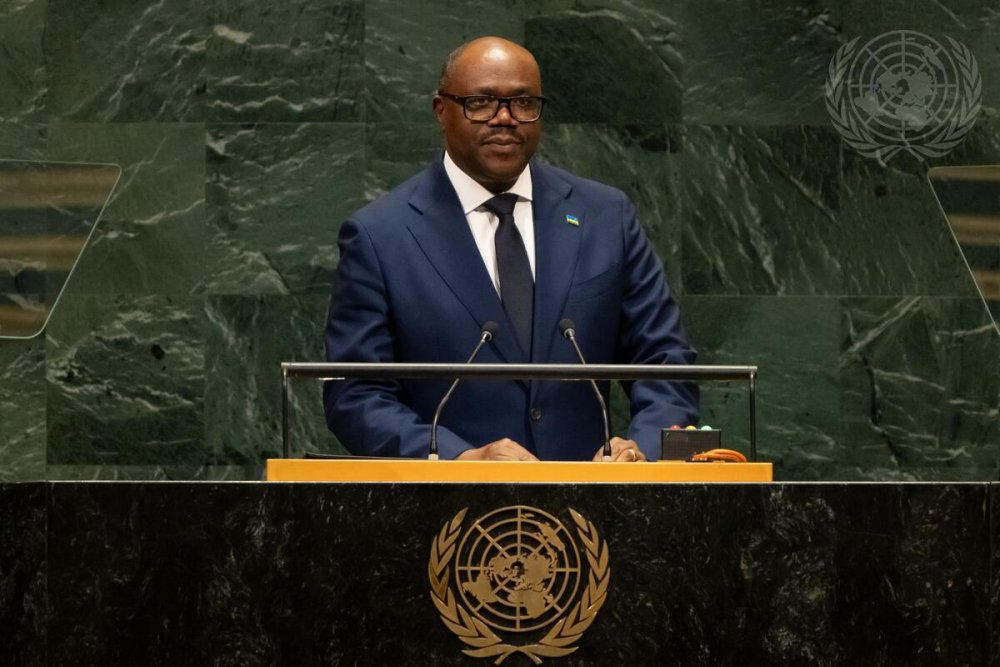
Prime Minister Justin Nsengiyumva made the appeal on Wednesday, Sept. 23, while delivering Rwanda’s statement at the 81st UN General Assembly in New York. He said Kigali supports the Washington accords between Rwanda and Congo and the Doha talks between the Congolese government and the AFC/M23 alliance.
Nsengiyumva said the conflict in eastern Congo had persisted for decades and could not be resolved through military measures alone.
“The roots of the conflict in Eastern DRC are political, and they lie in long-standing grievances, exclusion, and failures of governance. So the solution, too, must be political,” he said.
He urged the international community to help the parties involved honour commitments made through the ongoing diplomatic processes.
Rwanda has repeatedly identified the Democratic Forces for the Liberation of Rwanda (FDLR) as a security threat, and Nsengiyumva told the General Assembly that the group continues to spread what he called genocidal ideology, commit abuses and threaten Rwanda’s security, including through cross-border attacks.
He also alleged that the FDLR is working with Burundi’s forces, armed groups backed by the Congolese government and foreign mercenaries operating in Congo.
Nsengiyumva said such cooperation contravenes international and regional agreements addressing the use of mercenaries.
The Prime Minister said Rwanda’s support for the Washington and Doha processes was part of a broader diplomatic approach to the conflict.
He thanked U.S. President Donald Trump, Qatar’s Emir Sheikh Tamim bin Hamad Al Thani and Togo President Faure Gnassingbé, the African Union facilitator, for their roles in supporting the peace efforts.
“There is no lasting peace without compromise. There is no lasting peace without confronting the root causes of the conflict and addressing the legitimate concerns of all those affected,” Nsengiyumva said.
The Washington process resulted in an agreement between Rwanda and Congo, while the Doha process brings together the Congolese government and the AFC/M23 alliance. Rwanda has said both tracks should be supported as part of efforts to end the conflict.
Nsengiyumva also met UN Secretary-General António Guterres on the sidelines of the General Assembly. According to reporting on the meeting, the two discussed the security situation in the region as well as continued cooperation between Rwanda and the United Nations.
The Prime Minister’s remarks placed the eastern Congo crisis within a wider argument about the role of the UN in preventing conflicts before they become more difficult to resolve.
He said international institutions should put greater emphasis on prevention and on addressing underlying causes rather than responding only after crises have escalated.
Rwanda’s national statement was published by the Prime Minister’s Office following the General Assembly address.