
In business and economics, as in politics, uncertainty, complexity, and disruption are accelerating. The models and assumptions that CEOs, boards, and policymakers have long relied upon are giving way to a more fragmented, multipolar world defined by shifting alliances, intensified competition, and new sources of risk.
Over recent years, BCG has tracked the forces driving the global move towards multipolarity. These forces are now coalescing into clearer patterns affecting trade, regulation, geopolitical alignments, security arrangements, and climate policy. Together, they are reshaping how companies decide where to manufacture, invest, innovate, and compete.
As 2026 approaches, understanding these geopolitical dynamics has become essential for strategic leadership.
Multipolar Geopolitics
The defining feature of the current era is the shift towards a more multipolar geopolitical order. Power is increasingly distributed among multiple actors seeking to shape the global business environment.
The United States and China remain the two dominant powers, and their evolving relationship continues to reverberate across the global economy. However, Europe and the major economies of the Global South are also exerting growing influence. Their intersecting interests generate rivalry as well as selective collaboration, producing a fluid and contested set of rules, norms, and power structures.
China has become more assertive, supported by progress in reducing its dependence on foreign technologies and inputs. It now accounts for over a quarter of global industrial R&D spending and roughly half of all technology-related patent publications. China is deepening trade ties with the Global South and has become the largest trading partner of more than 90 countries. At the same time, it faces significant domestic challenges, including deflationary pressures, a weak property sector, subdued consumer confidence, and slowing growth.
The United States, pursuing an “America First” agenda, is reshaping both its domestic economy and its external relationships. Deregulation, unconventional state intervention, immigration restrictions, and industrial rebuilding are central to its approach. Internationally, it is deploying economic tools including tariffs, which have increased more than sixfold in the past year to pursue strategic objectives, while simultaneously seeking to attract foreign direct investment through bilateral deals. The 2026 midterm elections will test domestic support for these policies.
Europe faces constraints stemming from slower growth, geopolitical pressures, and internal divisions. Nonetheless, it is gradually recalibrating its economic and geopolitical role. The EU is pursuing trade agreements with partners in the Global South, including Mercosur and Indonesia, with India a longer-term prospect. These agreements could open access to around two billion consumers. Europe is also working to narrow its defence spending gap with the US by the end of the decade.
The Global South, led by countries such as India, Brazil, and South Africa, is seeking to prioritise growth while maintaining strategic autonomy amid great-power competition. Although trade-offs are increasing, the direction is clear: by the end of the decade, these economies are expected to account for roughly half of global economic growth.
Despite geopolitical fragmentation, global economies remain deeply interconnected through trade, investment, people, and data flows. This interdependence exposes businesses to new forms of disruption as governments increasingly prioritise national and economic security, complicating strategic decision-making.
SIX ARENAS OF COMPETITION
Multipolar dynamics are creating competition across six key arenas that will shape long-term advantage for companies and countries alike.
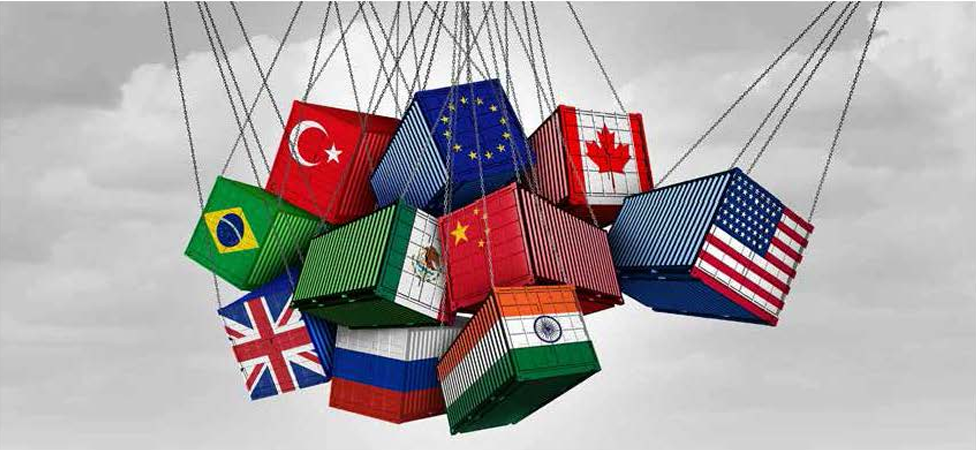
1. Trade and Foreign Direct Investment Realignment Global trade remains resilient, but its structure is changing. US tariffs and bilateral trade agreements often linked to investment commitments are replacing the multilateral, WTO-based system with a fragmented patchwork of rules and barriers. While most agreements still focus on goods, services, particularly digital services, are becoming central to geopolitical competition as governments impose new regulations on data, content, taxation, and investment.
Notably, over 85% of global merchandise trade excludes the US. In response to US policies, other economies are pursuing alternative trade arrangements, including EU free trade agreements and deeper integration within Asia. Over time, this could result in blocs of countries trading more among themselves than with others. For companies, this environment necessitates a reassessment of supply chains, manufacturing footprints, and investment strategies. Trade policy now intersects with taxation, immigration, and industrial policy. Firms must prepare for tariffs and non-tariff barriers, build strong trade- response capabilities, and use scenario planning to anticipate geopolitical risks across their own operations and those of key suppliers.
2. The Technology and AI Race
Artificial intelligence has become a central arena of geopolitical competition, with significant economic and security implications. The US and China dominate large-scale AI commercialisation, accounting for the majority of top-performing large language models. However, a group of “GenAI middle powers” in Europe, Asia, and the Middle East is emerging, each with distinct strengths in hardware, infrastructure, or adoption. For companies integrating generative AI, reliance on a single national technology ecosystem carries risks related to regulation, data localisation, and policy shifts. A more multipolar AI supply landscape increases complexity but also offers greater optionality. Beyond AI itself, the race extends to enabling sectors such as semiconductors, power generation, rare earth mining, quantum computing, batteries, renewable energy, biotech, and dual-use technologies.
3. The Global Talent Scramble
Technological competition and demographic change have intensified global competition for skilled talent. Rapid advances in AI and other technologies are reshaping skill requirements and learning models.
The US remains the leading destination for highly skilled migrants, followed by the UK. Gulf states, notably the UAE and Saudi Arabia, are increasingly competitive talent hubs. India continues to be the primary global source of mobile STEM and AI professionals.
For governments, education and immigration policy are strategic but politically sensitive. For businesses, talent scarcity affects hiring, compensation, upskilling, internal mobility, and partnerships. Developing skills across the workforce not only at the elite level is critical to capturing productivity gains.
4. Mission-Critical Sectors and Economic Security
In a world where power increasingly defines economic relationships, supply chains are becoming instruments of leverage. Industrial policy interventions motivated by national and economic security have risen sharply since 2021, spanning tariffs, export controls, subsidies, and equity stakes.
The US-China relationship illustrates this dynamic. China dominates many manufacturing supply chains and controls most rare earth mining and processing, while the US leads in advanced chip design and critical software. Both sides seek to exploit and reduce dependencies, often through formal or informal alliances.
Companies operating in geopolitically sensitive sectors must build resilient supply chains, including diversification, redundancy, and in some cases strategic stockpiles. A “cost of resilience” operating model balancing efficiency with flexibility is increasingly essential.
5. Climate Policy Divergence
Climate change remains a major concern, but energy security and affordability are increasingly taking precedence over decarbonisation in many countries. China has emerged as the global leader in low-carbon technologies and renewable [energy].
Here is the text extracted from the image:
energy deployment, while other countries, including the US, are placing renewed emphasis on conventional energy sources. Incentives for green technologies are becoming more uneven, producing divergent regional market dynamics.
International climate cooperation is fragmenting into smaller, issue-specific groupings, leading to inconsistent rules on carbon markets, taxes, and border levies. Corporate responses will depend heavily on geographic footprint: sustainability remains central in Western Europe, while policies elsewhere are more fragmented. Companies that fail to track shifting climate regimes risk strategic missteps and compliance challenges.
- Expanding Conflict and Instability
Armed conflict is increasingly widespread, with around 60 active interstate and civil wars worldwide the highest level since the Second World War. Conflicts in Ukraine, the Middle East, and elsewhere continue to disrupt supply chains and operations, while grey-zone activities, cyberattacks, and threats to space and undersea infrastructure are rising. AI introduces additional vulnerabilities.
Social unrest and political instability can erupt quickly, particularly in fragile regions. Businesses must equip local managers with strong political awareness, contingency plans, and employee support mechanisms.
At the same time, conflict can generate opportunities. Europe’s planned increase in defence spending is expected to create up to €500 billion in cumulative demand between 2026 and 2029, including substantial opportunities for non- defence firms in software, aerospace, electronics, telecoms, automotive, and logistics.
What This Means for Leaders Multipolarity, state intervention, and geopolitical risk are now enduring features of the business landscape. To succeed, companies must:
- Build geopolitical capability into strategy, capital allocation, and operating models
- Control costs through technology while investing in resilience and strategic sectors
- Navigate cross-border barriers and identify growth opportunities in new regions and partnerships
- Adapt organisational structures to operate effectively across diverse jurisdictions
- Upgrade technology systems and talent to ensure continuity amid disruption
The brief optimism following the end of the Cold War, when many anticipated a lasting “peace dividend”, has long faded. Uncertainty, complexity, and turmoil are likely to remain defining conditions of global business for years to come.