
As Rwanda and the rest of the world ushered in a new year, President Paul Kagame delivered a pointed and reflective message to the country’s youth, emphasizing that national development begins with personal growth, discipline, and strong values. His remarks framed youth empowerment not merely as a social goal, but as a strategic imperative for Rwanda’s long-term economic and social transformation.
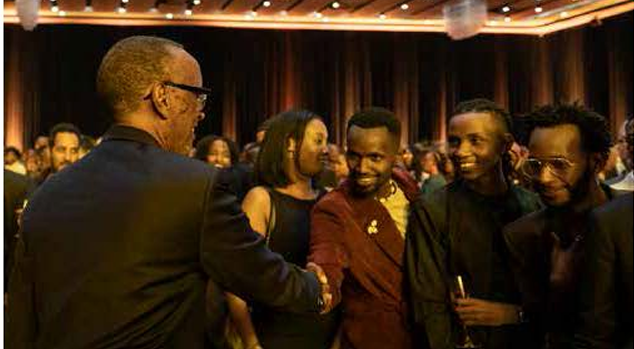
The Head of State made the remarks on Monday evening, December 29, 2025, during his annual New Year address to Rwandans—an event that has become a defining moment for reflection on the country’s journey, achievements, and future aspirations. As is customary, President Kagame hosted Rwandans and friends of Rwanda from diverse backgrounds to exchange New Year wishes and reflect on the direction of the nation.
The gathering was attended by First Lady Jeannette Kagame, senior government officials, youth representatives, and other invited guests, underscoring the inclusive nature of the occasion and the importance placed on engaging all segments of society, particularly the youth.
Addressing young people directly, President Kagame underscored their central role in Rwanda’s present and future, noting that youth form the backbone of the nation’s demographic and productive potential.
“To you the youth who are here, you are the majority of Rwanda’s population. Having 75% of the population under 30 is an immense source of strength. We have to ensure that strength is anchored in our values and meaningful work that enable you to build yourself and your country. You cannot build Rwanda without building yourself first. That is what I ask of you and that is my wish for you.”
The President highlighted Rwanda’s youthful demographic as one of the country’s greatest strategic assets. With nearly three-quarters of the population under the age of 30, and more than 75 percent under 35, Rwanda stands out as one of the youngest nations in the world. This demographic reality, he noted, offers a powerful opportunity to accelerate development, innovation, and competitiveness if properly harnessed.
However, President Kagame cautioned that numbers alone are not enough. Demographic advantage, he emphasized, must be translated into productivity, responsibility, and purpose-driven action rooted in national values. Without skills, discipline, and a strong work ethic, he warned, a youthful population could become a missed opportunity rather than a driver of progress.
He stressed that national transformation begins with individual growth. Young people were urged to invest in education, practical skills, and character development, arguing that Rwanda’s progress depends on a generation prepared not only to lead, but also to serve with integrity and accountability.
This message resonates strongly within the context of Rwanda’s evolving commerce and trade landscape. Over the past two decades, the country has positioned itself as a regional hub for trade, logistics, and services, supported by reforms that encourage entrepreneurship, private-sector growth, and innovation. Young Rwandans have increasingly taken up roles as entrepreneurs, traders, technology innovators, and small business owners, contributing to domestic markets and cross-border trade across the East African Community and the Great Lakes region.
Rwandan youth continue to command national attention not only because of their sheer numbers, but also because of their growing influence across key sectors including the economy, technology, innovation, leadership, and governance. In commerce, young entrepreneurs are driving the expansion of small and medium-sized enterprises, leveraging digital platforms, e-commerce, and mobile payments to reach wider markets. In trade, they are actively engaged in value chains ranging from agriculture and agro-processing to retail and logistics.
From entrepreneurship and digital transformation to public service and community development, young people are increasingly shaping the country’s trajectory. Government-backed initiatives supporting skills development, vocational training, and access to finance have further expanded opportunities for youth participation in economic activity. These efforts align with Rwanda’s broader ambition to build a knowledge-based economy that competes regionally and globally.
President Kagame’s message therefore served as both guidance and a challenge. He reminded young people that while government can create enabling conditions through infrastructure, policy reforms, and investment in education the responsibility to seize opportunities rests with individuals. Self-development, he stressed, is inseparable from national development.
As Rwanda looks ahead, the message from the President was clear: the country’s future will be built by a generation that is grounded in strong values, driven by meaningful work, and committed to self-improvement as the foundation of collective progress. For a nation seeking to expand its role in regional trade, strengthen domestic commerce, and sustain inclusive growth, the character and capability of its youth will remain decisive.
For Rwanda’s youth, the call is both a responsibility and an opportunity to build themselves, and in doing so, build the nation.